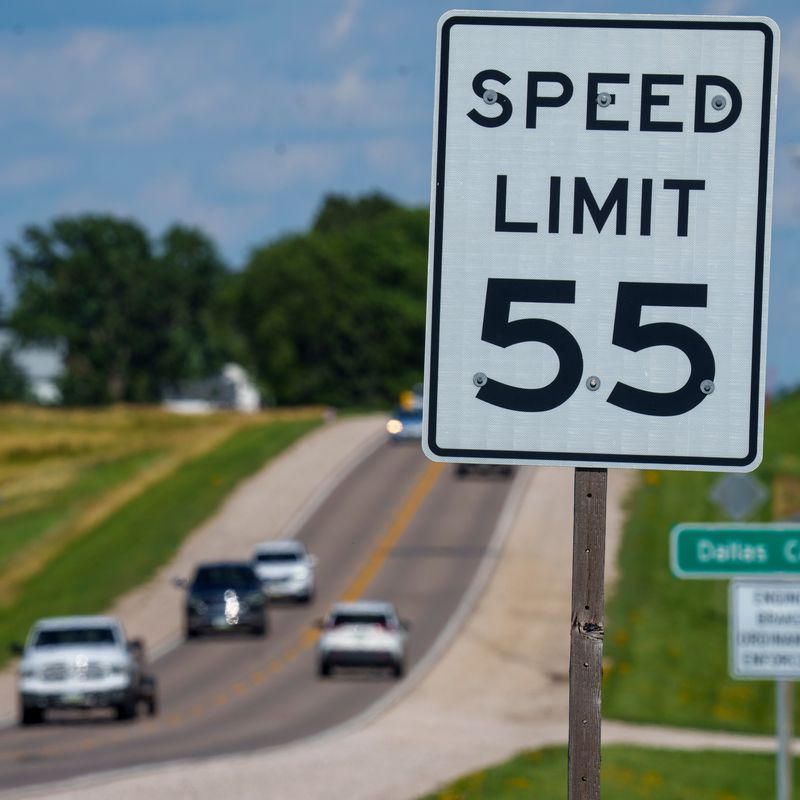
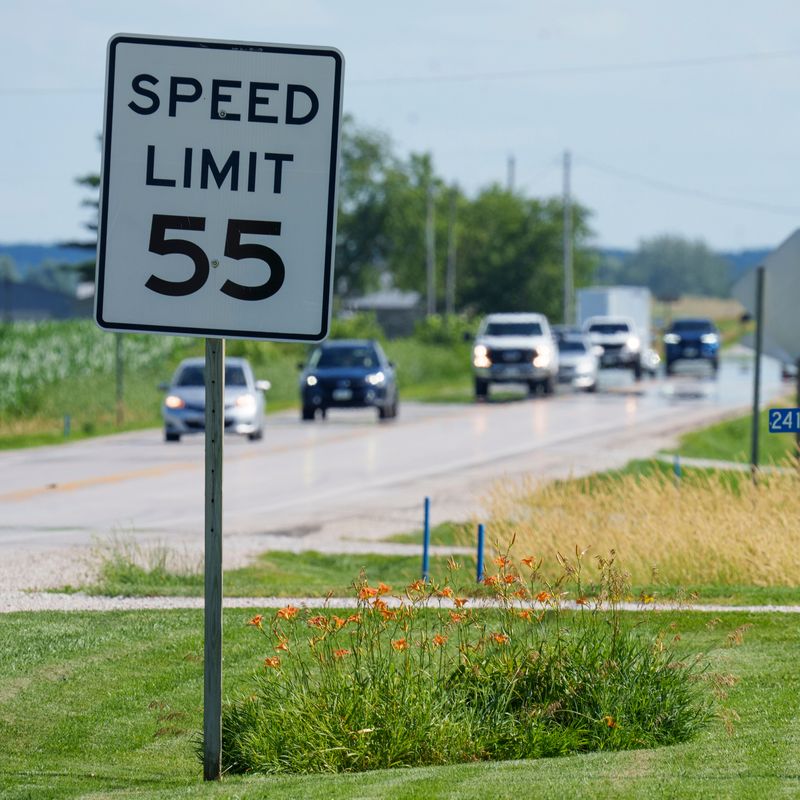
For the first time decades, Iowa is taking the brakes off its 55 mph speed limit.
Gov. Kim Reynolds signed Senate File 378 into law on June 1, effectively raising the default speed limit in areas where no speed limit is posted to 60 miles an hour.

Starting on Wednesday, July 1, the Iowa Department of Transportation will place temporary “60” overlays on existing signs to update the speed limit until the signs are due for normal replacement.
But that doesn’t mean the limit will change everywhere, a state highway official warned. The state may keep the speed limit at 55 mph or lower in some places if it deems it unsafe to raise it.
“Motorists should not assume that it’s going to go up,” Daniel Yeh, the director of government and community relations for the Iowa Department of Transportation, said. “We’re going to be carefully looking at roadways.”
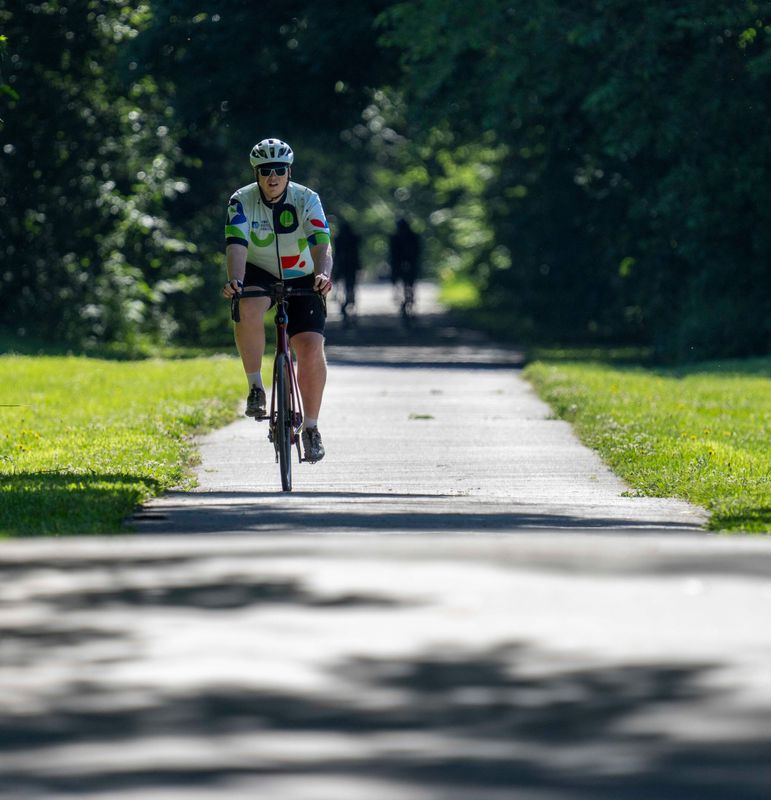
The prospect of higher traffic speeds is already worrying some pedestrian and biking advocates who fear more people will get hurt or killed.
“As speeds increase, it gets more dangerous for everyone on the road,” Matt Burkey with the Iowa Bicycle Coalition said. “So we’re going to see crashes go up. We’re going to see fatalities go up.”
Iowa’s speed-limit rollout begins July 1
Yeh said Iowans should expect to see 60 mph signs start to change right away on July 1.
“What might have been a default roadway with a 55 miles per hour speed limit today, might be an engineering- and traffic-analysis-based 55 miles per hour speed limit tomorrow,” he said.
“If we identify roadways where we think that the roadway cannot handle the higher speed limit, we will not change that speed limit.”
The state will consider several factors in making that determination, including the curvature of the roads, the number of driveways in a given area or even the spacing of stop signs, he said.
“Going out and changing the speed limit signs is the first step in implementing this law, but in many cases, it’s not going to be the only step,” he said. “We might need to recalculate some advisory speeds on curves, we might need to extend some guardrails. So, there are going to be a few other things that we do because of the higher speeds.”
Because of that, the DOT’s work won’t be finished once new speed-limit signs go up.
“Each of those is going to be on a case-by-case basis where we need to go out and look at all of the impacted roadways,” Yeh said. “So, it will take some time, but we’re going to try to do as much as we can in the coming weeks and months to make some of those adjustments.”
Faster isn’t safer, some Iowans warn
Reynolds said the higher default speed limit is a response to requests she’s heard from Iowans.
“We heard from constituents across the state that they want us to raise the speed limit,” she told reporters June 2. “I mean, this is grassroots driven. And I think if you look at all the comments, and the comments that I’ve been getting from Iowans, and if you look at social media, they’re pretty excited that it’s going to be legal to drive what they’ve been driving.”
While a 5-mile-per-hour increase might not seem like much, the new law has some Iowans concerned about harmful effects the new law could have not only on drivers, but pedestrians and bikers.
“The reasoning for the bill (is), ‘everyone’s already speeding, we should just raise it,’” said Burkey said. “That doesn’t make a lick of sense to me. … As speeds increase, it gets more dangerous for everyone on the road, so we’re going to see crashes go up. We’re going to see fatalities go up.”
A study from the Insurance Institute for Highway Safety in 2019 found that a speed limit increase of 5 miles per hour was associated with an 8.5% increase in fatality rates on highways and interstates and a 2.8% increase on other roads.
“At 20 miles an hour, there’s only a 2% to 5% chance of fatality; at 40 miles an hour, it’s a 50-50 chance of fatality,” said Burkey, who coordinates safe routes to school for the bike organization. “Going from 55 miles per hour to 60 miles per hour, a small bump, for a pedestrian, a motorcyclist, that’s going to be a tragedy.”
Burkey worries Iowa’s new 60 mph speed limit will only exacerbate the state’s speeding problem.
“It’s ingrained in our culture that the limit is not a limit — it’s that number posted plus 10,” he said. “Now the speed limit is 60 miles per hour, everyone’s going to start doing 65 miles per hour. A few more years, are we going to have social media comments saying, ‘hey, we should raise it. Everyone’s already doing 65 miles per hour.’”
Burkey echoed Yeh’s concerns about faster speed limits on the roads surrounding Iowa’s small towns.
“A lot of (small towns) reach out to me and say, ‘hey, we want more people walking and biking, but we have this highway that cuts through town,’” Burkey said. “And even though there’s speed limit signs that say ‘city approaching, slow down,’ the people aren’t. I just fear that it’s going to be an even bigger problem now that people are going to be going even faster before these towns.”
Where there’s speed, there’s danger, Burkey said.
Navigating increased speed
Highway Patrol troopers will be vigilant as the speed limit increases, Sgt. Alex Dinkla, the patrol’s public information officer, said.
“We’re always concerned about fatalities,” Dinkla said. “With the new speed limit increase, we hope that motorists will pay extra attention as they’re driving.”
He emphasized the importance of seatbelts, “and with the new hands-free law, always put that phone down, limit those distractions.”
Dinkla also suggested that drivers increase the following distance between vehicles and keep an eye out for animals and children.
The State Patrol is well prepared for the transition period, he said.
“We will be standing ready to enforce that new law,” Dinkla said. “And we’ll be helping with some of that education as well to educate motorists on those new areas.”
Des Moines Register Capitol Bureau Chief Stephen Gruber-Miller contributed to this article.
Norah Judson is a reporter for the Register. Reach her at njudson@gannett.com.
This article originally appeared on Des Moines Register: Iowa is raising its speed limit. But exactly where remains to be seen
Reporting by Norah Judson, Des Moines Register / Des Moines Register
USA TODAY Network via Reuters Connect
By Norah Judson, Des Moines Register | USA TODAY Network