Many Americans still carry an image of small-town policing shaped by the television series The Andy Griffith Show and its spinoff, Mayberry R.F.D.

Sheriff Andy Taylor knew everyone in town. Deputy Barney Fife provided comic relief. Most problems involved speeding tickets, petty disputes and the occasional drunk in the jail cell.
That world no longer exists.
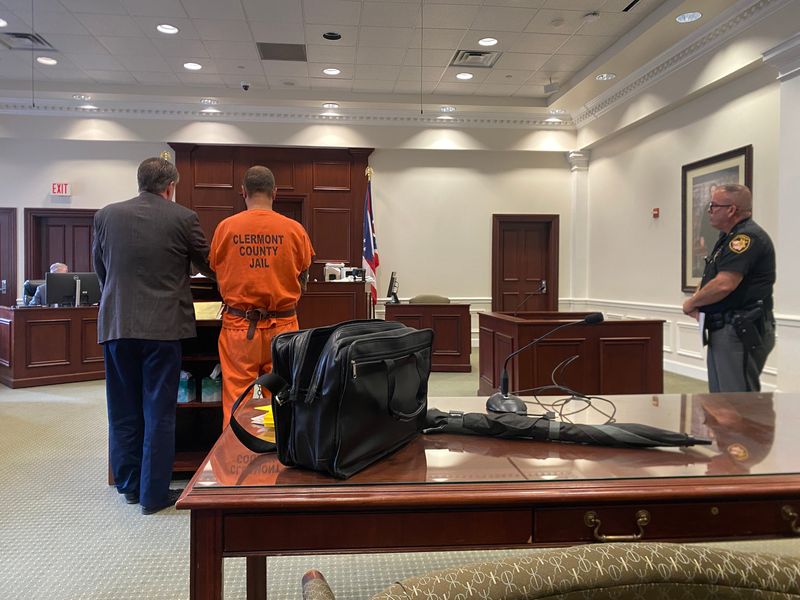
The recent events in Bethel, Ohio, provide a sobering reminder. Chad Essert, the police chief of the village of roughly 3,000 residents, was recently indicted on 70 felony counts, including 56 counts of sexual battery and 14 counts involving unlawful sexual conduct with a minor. Misconduct allegations and disciplinary problems had followed him through three different departments before he was hired as chief − a hiring failure that speaks less to Bethel’s intentions than to its institutional capacity.
Bethel and other small villages and townships want their own police departments. Visibility gives them comfort, and familiarity leads to trust.
That desire is understandable. Local control has advantages. Citizens like knowing the officers who patrol their streets. They want familiar faces and accountability close to home.
Modern policing demands more
But modern policing has become extraordinarily complex. Today’s police departments confront drug trafficking and use, an armed citizenry, mental health crises and a severe shortage of qualified officers.
At the same time, many small communities rely on part-time mayors, township trustees and volunteer council members to recruit and evaluate candidates for one of the most powerful positions in local government.
As well-intentioned as these officials are, they often lack the resources and expertise necessary to conduct exhaustive background investigations involving multiple jurisdictions and decades of employment history. Once concerns surface, there can be an understandable temptation to minimize them rather than restart the search.
The issue is not Bethel. The issue is whether governmental structures designed for the era of Mayberry are equipped for the realities of 2026.
Is it time for a new model?
Increasingly, communities in states such as Florida have decided they are not. Rather than maintain their own departments, they have contracted with county sheriffs’ offices, gaining access to larger applicant pools, professional internal affairs divisions and more robust oversight. The evidence suggests the model works: Contract communities generally report improved response times and fewer misconduct incidents than comparable standalone departments.
This is not an argument against local oversight. It is an argument for asking whether the current structure actually delivers it. Wanting a hometown police department and possessing the institutional capacity to manage one safely are not necessarily the same thing.
America no longer lives in Mayberry. Perhaps it is time to ask whether our approach to policing still does.
Dennis Doyle lives in Anderson Township and is a member of the Enquirer Board of Contributors.
This article originally appeared on Cincinnati Enquirer: It’s time to rethink small-town police departments | Opinion
Reporting by Dennis Doyle, Opinion contributor / Cincinnati Enquirer
USA TODAY Network via Reuters Connect

By Dennis Doyle, Opinion contributor | USA TODAY Network