A blue sign along Interstate 74 greets travelers: “Welcome to Cincinnati, settled 1788.” Below, it reads, “All American City.”
That description is actually an honor awarded to Cincinnati by the National Civic League in 1949, 1950 and 1981. So, this is not the only city officially called “All American.” The title is given to 10 cities every year, and it has been quite a while since the Queen City has earned that honor.

Yet the label kind of sticks with Cincinnati.
Not because it’s a typical American city. But because Cincinnati was the first city that was entirely American.
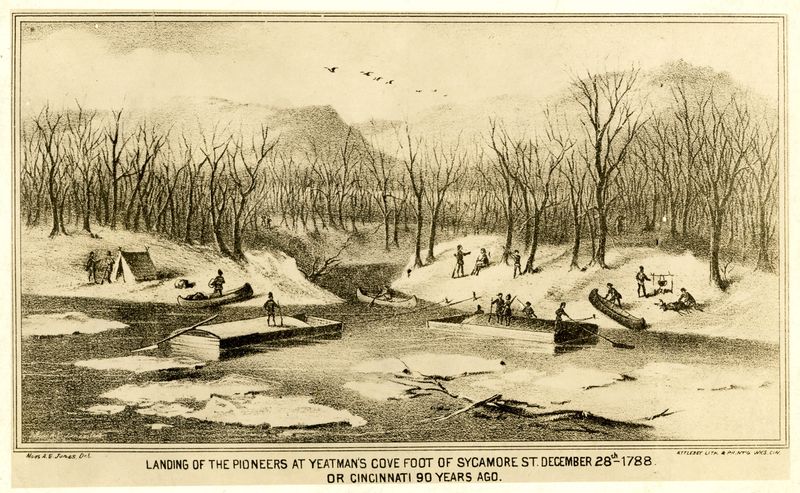
It was founded in December 1788, six months after the U.S. Constitution was ratified. George Washington was about to be elected as the first president of the United States.
Marietta, Ohio, barely beat Cincinnati as the first permanent settlement after the American Revolution, founded in April 1788. It was Cincinnati that blossomed into the sixth largest U.S. city by 1850.
The city was built by that new character of people called Americans. Not European colonists, who settled New York, Boston and Philadelphia. Brand new Americans. Pioneers and free thinkers, brave souls emboldened by a successful cutting of the old ties, striving to create a new nation.
As we celebrate America’s milestone 250th anniversary, it’s worth taking a closer look at Cincinnati.
It was the first significant test of how this American experiment would go. Hand in hand, Cincinnati and America found their footing together. The good and the bad, triumphs and tragedies. Cincinnati was a microcosm of the nation as a whole.
In 1948, Cincinnati Gas & Electric Co. ran a national ad campaign to promote Cincinnati as a great industrial area within a few hundred miles of most of the population of the U.S.
The slogan was “Cincinnati, the city closest to America.”
“It’s the people, here. It’s their closeness to the American way of life,” the ad read. “It’s their attitude … the attitude which built America and which makes it perhaps the world’s last remaining land of opportunity.”
Sure, it was a campaign designed to attract businesses to Cincinnati as the population shifted out to the suburbs. Just like every other American city at the time.
But that phrase resonates. The city closest to America.
Like much of America, Cincinnati was founded on native lands
Unnamed early ancients, identified by archaeologists as Adena culture and Fort Ancient culture, lived in the area thousands of years ago. The burial mounds they left behind were mostly cleared away as the city was built on top of them.
In the 18th century, lands north of the Ohio River were occupied by Shawnee and Miami tribes who shared an antagonistic relationship with encroaching American settlers. The matter was decided by violence.
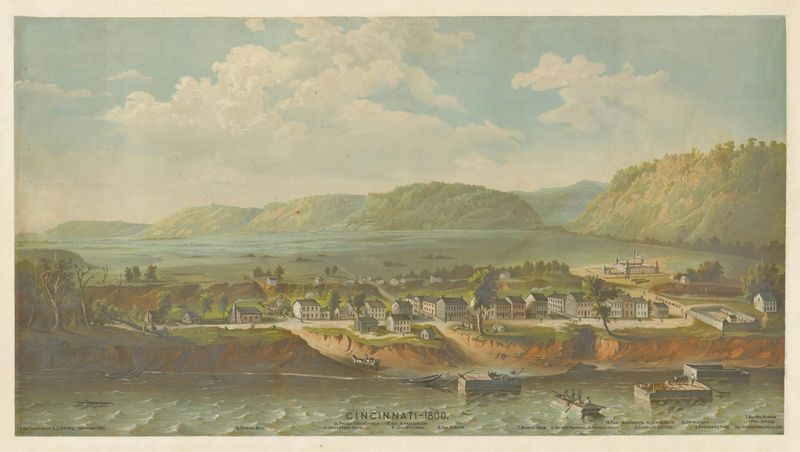
Fort Washington was erected in Cincinnati, from which a garrison of troops, there to protect settlers in the Northwest Territory from Native American raids, launched military expeditions in retaliation.
The first rounds were won by Miami chief Little Turtle and Shawnee chief Blue Jacket, who soundly defeated Generals Josiah Harmar and Arthur St. Clair. Then, Gen. “Mad” Anthony Wayne proved more successful in battles across the Ohio River Valley, culminating in U.S. military victory in 1794.
The subsequent Treaty of Greenville forced the indigenous tribes to give up the Ohio lands.
This was a tale that would replay again over the next century in America – notably the Indian Removal Act in 1830 and the Trail of Tears, when 100,000 Native Americans were displaced and forced to relocate west of the Mississippi River.
Cincinnati was a city of pioneers, patriots and immigrants
Think about the character it would take to pack up and move to the frontier in days before paved roads, railroads or indoor plumbing.
The rustic frontier had drawn the likes of Daniel Boone and Simon Kenton, but those sorts of folks don’t settle in towns. Once the forts were no longer needed, they moved on to the next uncharted region. You find their kindred spirits in the wagon trains to the Old West and the gold mines in California.
Many of the first settlers to Cincinnati were those who fought to win independence.
John Cleves Symmes was a member of the Sussex County militia and a New Jersey delegate to the Continental Congress. Maj. David Ziegler, Cincinnati’s first mayor, served under George Washington at Brandywine and Valley Forge.
Sgt. William Brown, awarded the Badge of Military Merit for bravery at Yorktown, is buried in Memorial Pioneer Cemetery near Lunken Airport. Joshua Wyeth, a participant in the Boston Tea Party, is likely still buried beneath Washington Park.
That was the first wave of migration west.
As the fastest growing city in the west, Cincinnati soon attracted people from all over the world.
Architect Samuel Hannaford was born in England. Archbishop John Baptist Purcell was from County Cork, Ireland. Rabbi Isaac Mayer Wise was born in Bohemia (now Czech Republic).
German-born Martin Baum, who first owned the home that’s now the Taft Museum of Art, started the surge of German immigrants to settle in Cincinnati, which included beer barons, symphony conductors and bootlegger George Remus.
Through the 19th century, the neighborhood known as the Bottoms, closest to the river, had clusters of Irish, German, Italian, Jewish and Black residents, but also Chinese, Japanese and Lebanese.
Less a melting pot than a stew, distinct groups with their own churches and businesses, all simmering in the Downtown basin.
Later there would be more immigrants coming. Including a couple of brothers from Macedonia with a recipe for a Greek meat stew.
America’s racial conflict played out on the shores of the Ohio River
The river was the dividing line between free and slave territory before the Civil War.
On one side of the river, Black people were enslaved, working on tobacco farms while deprived of human dignity. On the other side, free Black men had few rights or opportunities due to Ohio’s discriminatory Black Laws. There was freedom, but Cincinnati – like the nation – was divided.
Black residents were chased out of Cincinnati’s Bucktown in 1829 by a mob of White ruffians. More than 1,200 Black people – half of the Black population living in Cincinnati then – headed to Canada.
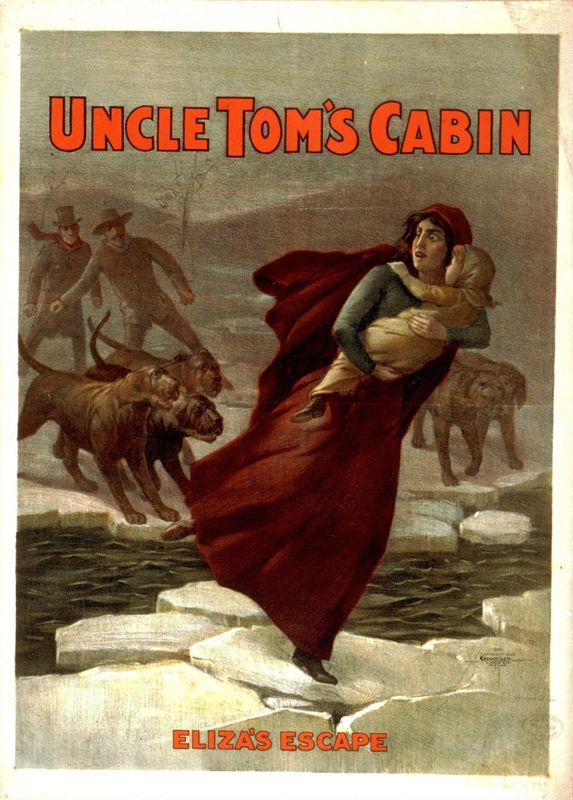
Another riot erupted in 1841, but the Black residents took up arms to fight back. Cincinnati became a hotbed for abolitionists – newspapers, student-led debates at Lane Seminary and the inspiration for “Uncle Tom’s Cabin.”
The Underground Railroad operated secretly to help enslaved people escape to freedom. That was dangerous and illegal, as fugitive slave laws made it legal for hunters to track runaways in free territory and force them back into slavery.
Some of the Underground Railroad conductors were afforded a modicum protection by their staus – John Rankin in Ripley, Ohio, was a Presbyterian minister and Levi Coffin and his wife, Catherine, were peaceful Quakers.
That was not the case for John Parker, a Black man formerly enslaved who built his own iron foundry and risked his life and livelihood by secretly helping enslaved people escape across the river at night.
These racial issues and disparities did not go away with the passing of the 13th Amendment and abolishing slavery. In neither Cincinnati nor in America. Jim Crow, Martin Luther King Jr., George Floyd. They would manifest on the national stage. Here, it was Coney Island segregation, Avondale riots and Timothy Thomas.
Cincinnati showcases the American spirit of enterprise
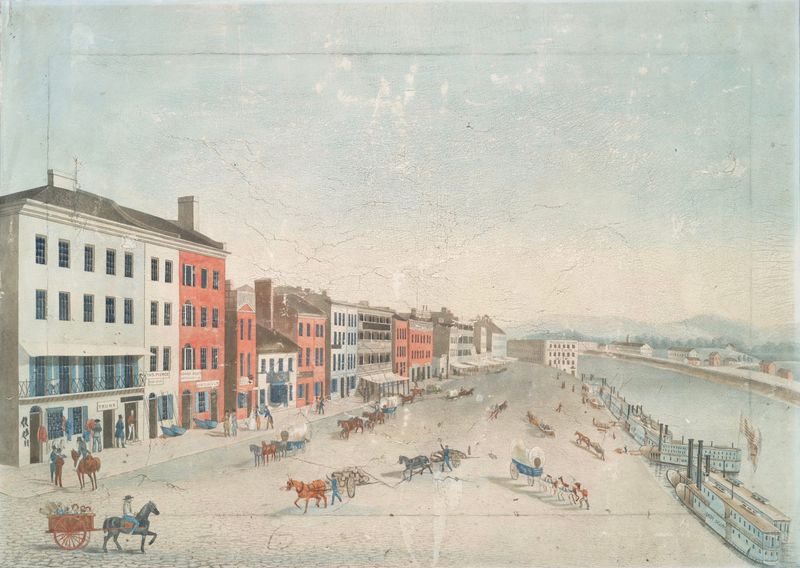
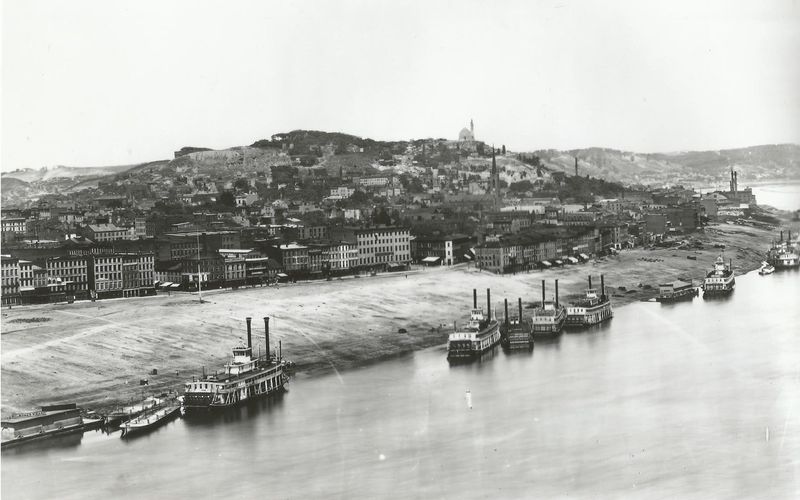
The Queen City, the city’s nickname since at least 1819, was the first boomtown in the young nation. When the steamboat era began in 1811, Cincinnati was primed to become a major shipbuilder. It had the craftsmen and the labor and was the biggest city on the route from Pittsburgh to New Orleans.
They also had something to transport – pork. The city’s meatpacking operation was the largest in the world in the 1830s. While some may have snickered, calling the city “Porkopolis,” that industry supported the city’s greatest period of growth.
Also, Procter & Gamble emerged from those slaughterhouses, making soap and candles out of pig lard. Even as the meatpacking center moved west with the railroads, P&G continued to evolve and thrive, introducing soap that floats, laundry detergent and toothpaste with fluoride.
Cincinnati’s manufacturing produced world-class machine tools, Crosley radios, Formica laminate and Baldwin pianos.
The city has been fertile ground for innovators as well. Granville T. Woods, known as the Black Edison. Nicholas Longworth and the first successful winery in America. Maria Longworth Nichols, the first woman in America to own a manufacturing company, Rookwood Pottery.
The first steam-powered fire engine, the oral polio vaccine, early rock ’n’ roll and Play-Doh.
Not to mention Cincinnati and America’s pastime. The first professional baseball team. The first night game. And the Reds did win the bicentennial World Series in 1976, after all.
Cincinnati grew up with America. As the nation went through growing pains and found its way, so did Cincinnati.
This article originally appeared on Cincinnati Enquirer: How Cincinnati, the first major city post-Revolution, reflects America
Reporting by Jeff Suess, Cincinnati Enquirer / Cincinnati Enquirer
USA TODAY Network via Reuters Connect
By Jeff Suess, Cincinnati Enquirer | USA TODAY Network