EVANSVILLE — Police on Friday disclosed new details about the fatal shooting of a 24-year-old man by an Evansville narcotics detective, saying the plainclothes officer fired eight rounds during a confrontation, which was not recorded by a body camera, that began as a response to a reported overdose.

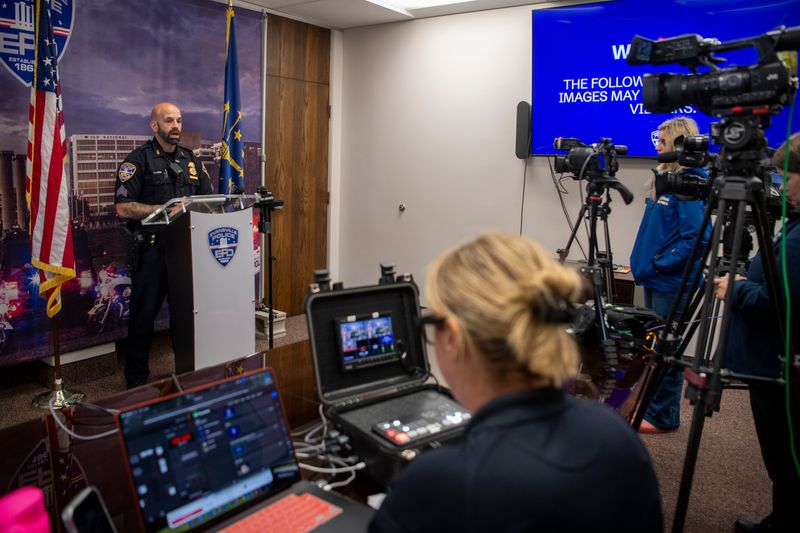
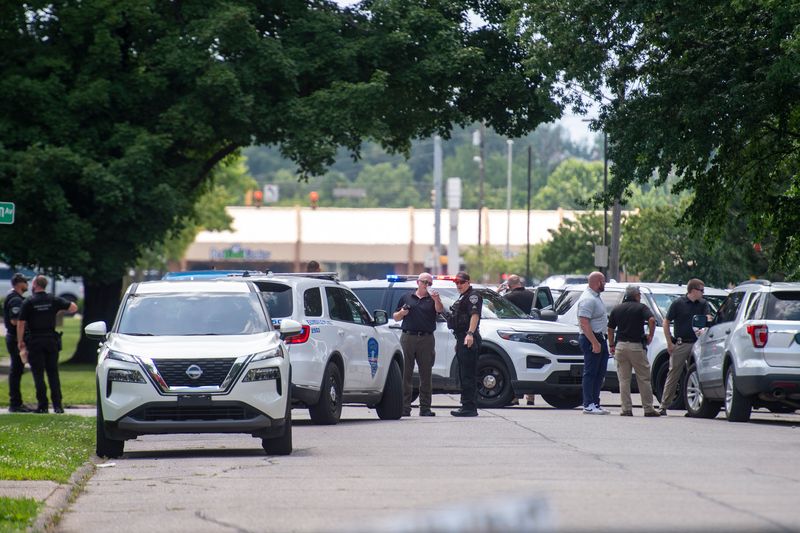
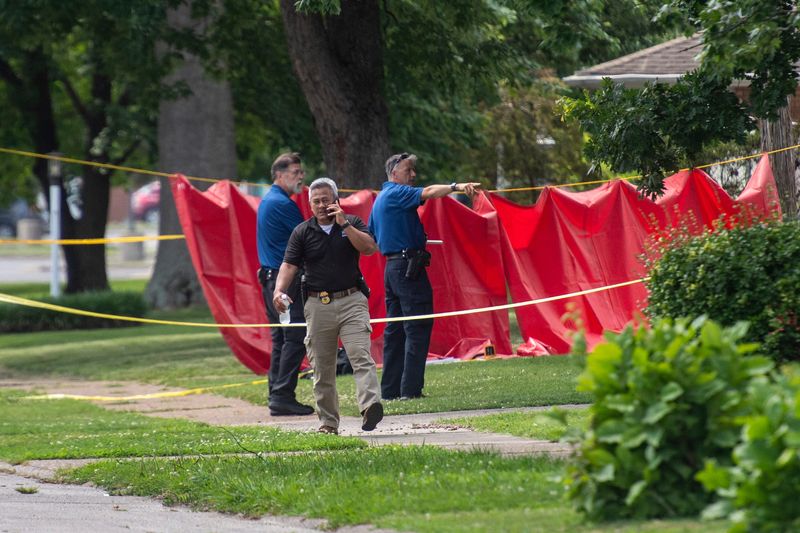
The detective, who has not been publicly identified, shot and killed Caleb Weber Thursday afternoon at a home in the 500 block of Colonial Avenue, Sgt. Anthony Aussieker, an Evansville Police Department spokesman, said at news conference Friday. The account he gave was the department’s most detailed yet, drawn, he said, from the detective’s statements and those of a woman who was at the home and dialed 911 to report the supposed overdose.
What started as a medical call ended in gunfire within about five minutes, according to the timeline Aussieker described.
The woman called 911 just before 1 p.m. Thursday to report that a man was possibly overdosing, Aussieker said. She told dispatchers she had tried to rouse him by running cold water over him. The man was later determined to be Weber.
An on-duty narcotics detective working in plain clothes was nearby, heard the call and drove to the house on his own, without being dispatched, Aussieker said, at 12:54 p.m. Detectives in the narcotics unit are trained to treat overdoses and carry naloxone, a medication that can reverse some overdoses.
Because he was in plain clothes and driving an unmarked car, the detective displayed his department-issued police badge on a lanyard around his neck to identify himself, Aussieker said. The woman who dialed 911 let him inside.
Weber was toward the rear of the home, Aussieker said. As the detective looked around a hallway corner, he saw Weber standing in what the sergeant called a “shooter’s stance,” arms extended, pointing a gun at him. Aussieker could not describe how Weber – who was reported to have been suffering an overdose minutes earlier – had roused himself and drawn a handgun.
The detective hastily retreated to the home’s living room and the woman ran outside, Aussieker said. Weber fired at least one round, and the detective returned fire while backing out the front door and taking cover behind a large tree in the yard, according to his account of the incident.
Weber is alleged to have followed him outside, still holding the gun, and pointed it at both the detective and the woman, Aussieker said. The detective said he ordered Weber repeatedly to drop the weapon, and when he did not, he fired until Weber fell.
In all, the detective fired eight rounds and Weber fired “at least once,” Aussieker said. The detective radioed that shots had been fired at 12:59 p.m., five minutes after the call was dispatched.
During the news conference, Aussieker displayed two crime-scene photographs: one of a chair inside the home with a rod inserted to trace the path of the round investigators say Weber fired at the detective, and one of the blood-stained handgun recovered beside his body in the front yard.
Weber was given emergency medical care at the scene but died. The detective was not hurt. The woman and a child who had been inside the home were not injured, police said.
The shooting was not recorded on a body-worn camera because plainclothes detectives are not required to wear them, Aussieker said — a point he returned to repeatedly, stressing that the detective had inserted himself into a call he was never sent to in order to help a man he thought was suffering an overdose.
“He was not obligated to go to that run, but he went … with the intentions to help,” Aussieker said.
Much about the encounter remains unexplained. Aussieker said investigators do not know why Weber, whom the department believes was overdosing, would have been armed and lying in wait around a hallway corner. An autopsy and toxicology tests could help explain his condition, he said.
Officers recovered a gun near Weber’s body that matches the caliber of a shell casing found inside the home, Aussieker said, though ballistic testing is pending. Several firearms were in the house, all believed to be Weber’s. Aussieker said he did not know the make of the weapon or whether Weber could legally own guns, and he declined to discuss Weber’s criminal history, saying it had no bearing on the shooting.
Investigators obtained a search warrant for the home and were still seeking footage from neighbors’ doorbell cameras, he said. Aussieker would not characterize the relationship between Weber and the woman who called 911, saying only that she and the child were “secure” and that interviews were continuing.
The Evansville Police Department investigates all deadly uses of force by its officers internally — a practice that some community advocates have criticized in recent months, urging the city to assign such reviews to an outside agency.
The detective will remain on leave while that investigation proceeds.
Houston Harwood may be contacted with questions and feedback at houston.harwood@courierpress.com
This article originally appeared on Evansville Courier & Press: How EPD says an overdose call ended in a fatal police shooting
Reporting by Houston Harwood, Evansville Courier & Press / Evansville Courier & Press
USA TODAY Network via Reuters Connect
By Houston Harwood, Evansville Courier & Press | USA TODAY Network