A mistrial was declared Friday in the federal arson trial of Jonathan Rinderknecht, the man accused of sparking the deadly Palisades Fire, after jurors said they were hopelessly deadlocked and unable to reach a unanimous verdict.
U.S. District Judge Anne Hwang ended the trial after bringing jurors into court Friday morning and determining further deliberations would not break the impasse.

Jurors had told the court Thursday they were at a “standstill,” with some members unwilling to change their positions. In a final note, they wrote that no additional instructions or rereading of testimony would help them reach a verdict.
Prosecutors vow to retry Palisades Fire case
Federal prosecutors quickly announced they will retry the case.
“The evidence is strong that Jonathan Rinderknecht is responsible for igniting the fire on January 1, 2025,” First Assistant U.S. Attorney Bill Essayli wrote on X. “We fully intend to retry this case before a new jury and obtain guilty verdicts on all charged counts.”
Rinderknecht, 30, faces three federal arson counts, including destruction of property by fire and arson affecting interstate commerce. If convicted, he could face up to 45 years in prison.
The 10-day trial relied largely on circumstantial evidence, including witness testimony, surveillance video, cellphone data and fire behavior analysis.
How the Palisades Fire started and spread
Prosecutors argued the Palisades Fire was a “holdover” fire — a continuation of the smaller Lachman Fire ignited shortly after midnight on New Year’s Day 2025 near the Skull Rock Trailhead.
Although firefighters initially knocked down that blaze, prosecutors said it continued to smolder underground within dense vegetation.
On Jan. 7, 2025, strong Santa Ana winds caused the hidden fire to resurface and rapidly spread, becoming the Palisades Fire that devastated Pacific Palisades and Malibu.
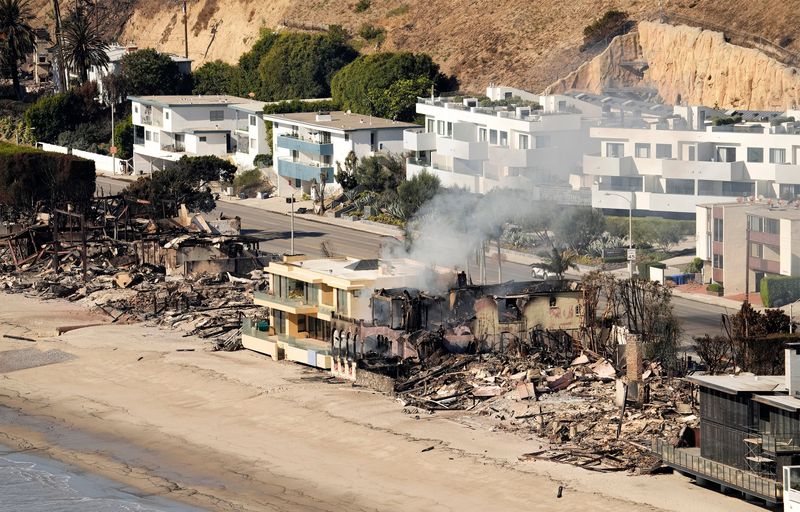
The fire killed 12 people, burned more than 23,000 acres, destroyed roughly 6,800 structures and caused billions in damage and insurance losses.
Defense argued no direct evidence tied suspect to arson
Rinderknecht’s defense centered on the lack of direct proof.
His attorney, Steven Haney, told jurors there was no definitive evidence linking his client to the fire’s ignition and argued the Lachman and Palisades fires were separate घटन.
Haney suggested the first blaze may have been caused by stray New Year’s Eve fireworks and said Rinderknecht’s presence near the scene was coincidental — that he simply reported the fire after calling 911.
“A man’s on trial and nobody knows when the fire started,” Haney argued in closing statements.
He also challenged the strength of geolocation data and images captured near the scene, telling jurors the surveillance “doesn’t show you anything.”
Prosecutors pointed to motive, behavior and timeline
Prosecutors painted a different picture, arguing Rinderknecht deliberately set the fire out of anger and resentment toward wealthy residents in Pacific Palisades.
They said he used a grill lighter to ignite vegetation before midnight on Dec. 31, 2024, then lied to investigators about his location.
Cellphone and geolocation data, prosecutors said, placed Rinderknecht just feet from where the fire first appeared — contradicting his claim he was farther down the trail.
Jurors also heard recordings from a pre-arrest interview in which Rinderknecht criticized wealth disparities and said, “That’s what I disrupted.”
Assistant U.S. Attorney Danbee Kim argued he was “the only one up there” who could have started the blaze.
What happens next after the mistrial
With the jury unable to reach a verdict, the case now resets for a new trial before a different jury.
Prosecutors have already committed to moving forward again, meaning the legal fight over who started one of the region’s most destructive recent wildfires is far from over.
This article originally appeared on Palm Springs Desert Sun: Palisades Fire trial ends in mistrial; jury deadlocked
Reporting by City News Service, Palm Springs Desert Sun / Palm Springs Desert Sun
USA TODAY Network via Reuters Connect
By City News Service, Palm Springs Desert Sun | USA TODAY Network