After Jason Church lost his legs to an IED in Afghanistan, the men who carried him out of harm’s way came home with conditions of their own: tinnitus and sleep apnea.
Now, Congressional Republicans plan to cut disability payments specifically for those two conditions in order to allow veterans like Church to keep full retirement benefits.

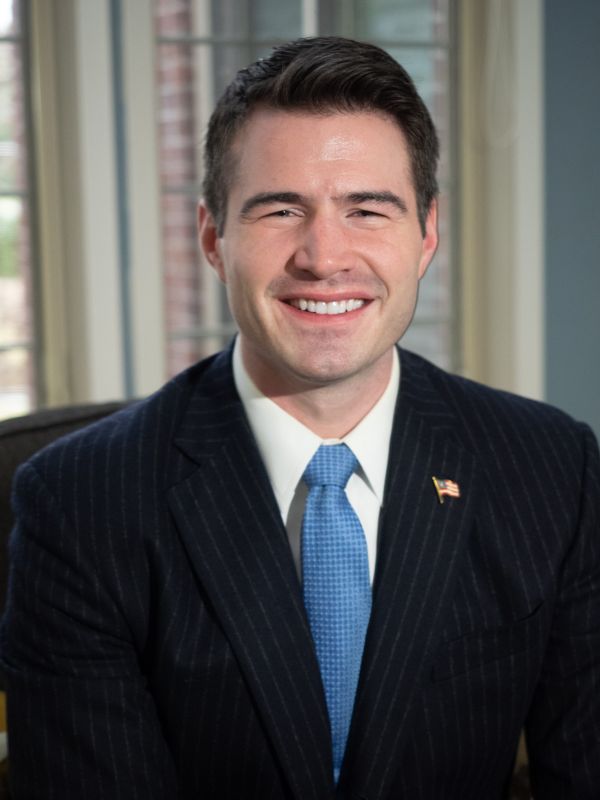
Church, a former Republican candidate for Wisconsin’s 7th congressional district, is having none of it.
“You don’t pay for one veteran by cutting another,” Church said. “This is personal for me because the men who carried me off that battlefield came home with the exact wounds that this bill currently would cut.”
Despite such opposition, the House Rules Committee voted June 23 to advance The Take Care of America’s Veterans Act. If passed, the bill would finally enact the Major Richard Star Act and 62 other veterans benefit bills that veterans groups have long pushed.
Church criticized his former boss Senator Ron Johnson earlier this month for blocking the bipartisan Star Act, which would eliminate a rule that reduces retirement benefits for disabled veterans like Church in proportion to the VA disability benefits they receive. The rule is estimated to affect around 50,000 disabled veterans.
What bothers Church and others now, however, is that the additional benefits would be paid for by cutting VA disability benefits for future veterans with tinnitus and sleep apnea. Veterans who already receive these benefits, like the men who helped rescue Church, would not lose them, the authors of the bill say.
Tinnitus and sleep apnea are particularly prevalent in veterans of the War on Terror, Church said, referring to the wars on Afghanistan and Iraq following 9/11.
“These are conditions that are the direct result of battlefield traumas that are the direct result of what we’ve been doing in the Middle East for over 20 years,” Church said.
Illinois Republican Mike Bost, the chairman of the House Veteran’s Affairs Committee, accused the Democrats of playing politics, rather than finding a way to pay for bipartisan proposals.
“A press release and handshake alone will not end an unfair policy. Only passing paid for legislation does that,” Bost said at the June 23 Rules Committee hearing.
But Mark Takano of California, the ranking Democrat on the Rules Committee, said the bill could actually result in cuts to current veterans’ benefits if they ever apply for adjustments.
“How can we say with a straight face that two veterans with the same exact condition should be treated differently?” Takano said.
Proposal divides veterans’ groups
Earlier this month, nearly every major veteran’s group endorsed the Star Act and criticized Republicans like Johnson for blocking its passage. This time, though, a divide is evident.
The American Legion has endorsed the Take Care of America’s Veterans Act; the VFW has fiercely opposed it.
“The American Legion and the broader veteran community have been frustrated at the lack of action on the Major Richard Star Act despite strong bipartisan, bicameral support,” American Legion national commander Dan K. Wiley said in a statement on June 16. “We believe TCAVA is the best path forward to get these crucial bills enacted into law.”
Wiley acknowledged the trade-offs involved in supporting the legislation, but said that this was the only viable path forward for the bills.
Church maintains that the bill will harm future veterans. By the VA’s estimate, nearly 1.5 million veterans already suffer from tinnitus and sleep apnea, Church said.
Jason Johns, a former Wisconsin VFW commander and the current chair of the VFW’s National Legislative Committee, was at the Rules Committee hearing Tuesday and agrees with Church.
“There’s got to be a way to provide earned benefits without making those who earned them pay for them,” Johns said. “We simply cannot and will not allow veterans in the future to pay the debt for veterans now. It’s not what we do.”
Johns is particularly concerned about the possibility that Congress will start making changes to the benefits schedule for veteran’s disabilities, something that he said has always been done by the VA Secretary with public input.
According to Johns, the VA estimates the change to tinnitus and sleep apnea will save $57 billion over the next 10 years, but the additional benefits in the bill will only cost $21 billion. Johns wants to know where the rest will go.
“We’re worried that Congress will look at it as an ATM machine: ‘Let’s go reduce some more VA benefits, and keep some more money in the Treasury,'” Johns said.
This article originally appeared on Milwaukee Journal Sentinel: Veterans groups all backed new benefits bill. Not anymore. Why?
Reporting by Zachary Suri, Milwaukee Journal Sentinel / Milwaukee Journal Sentinel
USA TODAY Network via Reuters Connect
By Zachary Suri, Milwaukee Journal Sentinel | USA TODAY Network