My property was recently reappraised in the Town of Genesee and reassessed, as were the properties in the City of Milwaukee where I resided for over 40 years before building my home in Genesee.
I’ve been a critic of the fundamental process of using property value as the basis for taxing homeowners for city and school expenditures ever since I owned my first home in Milwaukee.

My understanding is that using property value as basis for determining an individual’s share of total tax collection is not based on use or service rendered, (meaning higher property values do not require more city or school services than lower valued property), but that property value is used to determine, “ability to pay,” or simply stated, the assumption is, “if you can afford a higher value home, you can afford to pay higher taxes.”
Two neighbors, identical properties, different assessments
While at first blush, this might look fair and equitable, let’s take a look at this unrealistic assumption by reviewing a few of many scenarios, that while hypothetical, exist in all communities. Let’s first look at two neighbors, both 37 years old, and 30 years from retirement, and both with an identical 30-year mortgage at the same bank. We’ll call them Tom and Dick, (we’ll discuss Harry later) and they both have an annual income of $60,000, own a home valued at $300,000 and pay $6,000 in property taxes annually.
For the sake of argument, let’s say the homes are brand new and built on lots of identical size and next door to one another in Milwaukee. Bottom line: Two identical properties, two identical earnings and financial situation. Now, let’s assume that Tom feels like his home is his lifetime American Dream to raise his family in, retire in, have his children visit in his retirement, and hopefully pass it on to his children after he’s gone.
So, for the 30-year life of his mortgage, he spends much or most of his disposable income, (which is the same as Dick’s), on maintaining and improving his property, plus investing in landscaping, and maybe an expansion.
Meanwhile, during those same 30 years, neighbor Dick lets his home deteriorate, his lawn has gone to weeds, he does no maintenance unless absolutely necessary like patching a roof leak, no painting, makes no improvements, and no expansion or updates, all the while spending most of his disposable income foolishly.
Now comes the 30th-year tax assessor who values Tom’s now paid-for and beautifully maintained plus improved home at $400,000, or $100,000 more in value than he paid, while at the same time his neighbor Dick’s deteriorated home gets valued at $200,000, or $100,000 less in value than paid. What’s the result?
Our friend Tom, who still has the same job and resources as his neighbor Dick and has improved the overall neighborhood with his efforts in maintaining his property, will get punished with a 100% higher tax on the now $200,000 difference in value, or $8,000 with the same tax rate, while our “grasshopper” Dick, who created an eyesore in the community pulling down local area property values, will get rewarded for his irresponsibility with a much lower tax of $4,000 at the same tax rate. Now, with the benefit rate earned for their Social Security, (based on their identical salaries), who will be more financially able to retire and stay in their home on a fixed income?
Retirees forced to consider selling fruits of lifetime of work
Another case can be made for folks like me, building a dream home with a lifetime of work, looking forward to enjoying it in my retirement as a rallying place for family but now being forced to consider selling the fruits of my labor and downsizing or even leaving Wisconsin because I’m unable to pay the ever-increasing property taxes on my now fixed income.
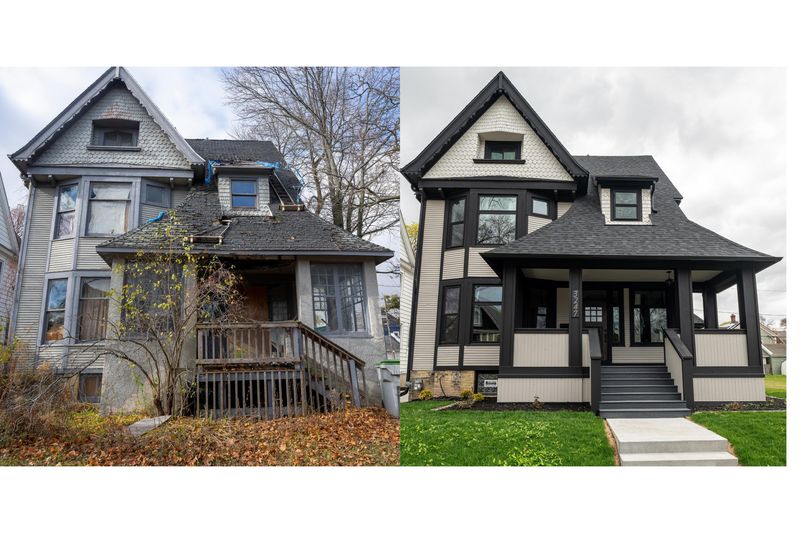
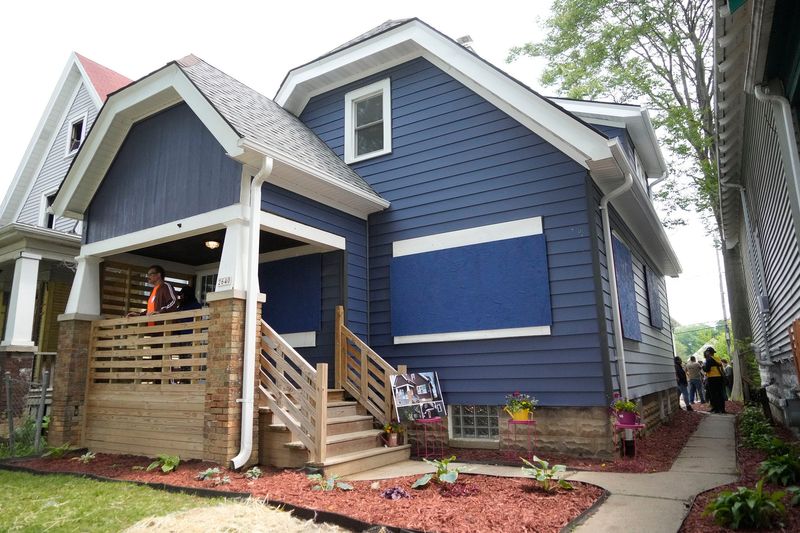
A recent article by April Quevedo highlighted a Metcalf Park area Milwaukee resident, (we’ll call her Harry), who experienced yet another scenario (“City council members question uneven property tax assessments,” May 10.) Through some grants, her neighborhood was recently renovated extensively, a great thing for the neighborhood, but because all the renovated property surrounding her lifted the value of her home, her property tax increased to the point where she may have to sell her home because she cannot afford the significantly increased property tax!
While this mid-life crisis case is a rarity, it is just another example of the egregiously unfair system that forces out countless senior retiring homeowners who now live on a fixed income, as well as many other medium-to-low-income folks who are forced to leave their life time dream home and family gathering place because of property tax increases making their residence unaffordable.
Tax homeowners on their income, not value of property
What’s the solution? There is an obvious, fair and equitable solution for taxing owner occupied residential properties including owner occupied duplexes, (commercial property could continue to be taxed on value), why not simply tax us “regular homeowners” on our income, rather than on our property value?
The federal government does it, the State of Wisconsin does it, why not local communities? One, it would provide an infinitely more fair assessment of our ability to pay, and two, the city could get household income information free from Wisconsin tax forms, eliminating the cost of reappraising and reassessing residential property and handling disputes.
Lastly, not only us old folks on a fixed income, but all folks living in their dream homes at any age or financial circumstance would be fairly taxed on their ability to pay, and be able to afford to stay in their lifetime community, and in the home they worked so hard to buy and maintain, while allowing their children and extended families to gather and visit Mom and Dad at their homestead during their retirement and declining years, realizing the American Dream to the fullest.
Michael O’Toole is a long-retired President & CEO, working for several international corporations that developed, manufactured, and marketing products ranging from high-pressure hydraulic systems and standard components, to aerial manlifts & scissor lifts, over-the-road truck cranes, “bucket-trucks”, “cherry-pickers” and aircraft deicers, all for global markets.
This article originally appeared on Milwaukee Journal Sentinel: Wisconsin’s unfair property taxes should be abolished | Opinion
Reporting by Michael O’Toole, Special to Milwaukee Journal Sentinel / Milwaukee Journal Sentinel
USA TODAY Network via Reuters Connect
By Michael O'Toole, Special to Milwaukee Journal Sentinel | USA TODAY Network