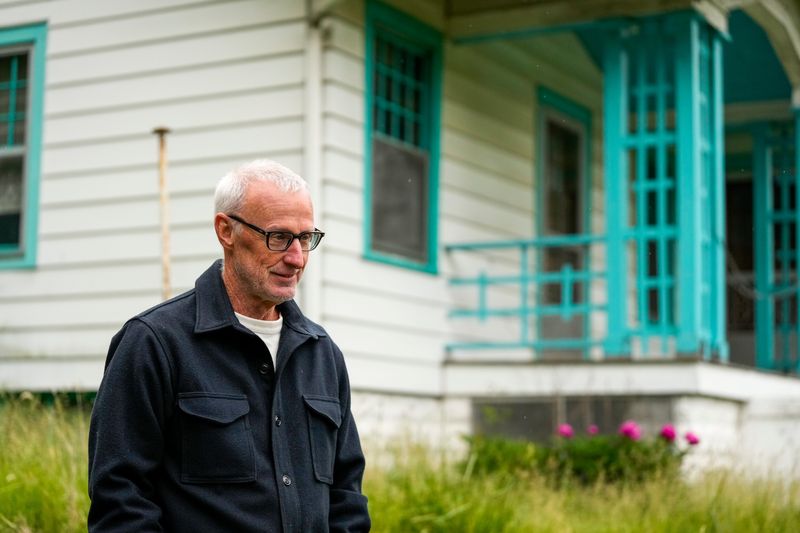
DELHI TOWNSHIP, OH – When Mike Northcutt was a boy, he’d pick pawpaws and sassafras in the woods behind his grandma’s house in this Cincinnati suburb.

When Northcutt’s father, William, took over the Hillside Avenue property in the 1980s, he acquired 14 acres next to his mother-in-law’s original seven.
“He liked the woods. He liked the nature,” his son said.
Now those woods are protected, with Mike Northcutt selling his family’s 21-plus acres to the Western Wildlife Corridor and the nonprofit establishing the William Forest Northcutt Nature Preserve.
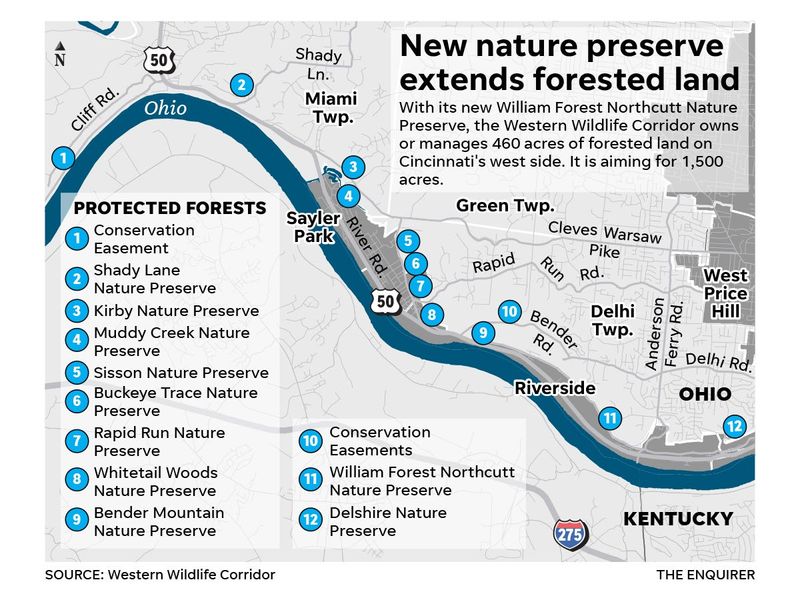
The acquisition also brings the wildlife group another step closer to connecting forested property from Downtown Cincinnati to the Indiana border.
It’s about 30% of the way there now.
Northcutt cut wood, fed turkeys
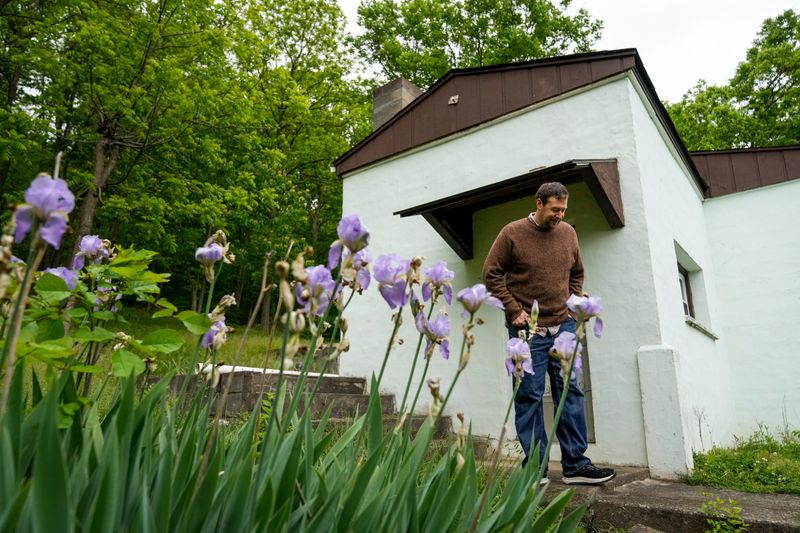
Myrtle Leyendecker, mother-in-law to William and grandmother to Mike, got her water from two cisterns on her land. She cut the lawn with an electric mower. She kept bushes near the road and a garden out back. She rode the bus Downtown to buy groceries. Mike remembers walking beyond the garden to the steps and stone walls supporting a long-gone vineyard.
“We were there every weekend,” said Mike Northcutt, now 62 and a project manager for the city of Rising Sun, Indiana.
William Northcutt, a veteran of the trucking industry, cut a lot of wood during his years on the property, up to his death at 87 in 2024, his son said. “My dad spent his whole day out in the woods,” he said. “No one could out work my dad.”
His dad – called Bill by his wife, Louise, and Forest by his siblings – also spent considerable time feeding black sunflower seeds to wild turkeys.
“Everybody would see him on the porch,” Mike Northcutt said.
When the nature preserve is ready for visitors, the new owner will erect a sign in Northcutt’s honor. It will feature a photo of a wild turkey, taken by Oscar River, a Cold Spring, Kentucky, fine art photographer and Mike Northcutt’s father-in-law.
Nonprofit aims for 1,500 acres of protected forest
Western Wildlife Corridor owns or manages about 460 acres at nine different West Side preserves.
It aims to oversee about 1,500 acres of protected forest, from the Mill Creek in Lower Price Hill to the Great Miami River at the Indiana border. The goal, since its 1992 creation: provide contiguous habitats for plants and animals, and inspire people to spend time in nature.
Nature preserves can also spur business, said Matt Trokan, the group’s executive director for three years.
Like Wasson Way and the Little Miami Scenic Trail, the Western Wildlife Corridor “will become a driver of economic activity,” Trokan said.
His group has already seen that happen with Delhi Township’s Bender Mountain Nature Preserve, where it shares management of the land with Delhi Township. People have moved to the area for its green space, he said.
Green space is important to the community, added Greg Lang, a 25-year active resident of the area and past president of the Riverside Community Council. “It keeps development from coming in and keeps the nature,” he said.
A return to the past
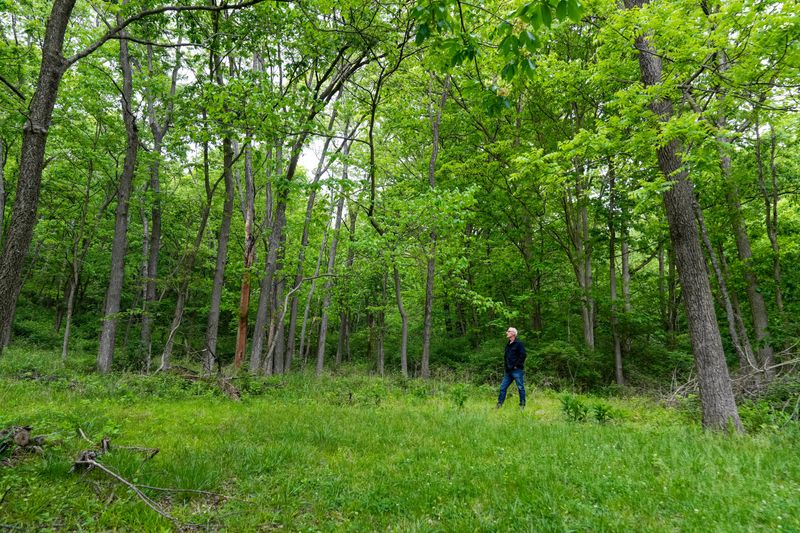
In some ways, the Western Wildlife Corridor aims to restore the forested land to look as it did to the first American settlers. That was before the wooded hillsides along the Ohio River in western Hamilton County were heavily logged in the early 1800s. Old-growth oaks and maples were hauled down to riverside landings where steamboat crews brought them aboard to continue on their river journey.
The nonprofit staff of two, backed by a volunteer crew roughly equal to two more staffers, seeks to restore the forest largely by removing invasive plants. That involves spraying, yanking and hacking out invaders like honeysuckle, garlic mustard and winter creeper that cover the forested hills.
The result: Natural spaces closer to what they once were, with room for paw paws, buckeyes, wildflowers and other native species.
“It’s just amazing how the native plants have come back,” Denis Conover, a botanist and professor of biology at the University of Cincinnati, told The Enquirer in 2015. “I wish I lived closer, I’d be spending a lot of time out there.”
Northcutt site will include trails, programs for kids
Western Wildlife Corridor bought the Northcutt land, with two houses and a garage on it, for $317,500 on April 22. A grant from the Clean Ohio fund of the Ohio Public Works Commission, as well as private donations, covered the cost.
The group will raze the structures to install parking and a rain garden, and bring in volunteers to help clear hiking paths and remove invasive plants.
Trokan is aiming for a late summer opening. “I’m really excited to see what comes back after we cut the honeysuckle,” he said.
Volunteers are invited to take up that and other tasks during “A New Preserve Takes Root” event on June 27.
Jeff Ginter, president of the nonprofit’s board, is excited about under-development programs that will get kids into nature. “They’re the next generation of nature preservationists,” he said.
Northcutt deserves credit for offering the property to a nature preserve, Ginter said. “The most critical thing is having a willing seller,” he said.
Mike Northcutt thinks his dad would approve.
When neighbors got wind of the sale, he said, one sent a text message.
“Congratulations,” it said. “Way to honor your father.”
This article originally appeared on Cincinnati Enquirer: A West Side forest corridor is reborn, bit by bit
Reporting by Patricia Gallagher Newberry, Cincinnati Enquirer / Cincinnati Enquirer
USA TODAY Network via Reuters Connect

By Patricia Gallagher Newberry, Cincinnati Enquirer | USA TODAY Network