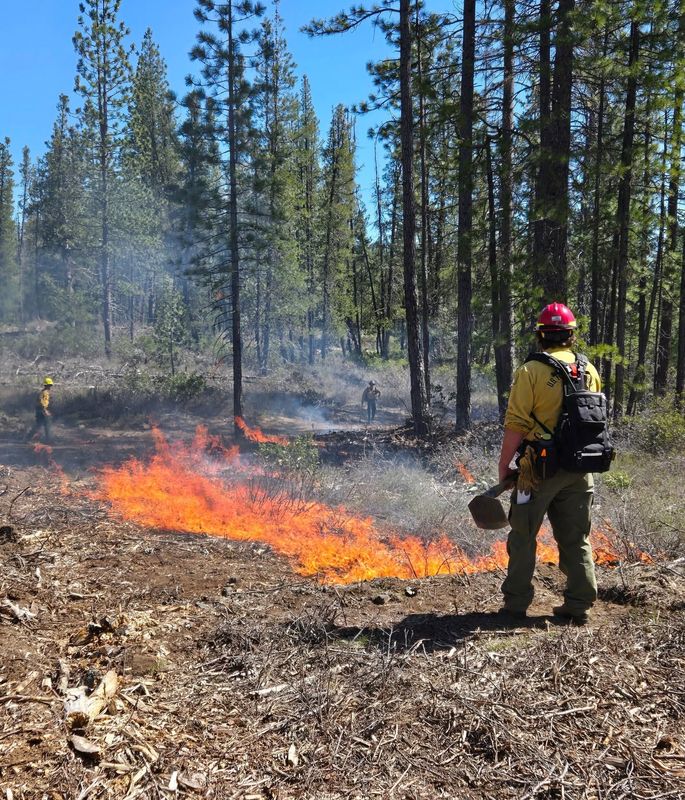
When firefighters conduct controlled burns to clear excess vegetation, they may actually be reducing California’s overall pollution levels, climate scientists said.
That’s because burning in small increments overgrown wilderness areas when winds are calm, and weather conditions are optimal, produces less smoke in the air than if the same areas burned in a severe wildfire.

Controlled burns also succeed at their primary goal: They significantly reduce the chances an area will erupt in wildfire, according to the study, headed by Stanford University and published in Science magazine on June 11.
Crews, like those with the U.S. Forest Service and the California Department of Forestry and Fire Protection, set these small fires during low fire risk days to prevent brush from fueling larger fires. Still, they inevitably create some pollution from smoke and gases.
However, after examining 20 years of satellite data on smoke and wildfire pollution, Iván Higuera-Mendieta and Marshall Burke — both with Stanford’s Department of Earth System Science — found controlled burning reduced the amount of cumulative particulate matter in the air by 10% statewide.
More good news: Controlled prescribed burns are working, at least in conifer forest lands like those in the Sierra Nevadas, Cascades, Klamath Mountains, and along the North Coast.
Burke and Higuera-Mendieta showed that these burns immediately reduced the probability of severe wildfires by 53% in the first year after they were conducted and reduced the risk of very severe wildfires by 92%.
And controlled burns can provide some protection for up to 10 years, they said.
Surrounding unburned areas benefit from controlled burning, too, the study showed.
Territory within 2 kilometers (1.24 miles) of a controlled burn scar saw a 43% reduction in fire risk. Even land as far as 5 kilometers (3.1 miles) away benefits from a controlled burn, according to Higuera-Mendieta and Burke.
What kind of pollution does wildfire create?
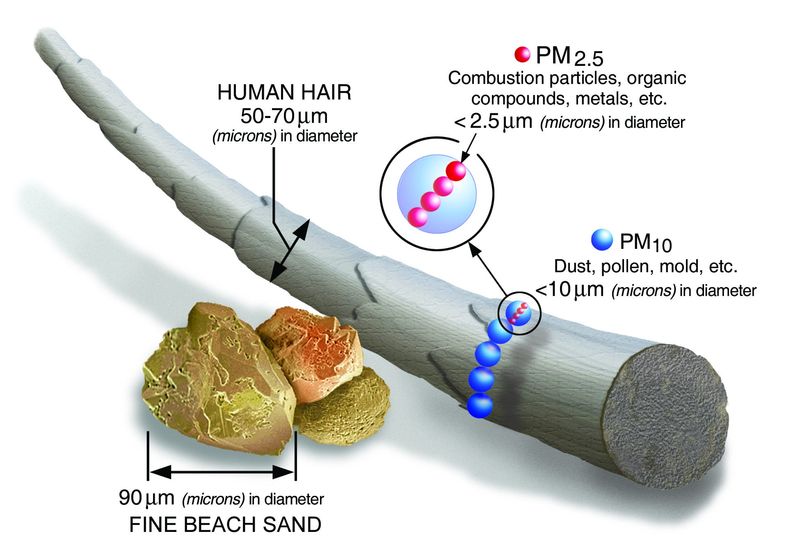
Fires send a mixture of smoke and tiny particles called PM 2.5 — particulate matter — into the air. PM 2.5 contains “microscopic solids or liquid droplets that are so small, they can be inhaled and cause serious health problems,” according to the EPA.
When you smell smoke, you’re actually smelling just the gases, not the particles, medical scientists said. Gases and particulate matter coexist at the site of a fire, but the particles separate when they move higher into the air away from the flames.
Particulate matter doesn’t smell. That is why you can have bad air without smelling smoke.
Air quality scientists measure the amount of particulate matter in the air. When air quality is ranked “unhealthy” or worse, it means there’s enough PM 2.5 or other pollutants in the air to cause health problems for at least some people.
To check current air quality in your area go to the EPA’s AirNow at airnow.gov and air quality survey site Purple Air at purpleair.com.
Jessica Skropanic is a features reporter for the Record Searchlight/USA Today Network. She covers science, arts, social issues and news stories. Follow her on Twitter @RS_JSkropanic and on Facebook.
This article originally appeared on Palm Springs Desert Sun: California researchers say controlled burns reduce long term pollution
Reporting by Jessica Skropanic, USA TODAY NETWORK / Palm Springs Desert Sun
USA TODAY Network via Reuters Connect
By Jessica Skropanic, USA TODAY NETWORK | USA TODAY Network