The National Football League and the Green Bay Packers continue to be concerned about Congress’ interest in the league’s media contracts, believing that efforts to correct perceived problems could create even worse problems.
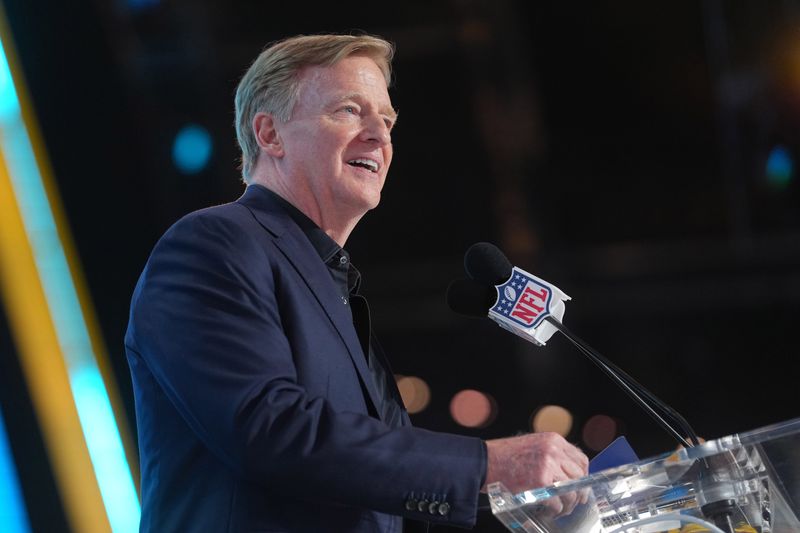
The issue came to the fore again on June 3 when NFL Commissioner Roger Goodell declined an invitation to testify before a House Judiciary Committee hearing on June 10. Goodell cited “ongoing litigation related to the topic of the hearing.” The NFL lost a class action lawsuit regarding its Sunday Ticket package, but a U.S. District judge threw out the jury’s decision for multiple reasons. The plaintiffs are appealing the $4.7 billion decision.

The Sports Broadcasting Act of 1961 allows NFL teams limited anti-trust immunity to collectively negotiate contracts with broadcast television networks, as opposed to requiring every team to do so individually. The NFL, in turn, shares revenue from those contracts equally with all 32 NFL teams. That and the salary cap allows Green Bay, the smallest market in the NFL, to compete on equal footing with its larger-market opponents.
The NFL distributed $432.8 million to each team during the 2024-25 fiscal year, most of that from TV and streaming deals. That exceeded the Packers’ player and team costs by $38 million.
“If SBA did not exist, each team would need to pursue their own media deals. It would cause economic disparity among the clubs. That would make it a challenge to share the revenue,” said Jeff Miller, executive vice president of the NFL and a Wisconsin native. “It would pose an existential threat to the Packers.”
In other words, it could mean the end of the Packers franchise.
The Department of Justice and the Federal Communications Commission are asking questions because the NFL assigned some games to streaming services such as Amazon and Netflix. Critics contend that forces football fans to subscribe to multiple services to see games. Games are available on local broadcasts in the home markets of teams, regardless of where else they are shown. In Wisconsin, that means the Packers can be seen on local stations in Green Bay and Milwaukee, even if they are on Amazon, for example, but not around the rest of the state or even the world without an Amazon subscription.
The NFL says if Congress upends revenue sharing, either intentionally or as an unintended consequence, it would have a devastating impact on small-market teams.
“I’m not sure there is a better example of an antitrust exemption that has worked for [NFL teams] and consumers,” Miller said.
U.S. Rep. Scott Fitzgerald, a Wisconsin Republican who is chairman of the Regulatory Reform and Antitrust Subcommittee of the House Judiciary Committee, which includes Wisconsin Republicans Tom Tiffany and Glenn Grothman, said in an emailed statement on June 5 that the intent of Congress is not to imperil revenue sharing in the NFL.
“This hearing will examine the extent to which the Sports Broadcasting Act of 1961 should be updated in light of the rise of streaming services and paywalled content. Modernizing the Sports Broadcasting Act would not affect existing revenue-sharing models across professional sports leagues, including the NFL,” Fitzgerald said.
Fitzgerald said in April he was committed to ensuring Wisconsin sports fans have access to their teams’ games without having to pay for multiple cable and streaming packages.
The SBA does not cover media other than broadcast networks, although the NFL proceeds as if it does.
Eighth District Rep. Tony Wied of De Pere, a Republican, co-authored a letter to Judiciary Committee Chairman Jim Jordan of Ohio defending the SBA. A bipartisan group of 20 other representatives signed the letter, including Derrick Van Orden, a Republican representing Wisconsin’s third district.
“This robust revenue sharing … means that fans in Green Bay, Buffalo, and Kansas City can watch their teams compete on an equal playing field with those in Chicago, New York, and Los Angeles due to this law,” the letter said. “We are concerned that proposed changes or repeal of the SBA would create unnecessary uncertainty and confusion for NFL fans and consumers.”
The Packers remain anxious about what might come of the SBA because they say revenue-sharing means life or death for the franchise. They warn against “playing with matches near a fuse – which if lit – could blow up the foundation upon which decades of success have been built and generations of Wisconsinites have cherished.”
“The Packers are a critical economic, cultural and social driver for the entire state of Wisconsin,” said Packers President and CEO Ed Policy. “The Sports Broadcasting Act for 65 years has provided the foundation that allows the Packers to survive and thrive in the smallest media market in professional sports.”
Miller said 10 of the Packers’ 16 scheduled game (not counting week 18, which is not decided until later) are in national windows, which he defines as games at 3:25 p.m. or later. Of those, two are on Amazon Prime and one on Netflix.
“We take any request from Congress or any congressional committee seriously,” Miller said. “I don’t know if we understand fully what problem they are trying to solve. We will continue to engage with congress and talk about our media strategies with anyone who wants to talk.”
Miller said a younger generation of fans is developing different viewing habits than their elders and the NFL must adapt. He said the league needs to reach fans where the fans are.
As noted, the media deals are huge money for the NFL. The NFL accounted for 89 of the 100 most-watched games on broadcast television during the season in 2025, which gives the league a great deal of leverage when dealing with broadcast partners, some of which, notably Fox, are pushing back at the rising cost of those deals.
The NFL contends that 87% of its games are available to fans on free TV, although Pro Football Talk’s Mike Florio questions that statistic, pointing out that fans can’t see all the games that way. Richard Greenfield, a Wall Street media and technology analyst who studies how the league’s broadcasting and streaming strategies affect various media providers, contends watching all the games is less expensive than critics claim and streaming deals are a reason for that.
Also tied into the SBA discussion is an effort to give colleges and universities limited anti-trust exemption to allow them to collectively negotiate media deals.
Contact Richard Ryman at rryman@usatodayco.com. Follow him on X at @RichRymanPG and on Instagram at @rrymanPG.
This article originally appeared on Green Bay Press-Gazette: Will Congress change NFL broadcast rules and hurt the Packers?
Reporting by Richard Ryman, Green Bay Press-Gazette / Green Bay Press-Gazette
USA TODAY Network via Reuters Connect
By Richard Ryman, Green Bay Press-Gazette | USA TODAY Network