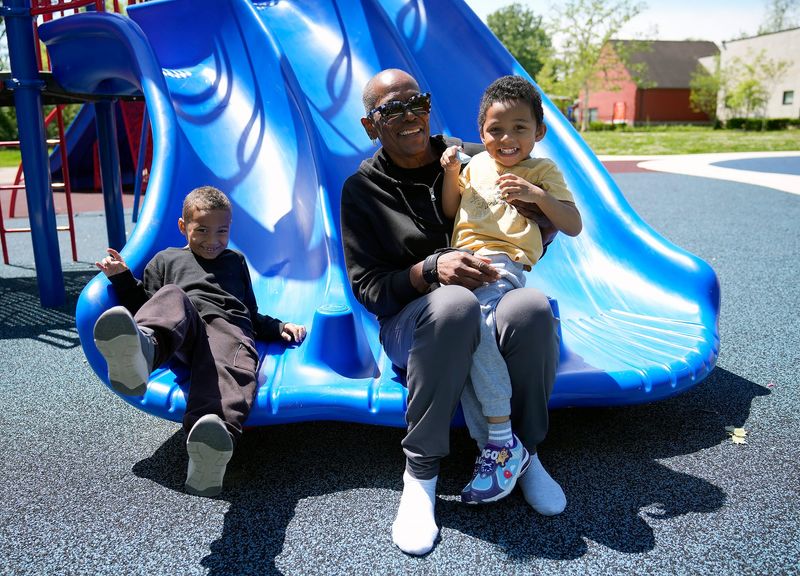
Charlene Porter was well into her 60s before anyone called her “mom.”
Now, two little boys ages two and four use the word to refer to her frequently.

“Sometimes I look at them and think: ‘they’re really mine. I don’t have to give them back,'” Porter said of her children, Marvon, 4, and Maurking, 2.
Porter, 70, isn’t related by blood to the boys but she has raised them since days after their birth and has legal custody of them through a kinship placement via Franklin County Children Services.
Earlier this year, the three became unhoused due to rising expenses of caring for the children and some benefits payments that didn’t come through as expected.
She’s never been homeless before.
“I got the baby and I got behind,” she said. “I couldn’t keep up with kid stuff and rent.”
Despite the hard times and the trio’s residency at the YWCA Family Center shelter for the past two months, Porter wouldn’t give her children up for anything. As much as she’s helped them, they’ve helped her not go crazy through being homeless. And, they’re sources of constant joy.
Children like Marvon and Maurking – both of whom have developmental disabilities due in part due to their mother’s substance use while pregnant with them – can be difficult to place with families, said Jackie Smigel, executive director at Open Arms Adoptions, a licensed non-profit adoption agency with offices in Columbus, Delaware and Kent.
About 9,411 children exited the foster care system in Ohio in 2024, including about 4,000 children with disabilities, according to the U.S. Department of Health and Human Services. That year, there were over 15,000 kids total in foster care in the state.
About 27% of children in the children services system had developmental disabilities in Ohio in 2023, according to a 2025 Ohio Department of Children and Youth report.
But, Smigel’s found that most of the children who come into the child protective services system to be placed have some type of disability secondary to trauma they experienced previously, she said.
Finding caregivers gets more complicated when children have special needs
The challenge for agencies like Open Arms is finding people interested in fostering or adopting and helping them discern whether or not they can care for children with disabilities, Smigel said.
There is a need for foster parents statewide, and the prospect of caring for a child with more needs might intimidate those wanting to help.
“These are our kids. They are our children, they are our neighbors’ children,” she said. “It is really our responsibility to take care of them.”
For Porter, it wasn’t a choice.
“They didn’t have anywhere else to go,” she said of the children.
Marvon was born June 14, 2021, and children services brought him to her at the suggestion of his father’s mother, who knew her from church.
Porter has taken care of children for years. She came to Columbus as a teenager from a farm she and her 14 siblings grew up on in Mays Lick, Kentucky, to help care for her sister’s children.
But, Marvon and Maurking are the first children she hasn’t had to give back to someone else to raise.
As for their disabilities, Porter said: “to me, they’re just like normal kids. All kids are battling, to a certain extent.”
Still, caring for children with disabilities is a big commitment not everyone is equipped for, Smigel said.
“Reaching those people that can do it, that have a heart for that is really challenging,” she said. “Our work with kids from foster care who need to be adopted is reaching people who feel called to do that. It is very challenging. And there are far more kids available than families.”
Though, she does meet people who do have a heart for caring for children like Marvon and Maurking, Smigel said.
Parents need more support
For those parents, Smigel believes there needs to be more support, which is, in part, what Open Arms offers families it works with.
“We cannot leave people on an island who are willing to step up and take care of kids,” Smigel said.
From the first time he met her, Micah Dupler has thought Porter has stood out. He noticed her bond with the boys, assuming she was their grandmother when she entered the shelter with them and met with the YWCA family advocate.
When he learned that Porter isn’t a blood relative of Marvon and Maurking, he was a bit taken aback – and impressed.
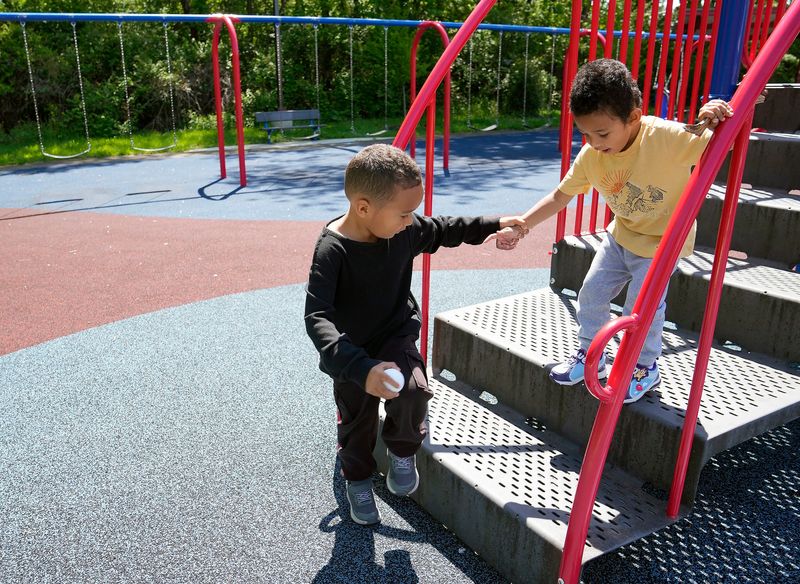
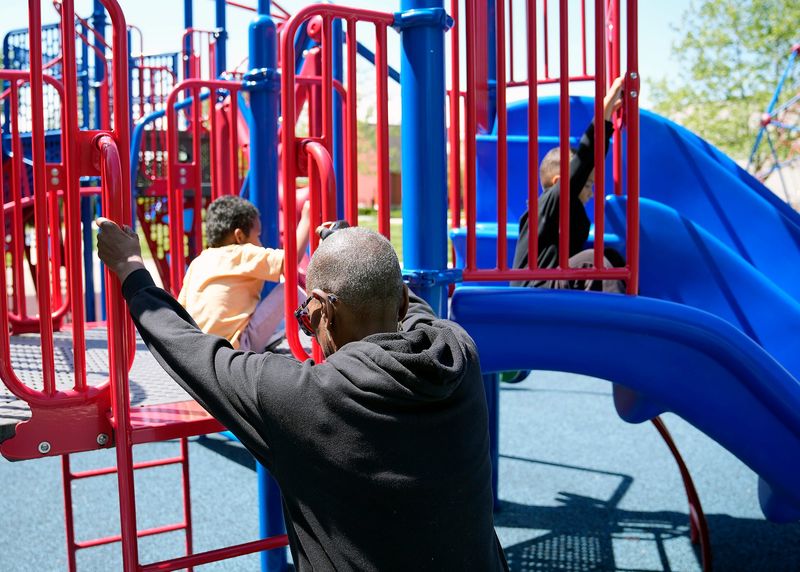
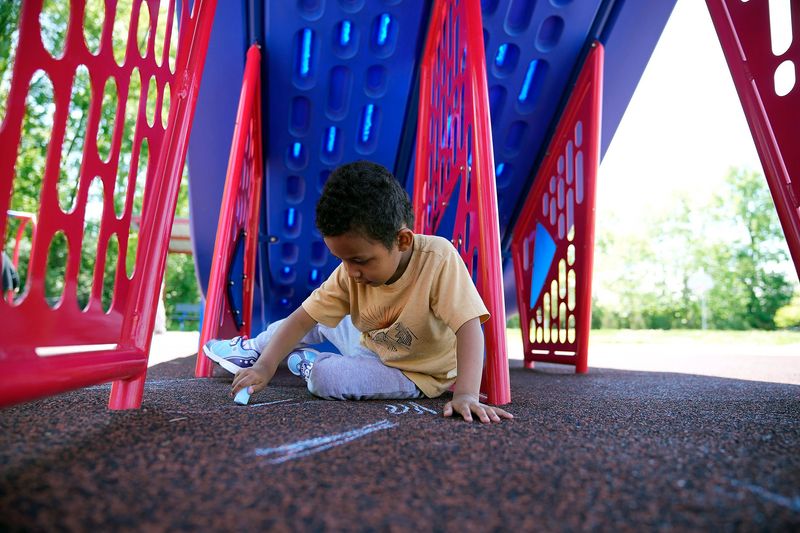
He’s watched her take both the boys to speech therapy, school and other activites every day. On a recent sunny day, she played with them on the nearby playground, lifting Maurking up over her head as he giggled with glee.
“To dedicate that much time just to making sure they had someone, that’s what stands out to me,” he said. “I can’t really even wrap my mind around what it’s like to take custody of two boys in that condition and begin struggling.”
Porter has been looking for apartments for her and the boys and making sure they still get to school while staying at the shelter.
Once they find a home, she said she’s focused on living long enough to be able to watch the boys walk away from her – into their own lives.
Underserved Communities Reporter Danae King can be reached at dking@dispatch.com or on X at @DanaeKing.
This article originally appeared on The Columbus Dispatch: After taking in two children, 70-year-old woman becomes homeless
Reporting by Danae King, Columbus Dispatch / The Columbus Dispatch
USA TODAY Network via Reuters Connect