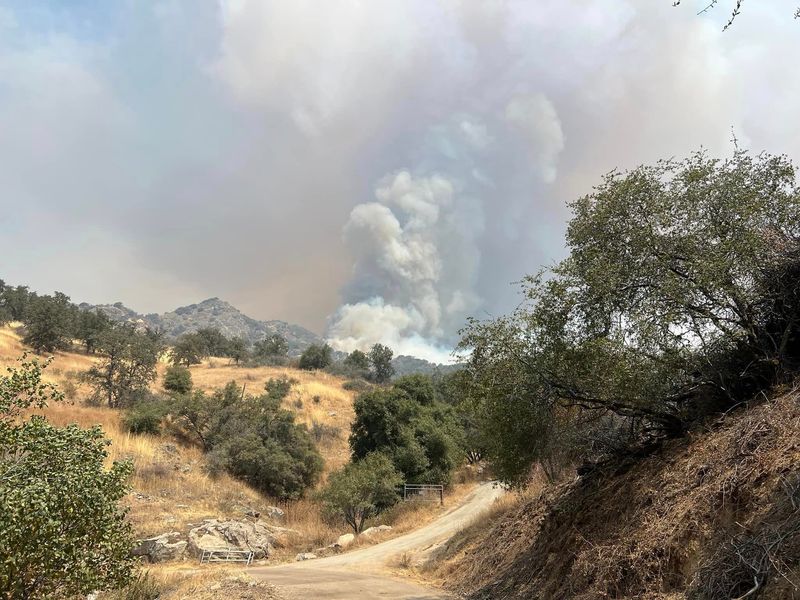
California’s wildfire season is starting early, with above‑normal fire activity and red flag warnings already showing up across parts of the state in May.
A red flag warning is issued when warm temperatures, very low humidity, and strong winds are expected, increasing the risk of fire. A red flag warning does not mean a wildfire is burning, but it signals that conditions are dangerous enough that a fire could start easily and spread quickly. During these periods, even a small spark can ignite dry vegetation and become a fast‑moving wildfire.

Fire danger is increasing earlier than usual this year due to warm, dry weather and early fuel drying, according to fire officials and national outlooks. Those conditions are expected to expand wildfire risk across California heading into summer, especially during wind events that can quickly push flames across dry grass and brush.
The National Weather Service issued its first red flag warning in mid-May for Kern, Tulare, Fresno, and Merced counties.
Meanwhile, Cal Fire, the California Department of Forestry and Fire Protection, maintains a wildfire threat and intelligence integration center, known as WFTIIC, that continuously monitors NWS alerts, current fuel model conditions, and conditions in various regions of the state.
As NWS and Cal Fire prepare for the next red flag warning, there are things people can do to minimize fire risk in their neighborhoods and wherever they travel.
How to prepare before a red flag warning
Fire officials say preparation should begin well before any warning is issued.
“Preparation starts long before there’s any sort of wind or fire threat,” said David Acuña, a Cal Fire battalion chief and public information officer.
Cal Fire recommends taking these steps now:
More preparation tips are available at https://www.readyforwildfire.org.
“All those things are steps people can take long before … so that if there does happen to be an evacuation, they can move quickly and safely,” Acuña said.
What not to do during a red flag warning
Fire officials urge people to avoid activities that could spark a fire during red flag conditions.
That includes:
“We generally say mow before 10 a.m., but during a red flag warning, we say don’t mow at all,” Acuña said.
Low humidity and strong winds can allow a fire to spread as if it were the hottest part of the day, even in the morning hours.
Small sparks that can start big fires
Some of the most common wildfire starts come from everyday activities, officials said.
To reduce risk:
Even a single spark can quickly grow into a dangerous fire under red flag conditions, Acuña said.
Where to track fires evacuation orders and road closures in California
The Cal Fire website posts information about current fires in the state.
Officials say it’s a reliable one‑stop source for real‑time wildfire information.
“We track all fires over 10 acres in the state of California, so people can see where the fires are and if there’s one near them,” Acuña said.
You can find updates at Cal Fire incidents map and monitor local alerts as conditions change.
This article originally appeared on Palm Springs Desert Sun: Early red flag warnings signal higher wildfire risk across California
Reporting by Steve Pastis, USA TODAY NETWORK / Palm Springs Desert Sun
USA TODAY Network via Reuters Connect