Mention hurricane and images of devastation usually fill our minds.
Too often, that is the case, not only for people, but for wildlife.

But University of Florida researchers have found there are a few good things about hurricanes and wildlife and it’s not just limited to the “hurricane toad.”
➤ Weather alerts via text: Sign up to get updates about current storms and weather events by location
So as we wait for the start of 2026 Atlantic hurricane season on June 1, let’s see what the UF study published in Biological Reviews revealed.
When does hurricane season start?
The Atlantic hurricane season runs from June 1 through Nov. 30.
Ninety-seven percent of tropical cyclone activity occurs during this time period, NOAA said.
➤ Hurricane Center testing new cone: What’s changing this season?
The Atlantic basin includes the northern Atlantic Ocean, Caribbean Sea and Gulf of America, as the Gulf of Mexico is now known in the U.S. per an order from President Trump. NOAA and the National Hurricane Center are now using Gulf of America on its maps and in its advisories.
Countdown to start of 2026 Atlantic hurricane season
Hurricanes and wildlife: ‘The good, the bad and the ugly’
“Hurricanes can be a devastating force — leveling trees, erasing beaches and damaging homes. But what do they do to wildlife? The answer ranges from the good to the bad to the ugly.
“Hurricanes sometimes help native species, but other times, they introduce and spread invasive species,” according to the UF study.
“Sometimes, they cause animals to evolve to survive these storms more easily, and sometimes they lead to mass migration or extinction.”
A University of Florida study published in Biological Reviews reviewed over 300 scholarly articles and looked for trends that showed how animals reacted and adapted to tropical cyclones.”
“Overall, researchers found a few themes: Animals around the globe moved differently in response to hurricanes due to instinct or by impact from the storm itself, they hid in or fled to unexpected places, some were killed by the hundreds and some thrived and multiplied — despite all odds, said Hance Ellington, senior author and assistant professor in the UF Institute of Food and Agricultural Sciences Department of Wildlife Ecology and Conservation.
Tropical cyclones also spread invasive species into new regions, adding a new survival challenge for native species.
““The big picture is that tropical cyclones impact wildlife, directly or indirectly in a variety of ways, whether via survival, impacting reproduction or by other means,” Ellington said.
“While it’s not the norm, a really fascinating realization from this review is that some wildlife can actually benefit from hurricanes.”
How can hurricanes benefit wildlife?
Hurricanes can actually help some wildlife, the UF study said:
“Some effects are indirectly helpful, like shedding of high canopy vegetation from strong hurricane-force winds. Key deer in the Florida Keys had more fawns after Hurricane Georges in 1998, presumably because the lush, new growth of vegetation provided a new food source,” according to the study.
Hurricanes can send some wildlife teeter on edge of extinction
“Some species have teetered on the edge of extinction due to tropical cyclones, such as the Cozumel thrasher and the Miami blue butterfly.
“Indirect forces can also cause animals to die, such as saltwater flooding into American alligators’ freshwater habitats or queen conches being buried by sand or rubble,” according to the study.
Tropical cyclones can bring invasive species
Storms can also spread invasive species, the study said, pointing to Hurricane Andrew in 1992, which reportedly released pythons from a South Florida facility, “though this likely worsened rather than caused the now-established Burmese python invasion.
“Another case is the spread of the non-native lionfish from Florida — where it was already causing problems — to the Bahamas and the introduction of non-native green iguanas onto tropical islands by hitching rides on floating rafts of storm debris.”
Can sharks really detect hurricanes?
“When looking at how animals avoided hurricanes, they found that sharks may have an innate sense of an oncoming tropical cyclone by detecting a drop in barometric pressure.
➤ NOAA scientists are tagging sharks making them mega hurricane hunters
“Juvenile blacktip sharks evacuated a nursery bay for deeper waters, even though they’d never had experience with a storm before,” according to the study.
Hurricanes can blow birds far from normal habitats
“Some animals, like birds, aren’t lucky enough to avoid a hurricane but instead get caught in its path mid-flight.
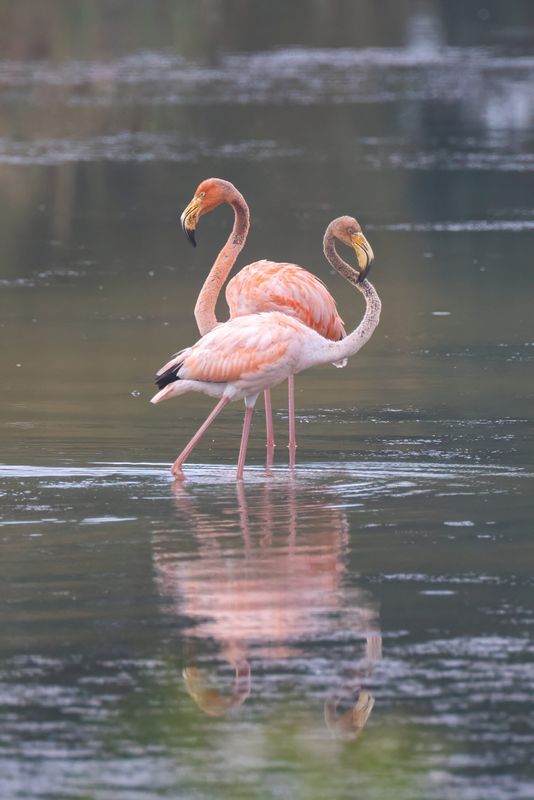
“In 2023, Hurricane Idalia blew flocks of American flamingos from the Yucatan in Mexico across at least 13 U.S. states, as far north as Wisconsin and Ohio.”
Flying into the eye of a hurricane … to stay safe
“Some animals hide — sometimes in unlikely safe havens,” UF researchers reported.
“Atlantic yellow-nosed albatrosses and wandering albatrosses, for example, have been recorded flying into the eye of a tropical cyclone, where the wind speed is lower.”
Tactics used by wildlife in face of tropical cyclones
Researchers found three behaviors wildlife used when a tropical cyclone is approaching:
Cheryl McCloud is a journalist for the USA TODAY Network-Florida’s service journalism Connect team. You can get all of Florida’s best content directly in your inbox each weekday day by signing up for the free newsletter, Florida TODAY, at https://palmbeachpost.com/newsletters.
This article originally appeared on Palm Beach Post: What happens to wildlife during hurricane? How animals react
Reporting by Cheryl McCloud, USA TODAY NETWORK – Florida / Palm Beach Post
USA TODAY Network via Reuters Connect