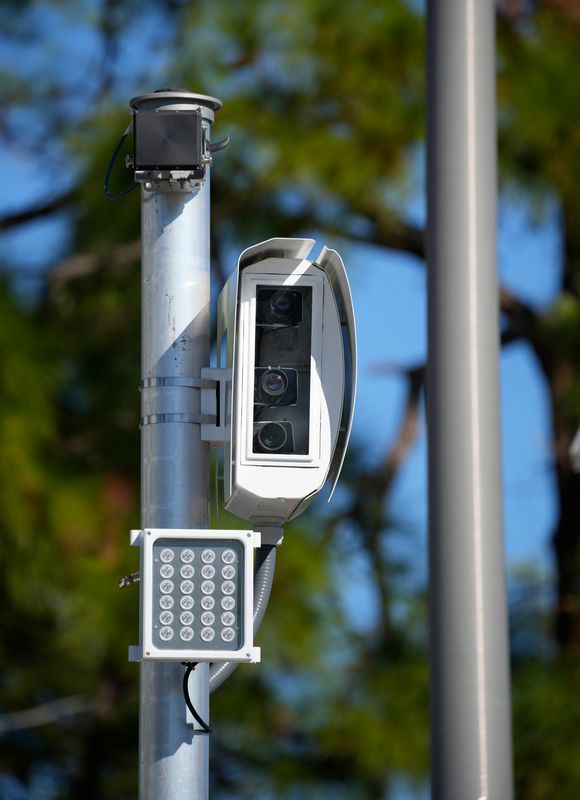
Florida residents are under the watchful eye of law enforcement now more than ever as the number of license plate readers grows and the use of speed enforcement cameras in school zones expands.
Critics of these mass surveillance technologies that are becoming the norm in cities across America say the country’s at a pivotal point in history, and the cameras might have more repercussions than meet the eye.

The increased surveillance is drawing greater public concern and raising questions for some: Is it really about enhancing safety or maximizing revenue? And do the policing gains outweigh the loss of privacy?
Tallahassee’s rapid expansion of license plate readers and speed cameras reflects a nationwide shift toward these automated policing tools — and a growing debate over their impact on safety, privacy and public trust.
“When you create those kinds of infrastructures, they always and inevitably end up getting used for all kinds of new purposes that weren’t the (original) justification. They end up getting abused,” said Jay Stanley, a senior policy analyst with the ACLU Speech, Privacy, and Technology Project.
In a push to improve public safety, many cities have turned to cameras to catch speeders and solve crimes faster, but reported cases of misuse — like South Florida law enforcement using license plate readers to track down protesters and Texas law enforcement using them to find a woman who allegedly had an abortion — have led to major pushback.
Last year, Tallahassee, like other Florida cities, saw a surge in the number of cameras and license plate readers that were dispersed throughout the community.
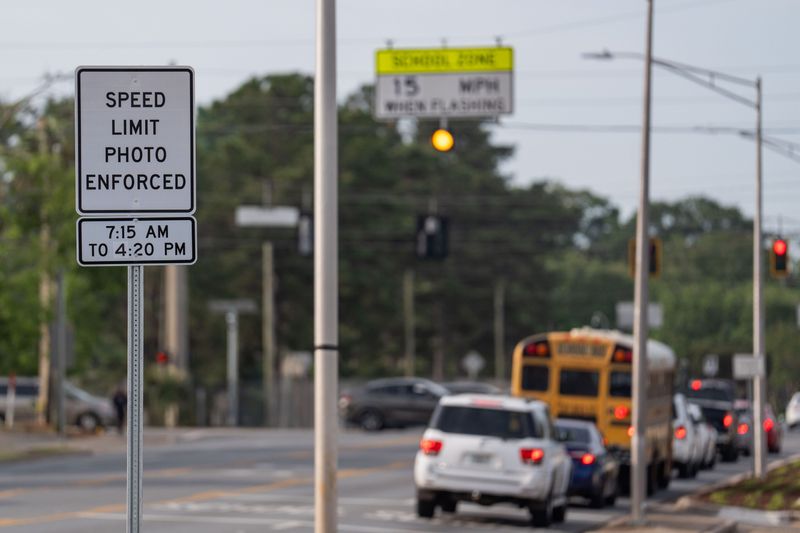
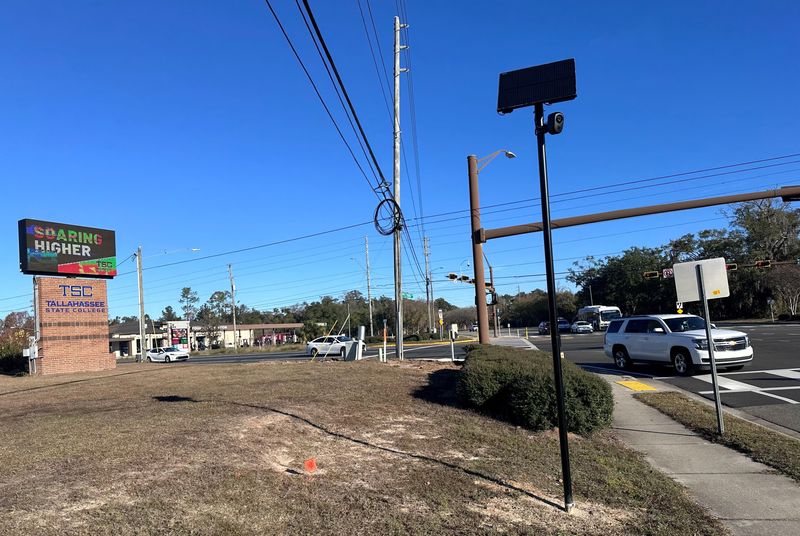
Since last March, the Tallahassee Police Department rolled out at least 33 speed enforcement cameras in various school zones from RedSpeed USA and 30 license plate readers from Flock Safety. And Leon County also is working on getting its own set of speed enforcement cameras for its school zones.
“It’s kind of like a slippery slope, like how far are we going to go with this?” said Ted Hollander, a traffic ticket attorney with The Ticket Clinic. “It drags people into the justice system that, really, otherwise wouldn’t be there.”
School zone cameras just a ‘money grab,’ critic says
A Tallahassee traffic study in different school zones clocked thousands of speeding violations within a single day, prompting city officials to OK the rollout of what’s now become TPD’s School Zone Speed Enforcement Program.
TPD Chief Lawrence Revell previously told the Tallahassee Democrat that “the safety of our kids is paramount,” and he doubled down on this in a recently prepared statement, affirming it’s always been about protecting children and changing driving patterns.
“At the end of the day, you just can’t put a price on the life of a child,” he said.
Other supporters of the cameras also argue that speed studies show the dire need for change in driving behavior and the cameras are a great way to achieve this. According to the Insurance Institute for Highway Safety, a nonprofit scientific organization dedicated to reducing traffic deaths and accidents, studies have shown the cameras are very successful in reducing speed and crashes.
A study in New York City found that the number of speeding tickets declined by 75% after roughly 2.5 years of the cameras being active in school zones compared with the first month after the cameras were installed, according to the organization. Crashes also decreased by 14% during the hours that the cameras were on.
“Programs should be geared toward increasing safety, not revenue,” the Insurance Institute for Highway Safety said. “In fact, communities should expect revenue to decline as fewer drivers violate the law.”
But Hollander maintains these cameras are really just a “money grab … disguised as a safety program.”
The Ticket Clinic represents drivers across the state who want to fight various traffic violations, and in recent years, the law firm has been more frequently squaring off against school zone camera violations.
“Some municipalities are doing the right thing and not putting these in, but I think many cities see the dollar sign,” Hollander said.
News outlets across the state have reported millions of tickets being issued via speeding cameras in school zones. In Tallahassee alone, 50,000 notices of violation have been issued since the inception of the camera program last March to May 15.
At $100 a ticket, that means the cameras have the potential to bring in $5 million with the City of Tallahassee’s share equating to nearly $2 million of that.
“I heard these commissioners say, ‘Well, this is about protecting the kids,’ ” Hollander said. “Really? Are you protecting the kids at 1 p.m. when they’re in class? … Why are the cameras still operating when the kids aren’t walking around if it’s really about safety?”
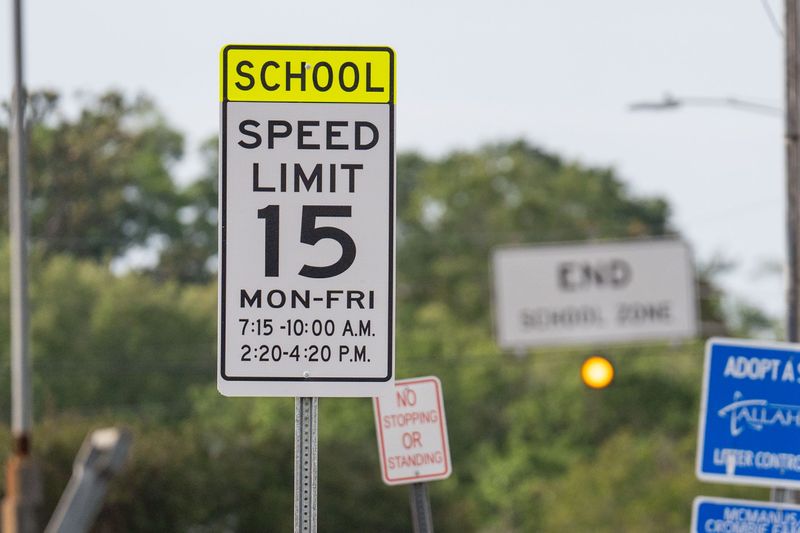
Similar to other Florida cities, Tallahassee’s speed cameras are activated throughout the entire school day, not just when the school zone lights are flashing. Confusion surrounding the cameras’ hours of operation is a complaint Hollander said he hears often from clients he represents.
Revell said as of now, there aren’t any plans to adjust the hours that the cameras are operating. Homeschool kids are coming and going at different hours, and there are playgrounds at schools bordering roads, making the cameras necessary all day, he said.
“As long as children are present, you want to keep people abiding by the speed limit because that’s the best way to not only keep the children safe, but the drivers on the roadway safe as well,” Revell said.
Even though complaints are common, the Insurance Institute for Highway Safety found the majority of drivers approve the cameras “in communities where they’re used effectively.”
In 2023, Gov. Ron DeSantis signed a law that gave cities the ability to create these programs. Hollander said he thinks framing this as a means to protect children was the legislature’s “creative” way to generate ticket revenue again after red light cameras were widely removed following extreme backlash.
“What kind of person would be against that?” Hollander said of school zone cameras. “We all want our kids to be safe, myself included.”
Are speeding cameras really promoting road safety? Attorney says no
At the beginning and end of the school day, speeds are reduced in school zones – a baseline measure used everywhere – but reducing speeds isn’t always enough.
Speeding is one of the most common contributors to fatal motor vehicle crashes. In 2023, nearly 12,000 people were killed in speeding-related crashes, representing 29% of all traffic fatalities, federal data show,” the Insurance Institute for Highway Safety said. “Using safety cameras to enforce speed limits, along with speed management practices like setting safe speed limits and installing traffic calming features, can reduce this toll.
Regardless of the reason behind the implementation, Hollander said automatic tickets stir up a number of problems.
People don’t check the mail as often anymore, which can be problematic if a driver racks up multiple violations without knowing it, he said. Multiple violations can lead to a suspended license, and if a driver is caught with a suspended license, it is an arrestable offense.
Another issue is that these notices of violation are a different type of offense, meaning speeders don’t receive any points on their license, allowing habitual speeders to continue their dangerous driving patterns without greater repercussions, he said.
If someone is wealthy, he said, “you can violate this law all day long.”
The vast majority of tickets get paid, he said, because if it gets taken to court, drivers run the risk of losing and getting the ticket added to their record: “They’re basically coercing you to pay the $100. Pay the $100 now, nobody will know anything about it.”
Between March 28, 2025, and May 15, 2026, 132 of the 50,000 violations issued in Tallahassee school zones were contested in court. Of those 132 violations, only five were dismissed, according to data provided by TPD. The agency could not confirm why those five were dismissed and whether these challenges were argued with attorneys.
The Ticket Clinic recently won a case in Broward County that Hollander said should set a statewide precedent for future ticket challenges. Under the law, the state publishes a list of approved devices that municipalities can use, and the camera that ticketed the law firm’s client included a device within the camera that wasn’t approved, leading to the dismissal of the ticket.
Red light cameras used to be all over the state until cities were tired of all the legal drama they stirred up, prompting most cities, including Tallahassee, to remove them. Hollander said his goal is the same for the speeding cameras.
“We’re trying our best,” he said. “I’m not sure how successful we’ll be, but we sure are going to try, just like we did last time because we don’t feel like this is fair.”
Digital trail for every driver raises alarms: Who’s watching — and why?
While speeding cameras stir up due process issues, license plate readers raise their own red flags for people.
This type of technology collects and stores data on everyone, not just those suspected of wrongdoing, and it’s generating serious legal questions about expectations of privacy, said Stanley.
Law enforcement always touts the usefulness of mass surveillance in solving “dramatic crimes” and “how these technologies have saved the day,” but people don’t hear about the times officers “get caught up in these technologies,” he said.
There have been instances where data captured by these cameras was used by U.S. Immigration and Customs Enforcement to round up undocumented immigrants and companies who’ve used artificial intelligence to search data for people whose movement patterns might be considered “suspicious.”
“Anybody could be identified as a potential criminal by some AI algorithm that nobody really knows how it works,” Stanley said.
Errors and misuse are bound to happen when weaving these technologies into policing, he said, and he thinks these examples are just the tip of “a much larger iceberg.”
Police Chief Revell said the technological advancements have been a huge help in finding investigative leads faster and improving response time, but at the same time, TPD understands the balance between protecting the community while also respecting people’s right to privacy.
“It’s something we’re constantly looking into and hearing the community when they makes these concerns and being able to address them in a way that lets them know there’s no one watching their comings and goings without a criminal predicate or if there isn’t a law enforcement purpose to it,” he said.
The use of these cameras has snowballed in recent years, Stanley said, and society and the justice system is still in the beginning stages of deciding what to make of them.
The argument can be made that there’s no expectation of privacy in public, “but that’s not really true,” Stanley said.
“If someone were following you around for 24 hours a day, for months on end, you’d probably go seek a restraining order,” he said. “Law enforcement isn’t going to do that, unless they really need to because it’s very expensive to follow somebody around like that. But now we have this technology that can follow you around like that for weeks on end.”
Data shouldn’t be stored for people who aren’t deemed a suspect in a crime, Stanley said, and if it is, it should be for short periods of time.
Flock Safety, a major provider of license plate readers, collects and stores data for 30 days, “but that’s way too long, especially considering it’s a nationwide network,” he said.
All Flock camera users are asked if they want to search license plate data locally or nationwide. If one chooses to access data nationwide, then they have to let their data be searchable too.
TPD has opted into the data sharing network, but Revell said the agency isn’t promoting its data to other cities and states.
Flock Safety has seen dozens of municipalities back out of contracts as the controversy over the technology continues to swirl around their license plate readers, he said. A lot more “tough questioning” is happening among city leaders about the intended use and potential misuse of these emerging technologies.
“The residents … were very upset that all their license plate data was being searched by a sheriff in Texas for a woman who had an abortion,” Stanley said.
City speed camera program withstands move to repeal
As Leon County nears the start of its own version of a speed enforcement program in school zones, it’s been carefully reviewing different companies during its selection process with all these controversies in mind.
And although the city has already gone full speed ahead with cameras and license plate readers, there is still some hesitancy on the board about the decisions already made.
At the May 13 city commission meeting, Commissioner Jeremy Matlow made a motion seeking to review its contract with RedSpeed USA and consider repealing the city’s speed enforcement cameras.
The idea was spiked, however, in a 3–2 vote with Mayor John Dailey saying he was happy with the program.
Whether people agree or disagree with the cameras, Stanley said everyone should agree that the decision to have these technologies should be made through the democratic process, not unilaterally by police chiefs or other officials.
“In our country, the government isn’t supposed to be watching everything everybody does all the time just in case you do something wrong,” Stanley said.
Elena Barrera is the local government watchdog reporter for the Tallahassee Democrat, a member of the USA TODAY Network. She can be reached at ebarrera@tallahassee.com. Follow her on X: @elenabarreraaa.
This article originally appeared on Tallahassee Democrat: Public safety or ‘money grab’? Speed zone cameras now under scrutiny
Reporting by Elena Barrera, Tallahassee Democrat / Tallahassee Democrat
USA TODAY Network via Reuters Connect