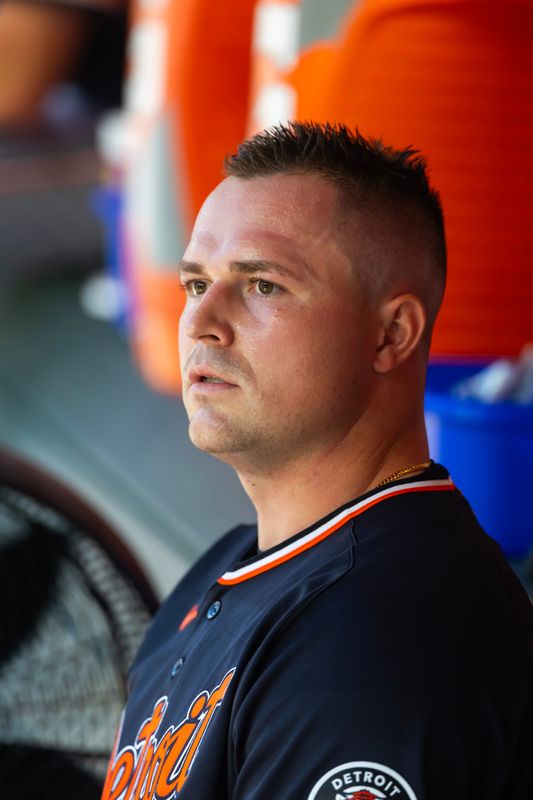
Reigning two-time American League Cy Young winner Tarik Skubal returned to the Detroit Tigers’ clubhouse on Monday, May 18, for the first time since undergoing left elbow surgery.
He sounds optimistic.

The 28-year-old won’t share a timeline, but he is preparing for an earlier-than-expected return to the Tigers, thanks to the NanoNeedle Scope procedure performed by Dr. Neal ElAttrache to remove a bone chip from his left elbow.
“It’s good to be back,” Skubal said. “I bet you guys didn’t expect to see me here.”
The recovery is typically 2-3 months for an arthroscopic surgery to remove loose bodies in the elbow, but with the NanoNeedle Scope, he should beat that timeline.
Skubal completed a bullpen session before Monday’s game against the Cleveland Guardians at Comerica Park – the second bullpen session of his throwing program.
He will remain with the Tigers until beginning a rehab assignment.
Here’s everything Skubal said about the surgery, the recovery process and the timeline for his return:
What is the intensity level right now as your throwing progression continues?
Some questions abbreviated for clarity.
“For me, I’m trying to keep the governor on a little bit. That’s the guidance that I’ve been told – hold it back. You’re going to feel good, but try to keep the reins on, and as you respond well, and as you keep bouncing back well from each bullpen session, then you can go out there and compete. That’s the hardest part right now. I feel really good, and I want to let it go, but I’ve been instructed not to.”
What did Dr. Neal ElAttrache tell you about the NanoNeedle Scope procedure before the surgery?
“The first thing they said was the recovery would be faster, and then I think I stopped listening after that. I was like, ‘All right, I’m good with it if you’re good with you.’ You trust the doctors. [Neal] ElAttrache is the best surgeon in the world, so you trust those guys to make those decisions, and if he’s comfortable with it, I don’t see why I wouldn’t be comfortable with it. Obviously, it’s good when he says recovery is going to be a little bit quicker. All things considered, I didn’t really care as long as we were getting what we needed to be done.”
Do you view the NanoNeedle Scope (and the quicker recovery process) as a best-case scenario?
“I think so. You guys asked last time I was here, ‘What are you going to take away from this situation?’ I’m not going to guarantee you I’m going to be back in however many weeks or months, whatever it is, but I’m going to work my [expletive] off to get there and try to do those things. But to be able to have some optimism to be back earlier than I initially thought, I think that’s a positive to take away from all this.”
What are your expectations for the faster-than-expected recovery timeline with the NanoNeedle Scope?
“I didn’t really go over timeframes on the normal loose body surgery. I didn’t go over the timeframe. This one, I’ve been in a lot of communication with our training staff and ElAttrache himself about how to progress and what to do and when to play catch and that whole routine. I’d love to sit here and say, ‘I’m going to be back here on this date.’ I just don’t know that. There are a lot of things that happen, whether it be a rehab assignment or something. Getting through those starts matters, and that will determine how I’m back here. I’d love to sit here and give you an answer of when I’m going to be back, because I want that same answer. I don’t have it. But hopefully, sooner rather than later, for sure.”
Have you gotten any answers for why this injury happened, especially since you already had two elbow surgeries?
“I don’t really know. I never really got any answers. I asked those questions, too. They didn’t really give me anything. They didn’t know. Loose bodies are kind of common, too. Recovery is different for everybody. I think every single arm is unique. But I don’t know if I have an answer. I pride myself preparing and having a good routine and recovering and doing all those things to go out there and put my body in the best position to stay healthy for a full season. This is just a little bump in the road.”
What did your arm feel like in the days immediately after surgery?
“I don’t really know. The next day, I started to feel better. From other surgeries that I’ve had in the past, you’re in a cast and can’t move your arm. This one, I was in an arm sleeve – and actually encouraged to get back range of motion as fast as I can. Within three or four days, we got there, and that was very encouraging.”
How do you feel about rehabbing in Detroit as opposed to staying in Lakeland?
“It’s hot and humid there. It’s a good setup, but I want to be here with my teammates. Obviously, I can’t play, but I want to go through the emotions with the guys. Be there for failure. Be there for success. As a starting pitcher anyway, you play once every five days, so you’re accustomed to being in the dugout and supporting your guys. Right now, I can’t go out and take the ball, but I can still be here and support and try to encourage our guys to go out there and have fun and play the game.”
What did you notice the first time you threw after surgery?
“From the first day I picked up a baseball, it was a lot more free. There was a lot more freedom in the throw. I didn’t realize what I was doing was actually moving the loose body out of the joint to keep throwing. I didn’t know what I was doing, but I knew it gave me relief. There’s still some – I don’t want to call it being hesitant or waiting for a symptom to come back. You still have to prove that through this whole process. That’s what the next however many days are for until I get back to pitching in the big leagues. I feel good right now coming off a bullpen session like that without any symptoms at all of what I was experiencing prior, and that wouldn’t be the case two weeks ago when I threw my last bullpen before having this surgery. All things considered, it’s a really positive thing. I haven’t had any symptoms since the surgery. I didn’t realize how much it was impacting me day-to-day. You just start playing and completing, and you don’t really think about a lot of stuff. I don’t know if you every really pitch a full season at 100% anyway, so you get dinged up throughout the season as it goes, but I didn’t realize how much it was impacting me day-to-day until I’ve taken that thing out of there. I feel great with different stuff, like stuff that’s not even pitching-related. These symptoms would creep up at home sometimes. To not have that has been a huge blessing.”
How difficult has it been watching your team struggle while you’re sidelined – and how can you help right now?
“The four days in between when I pitch, I try to be the biggest cheerleader I can be for our guys, whether it’s simple things like good swing, good inning, whatever it is. I try to get guys to go out and perform their best. That responsibility has never changed. That’s something I take pride in. I know those guys in there trust me and believe in me. Right now, I can’t go out and perform, but that’s something I don’t take for granted at all. I want to make sure that I’m here for these guys.”
What is your main goal during this recovery process?
“Everything is very normal right now. I think that’s what the goal is – to get back to normal as fast as possible. Get on a five-day rotation and get your body in shape to be back in the big leagues.”
Contact Evan Petzold at epetzold@freepress.com or follow him @EvanPetzold.
This article originally appeared on Detroit Free Press: Everything Tarik Skubal said about elbow surgery, recovery timeline
Reporting by Evan Petzold, Detroit Free Press / Detroit Free Press
USA TODAY Network via Reuters Connect