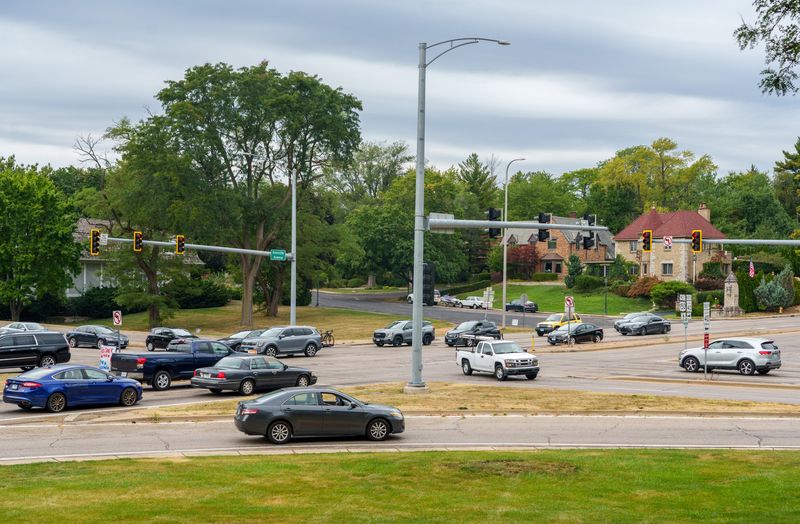
Drivers throughout Peoria know the headaches and dangers posed by Knoxville Avenue. Crumbling pavement is pockmarked with patches, with bumpy lanes, outdate intersections and regular closures lead to congestion and accidents.
Unfortunately, the troubles plaguing one of Peoria’s busiest roads is just a small glimpse at the infrastructure issues facing Illinois. Throughout the state, thousands of roads and bridges are clearly in need of repair or replacement. According to state data, roughly one-third of roads in the Chicago region are rated in fair or poor condition. Downstate, that number climbs to nearly 45 percent.

This is not a localized issue, it’s systemic. Decades of underinvestment have pushed Illinois’ infrastructure to a breaking point, despite meaningful progress in recent years under the Rebuild Illinois Capital Program. Passed in 2019, that program is investing a historic $25.4 billion across Illinois to help improve roads and bridges, creating jobs and economic opportunity in every corner of the state. Thousands of safety improvements have been made, and many miles of roads have been revitalized.
It’s a great start, but we need to do more in order to maintain Illinois’ position as the economic crossroads for the nation. The Illinois Department of Transportation should be applauded for their ability to stretch available resources as far as possible, but the reality is simple: without additional sustained, reliable funding, the system will continue to deteriorate. The consequences of inaction affect everyone.
Knoxville Avenue is the second-most traveled road in Peoria, averaging 20,000 to 30,000 cars a day. Where it intersects with War Memorial Drive, Peoria’s most traveled road, was the scene of 55 crashes in 2024 alone. This is an urgent safety issue that can no longer be ignored. Indeed, more than one-third of fatal crashes statewide can be attributed to poor road conditions.
In addition to these pressing safety concerns, poor road conditions cost Illinois drivers nearly $800 each year in vehicle repairs, wasted fuel and depreciation. This adds up to $6.6 billion annually, a direct hit to household budgets and the broader economy.
There is a fix. Lawmakers need to prioritize additional investment in Illinois roads and bridges. Every dollar invested in Illinois infrastructure returns as much as $2.50 in economic activity, and these projects create jobs, support local businesses and strengthen communities across the state.
In fact, every $1 billion invested in infrastructure can support up to 25,000 jobs — many of them skilled, union positions that sustain families and fuel local economies, particularly in downstate communities.
Knoxville is a vital roadway, connecting residents to needed medical facilities and businesses. We can no longer look away while it’s left to crumble.
The local workforce is ready to work and improve this vital road. Union laborers and skilled tradespeople stand prepared to rebuild Illinois’ roads in Peoria and beyond, strengthen our infrastructure and support the communities that depend on them. What’s needed now is leadership.
Illinois must commit to sustained, long-term infrastructure investment that matches the scale of the challenge. That means building on the progress of recent programs while ensuring reliable funding to address both immediate needs and future demands.
We can continue to react to crises, or we can invest now, fix what’s broken and build a stronger, safer future for Illinois. We can’t afford to wait any longer.
Luke Ogan is the Business Representative for the International Union of Operating Engineers Local 649 in Peoria
This article originally appeared on Journal Star: Opinion: Crumbling Knoxville Avenue shows statewide infrastructure needs
Reporting by Luke Ogan, Business Representative for the International Union of Operating Engineers Local 649 / Journal Star
USA TODAY Network via Reuters Connect