SOUTH BEND — Roughly half of the United States’ population expresses neutrality toward one or more undemocratic practices, a trend that researchers at the University of Notre Dame argue in a new study is an overlooked threat to American democracy.
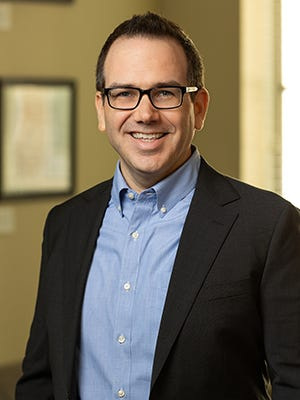
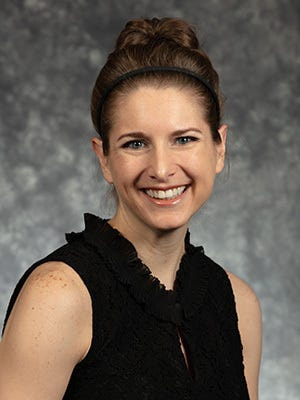
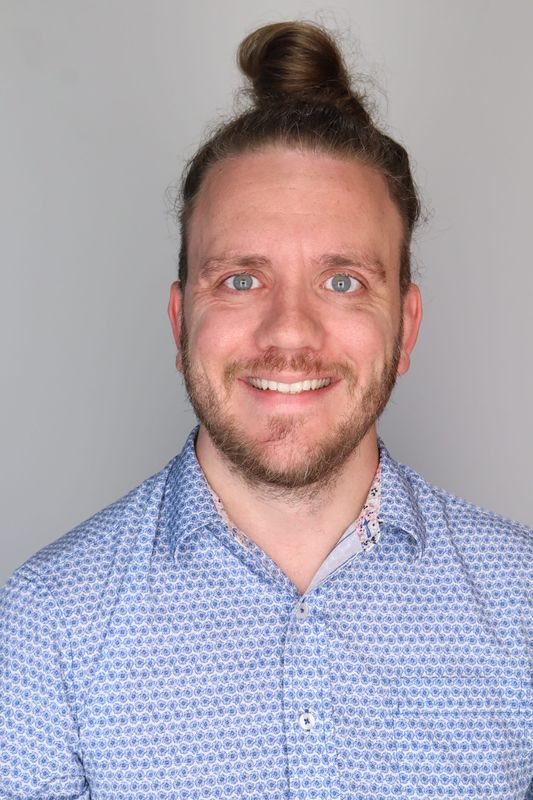
The 2026 study, titled “The overlooked threat of democratic neutrality in the USA,” by Matthew E. K. Hall, B. Tyler Leigh and Brittany C. Solomon explores democratic neutrality as prevalent and distinct from opposition to undemocratic practices, reflective of meaningful attitudes, correlated with theoretically related constructs and as “consequential as outright support for undemocratic practices in shaping preferences for anti-democratic candidates.”

The study’s publication comes just as the Notre Dame Kellogg Institute – Keough School of Global Affairs prepares to host the third Global Democracy Conference on Tuesday, May 19, and Wednesday, May 20.
The conference, “Confronting Public Support for Anti-Democratic Leaders,” brings together scholars, policy makers and activists to discuss strategies for safeguarding and renewing democracy worldwide.
Registration for the conference closed Tuesday, May 12. No walk-ins will be accepted.
Both days of the conference will begin at 9 a.m. with an introduction from Aníbal Pérez-Liñán, director of the Kellogg Institute for International Studies and professor of political science and global affairs at Notre Dame.
The sessions will discuss and explore topics such as:
● Why citizens stand for democracy and what factors led to support for authoritarian leaders
● Popularity of autocratic leaders and an exploration into autocracy versus democracy
● Citizen participation with social media and artificial intelligence
What does the study say?
The study, which surveyed over 45,000 voters across three different samples, demonstrated that although neutral voters may not actually support undemocratic practices, they don’t oppose them either. The authors suggest that democratic neutrality is seemingly benign, but at an individual level, democratic neutrality can threaten democracy.
“A substantial portion of the public appears willing to tolerate violations of democratic norms by failing to penalize anti-democratic politicians,” the study said. “Like the few Americans who explicitly endorse violations of democratic norms, democratic neutrals do not seem to care whether politicians undermine democracy.”
When “democratic norms” are violated and tolerated by citizens, politicians are given room to further push the limitations of democracy without “electoral accountability,” the study said.
Across the three samples, an average of 22.8 in 100 people responded “neutral” to four undemocratic practices: reduce outparty polling stations, ignore outparty court decisions, loyal to the party over constitution and censor partisan media.
The same three samples and four undemocratic practices resulted in, on average, 13.5 in 100 people responding “agree” to the practices; 47.8 of 100 responded “disagree.”
To explore the intent behind democratic neutrality, those participating in the third sample were asked in the form of an open-ended question what they meant when they selected the “neutral” midpoint. Of the 1,504 people surveyed in sample three, 777 participants chose “neutral” 1,240 times.
The study characterized the causes of democratic neutrality as “likely multi-faceted” and including reasons such as a lack of knowledge about a topic, uncertainty, indifference and socially desirable responding, among other, often overlapping factors.
Citizens who are highly educated and regularly stay updated with the news tend to be more politically aware and are more likely to push back against undemocratic practices, according to the study.
A lack of a college education and lower news consumption are related to uncertainty, because “participants felt uncertain or ill-informed, as well as misunderstood the question, both being consistent with uncertainty.”
“We found that individual-level expressions of democratic neutrality predict one’s willingness to tolerate anti-democratic candidates,” the study said. “In fact, democratic neutrals react similarly to those who explicitly support undemocratic practices when it matters most: at the ballot box.
“Like those who actively endorse undemocratic practices, democratic neutrals do not penalize elites for endorsing anti-democracy positions.”
Email Tribune staff writer Juliane Balog at jbalog@usatodayco.com.
This article originally appeared on South Bend Tribune: Notre Dame researches American democracy and the threat of neutrality
Reporting by Juliane Balog , South Bend Tribune / South Bend Tribune
USA TODAY Network via Reuters Connect