When it comes to battery manufacturing and research, the Binghamton area is carving out its place in the nation’s development ecosystem.
After being designated a federal Battery Tech Hub in 2023, Binghamton University’s New Energy New York program laid the groundwork for the area’s rise to prominence. In March, the National Science Foundation Upstate New York Energy Storage Engine, an initiative led by the school, was confirmed to be entering its second phase — a designation that comes with $45 million in funding over the next three years.

Outside of Binghamton University, local companies are jumping headfirst into the battery ecosystem, with companies including the Raymond Corporation expanding their reach by embracing new battery technologies.
The Raymond Corporation, a brand of Toyota Material Handling North America, focuses on designing forklifts and other warehouse vehicles. Historically, the company has used lead-acid batteries, which must be recharged frequently throughout the day.
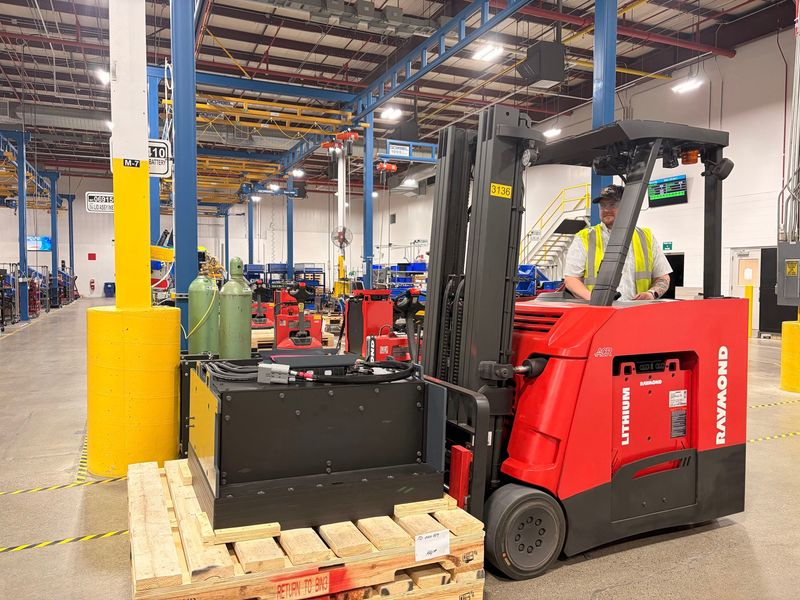
At Raymond’s Energy Solutions Manufacturing Center of Excellence in Kirkwood, the company has fully committed to lithium-ion batteries, which they both design and assemble themselves. According to TMHNA Vice President of Technology Solutions Jennifer Lupo, the transition to lithium-ion has revolutionized Raymond’s vehicles across the board.
Raymond Corporation expanded its business through lithium-ion batteries
The Binghamton area has a special connection with lithium-ion batteries through Binghamton University’s distinguished professor of chemistry and NSF Engine Chief Innovation Officer Stanley Whittingham. In 2019, Whittingham received a Nobel prize in Chemistry for his development of lithium-ion batteries — the same technology that is bringing Binghamton to the forefront of battery research and manufacturing in the U.S.
Previously, Lupo said companies would purchase two to three lead-acid batteries in order to have one battery running eight hours while the replacement charged for an equal amount of time. The process required a dedicated space to charge, water and clean batteries, and for operators to swap batteries in and out as charges drained.
“It’s all about efficiency,” said Lupo. “So having to take the vehicle out of service to change a battery isn’t a good thing. With lithium-ion, you can put the battery in the vehicle and not have to take it out at all. With lead-acid, you get eight hours of run for eight hours of charge. With lithium-ion, you may only need to charge to full capacity in one hour.”
While the technology sounds like an objective improvement and an easy choice, Lupo said there is more below the surface when it comes to new batteries. To start, lithium-ion batteries include significantly more complex systems than the comparatively simple lead-acid batteries.
When it comes to lead-acid, if a battery has issues, it is designed to be removed from the vehicle to recharge, meaning any problem with a single battery can be resolved relatively easily. For the new vehicles Raymond produces, the lithium-ion batteries are built in and not designed to be removed constantly — meaning the company has to get it right the first time.
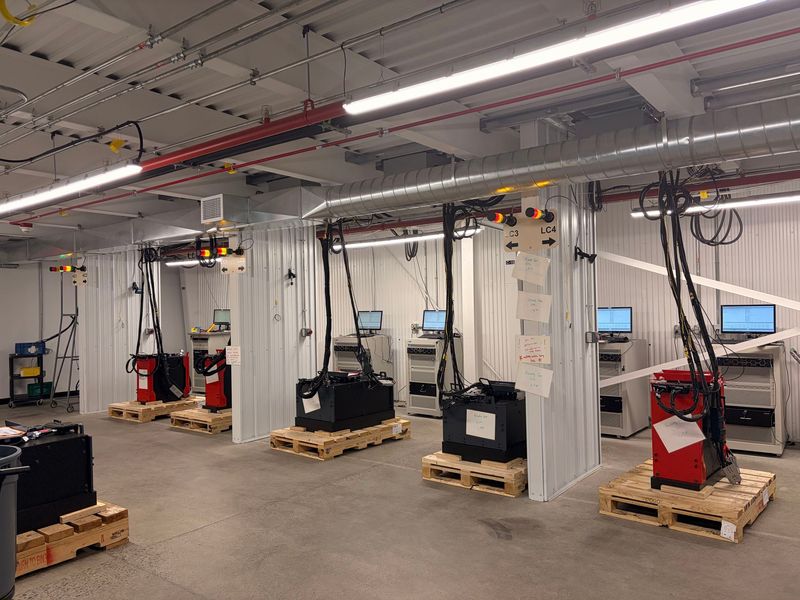
Because Raymond produces its own vehicles, finding the specifications for the best lithium-ion technology is made significantly easier than if an outside company were to design batteries. According to Lupo, all Raymond batteries go through a rigorous testing process run by UL Solutions, which ensures the batteries meet national safety standards.
To ensure batteries meet these standards, Lupo said it is critical to test throughout the design process, which takes about three to four years.
Each of the company’s six different vehicle types, which then have various available profiles, requires a different battery configuration. These specifications are tied to the size, weight and function of each vehicle, meaning the company configures each battery pack according to a customer’s needs.
Another key factor when it comes to lithium-ion batteries as opposed to lead-acid is the cost. To ensure a lithium-ion battery is worth the higher up-front cost, Lupo said Raymond puts specific focus into its batteries’ efficiency, aiming for a competitive return on investment compared to standard lead-acid ones.
In a 2025 news release, Raymond said the company’s new batteries are 17% more productive than lead-acid batteries, allowing them to “meet the needs of virtually every customer and application.”
Raymond moves to new Kirkwood facility
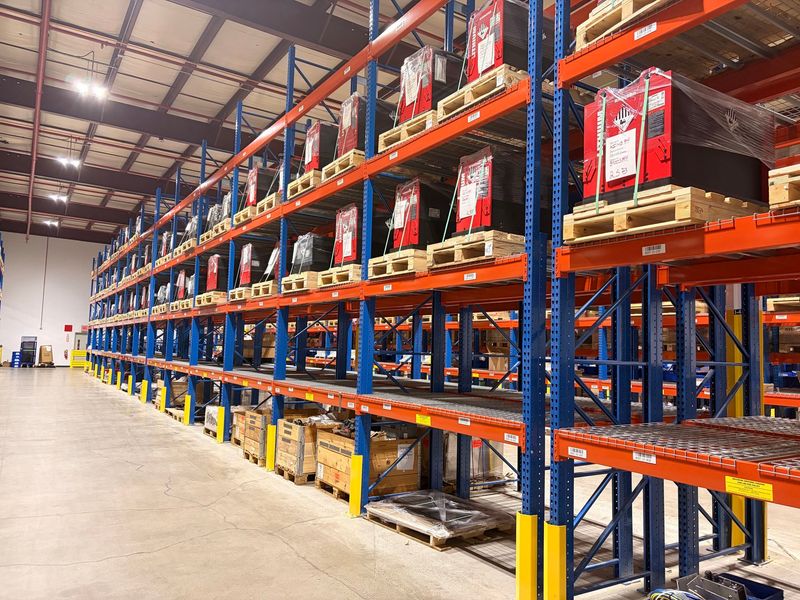
While the company originally started producing lithium-ion batteries at its historic Greene location, Lupo said it quickly became clear more space was needed. Over the course of two years, the company moved its lithium-ion production to 191 Corporate Drive in Kirkwood, with manufacturing at the location starting in the fall of 2025.
To ensure the building met the needs required for battery manufacturing, more than $28 million was spent on the location. In the coming months, the company will produce its 1,000th battery at the location.
When it comes to supporting a battery ecosystem in the Southern Tier, Lupo said Raymond is proud to be a participant in something she said the company has always believed in.
“Raymond has been manifesting electric vehicles to the tune of tens of thousands per year for decades,” said Lupo. “We have no doubts about this, so we are happy to be participating in that ecosystem to help create awareness and support the idea that this technology is very viable and real.”
Outside of the company’s success, Lupo said a key factor in Raymond’s decision to expand to Kirkwood is to benefit and support the local economy and job market. According to The Agency’s 2025 Annual Report, the project generated more than 84 new jobs, as well as 57 new construction jobs throughout the building’s renovation.
“We intend to benefit our community by creating opportunities and job growth,” said Lupo. “That’s such a proud aspect of our culture, and we’re very happy with what we have happening here in the area.”
This article originally appeared on Binghamton Press & Sun-Bulletin: Raymond Corp’s lithium push solidifies Binghamton as hub for battery innovation
Reporting by Riccardo Monico, Binghamton Press & Sun Bulletin / Binghamton Press & Sun-Bulletin
USA TODAY Network via Reuters Connect