The Eta Aquarids meteor shower is about to hit its most active state in 2026.
For the next two nights, skywatchers in Arizona and across the U.S. may be treated to a striking annual celestial show as Earth passes through the densest part of debris from the famous Halley’s Comet. The impending peak comes after the Eta Aquarids first became active in April as our planet entered the debris trail left by the comet, which is also the source of the Orionids meteor shower in October.

As the cosmic debris disintegrates in Earth’s atmosphere to create the fiery, colorful meteors – known colloquially as “shooting stars” – spectators can expect to be treated to spectacular glowing trains, the Aquarids are famous for leaving in their wake.
Here’s everything to know about the Eta Aquarids meteor shower, its impending peak and how you can spot them in Texas.
Here’s everything to know about the Lyrids meteor shower, its impending peak and how you can spot them in Texas.
When is the Eta Aquarids meteor shower?
In 2026, the Eta Aquarids meteor shower is scheduled to last until May 28, according to the American Meteor Society. The Eta Aquarids meteors will hit their peak in activity May 5-6 as Earth passes through the densest part of Halley’s cosmic debris.
Eta Aquarids meteor shower 2026. How many meteors will be visible?
Eta Aquarids meteors whiz across the sky at up to about 40.7 miles per second. That’s fast enough to leave a glowing trail of debris behind that can last for several seconds or even multiple minutes, according to NASA.
If conditions are right, up to about 50 meteors can be seen per hour during the shower’s peak.
But north of the equator, the meteor shower typically produces no more than 10 to 30 meteors per hour.
Will the Eta Aquarids meteor shower be visible in Texas?
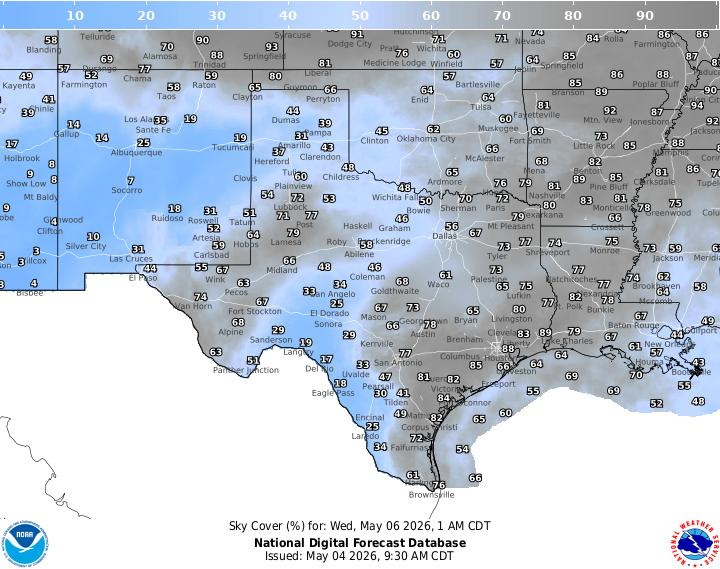
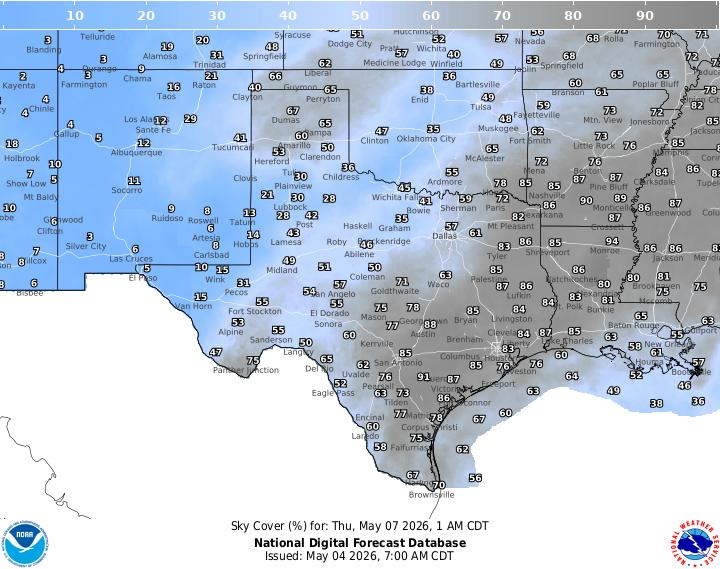
Unless clouds obstruct the view, Texans will have an opportunity to see the meteor shower on May 5-6.
Texas cloud forecast for May 5-6
Could the moon interfere with the Eta Aquarids in May?
Following a full Flower Moon on Friday, May 1, a waning gibbous moon will still be mostly bright and nearly completely illuminated on both nights of peak activity, which could interfere with the meteor shower, according to the website EarthSky.
Where, what time are the Eta Aquarids visible in Texas?
In general, the best time to see meteors are typically between midnight and dawn. The Lyrids are best viewed in the Northern Hemisphere during those dark hours.
Visit the website Time and Date to find the best times and viewing directions for your location.
What are the Lyrids? Here’s what causes the meteor shower
Meteor showers occur when Earth passes through dusty debris trails left by comets and other space objects as they orbit the sun.
The debris – space rocks known as meteoroids – collides with Earth’s atmosphere at high speed and disintegrates, creating fiery and colorful streaks in the sky, according to NASA. Those resulting fireballs, better known as “shooting stars,” are meteors.
And the Eta Aquarids’ parent comet is none other than the famous Halley’s Comet.
The meteor shower itself, though, has been observed for 2,700 years, ever since the first recorded sighting in 687 BC by the Chinese, according to NASA.
When is the next meteor shower?
If you miss the Lyrids, you’re in luck — you won’t have to wait long for another chance to catch falling stars.
The Eta Aquarids meteor shower will be active until May 28, with peak viewing expected on May 5 and 6 in Texas.
This shower tends to be more of a spectacle, producing up to 50 meteors per hour at its peak. It’s named after Eta Aquarii, one of the stars in the constellation Aquarius.
The Eta Aquarids is one of two meteor showers created by debris from Comet Halley. Earth crosses Halley’s orbital path twice a year — once in spring and again in fall. The second crossing creates the Orionid meteor shower, which typically peaks around October 20.
Comet Halley takes about 76 years to complete one orbit around the sun. The next time it will be visible from Earth is in 2061.
Map: Best places to watch the meteor showers in Texas
Texas is home to several International Dark Sky Communities, designated by the International Dark-Sky Association for their commitment to reducing light pollution and preserving night skies.
Dripping Springs, located about 23 miles west of Austin, was the first in Texas to earn this title in 2014 and the sixth in the world.
In addition to these communities, Texas also boasts several Dark Sky Places, which include larger natural areas like parks or preserves dedicated to protecting the night sky. These areas typically have minimal artificial light and offer educational opportunities about astronomy.
Notable examples of Dark Sky Places in Texas include Big Bend National Park, Enchanted Rock, and Devils River State Natural Area.
Here are the areas officially recognized for Dark Sky initiatives in Texas, which will be the best places to view the upcoming meteor showers.
Eric Lagatta is the Space Connect reporter for the USA TODAY Network. Reach him at elagatta@usatodayco.com
This article originally appeared on Corpus Christi Caller Times: Halley’s Comet meteor shower tonight. When to see peak in Texas
Reporting by Brandi D. Addison, USA TODAY NETWORK / Corpus Christi Caller Times
USA TODAY Network via Reuters Connect