Section 1 this week took another step toward a constitutional amendment that would require separate postseason tournaments for public and private schools.
And while the Athletic Council on Tuesday, April 28 approved creating a ballot and moving forward with a referendum on the proposal, local administrators are still hoping the New York State Public High School Athletic Association might reverse course and enact meaningful change.

Noting once again the structural inequities that prevent most public schools from staying in stride with many private schools in the same playoff bracket, Section 1 officials are discussing legal action with a goal of compelling the state to level the playing field.
“We don’t want to go to litigation, but it might be necessary at some point,” said Marc Baiocco, who is the Section 1 president and superintendent of Clarkstown Schools.
A lawsuit filed by a member section against NYSPHSAA would be highly unusual.
“I’ve been doing this for 14 years and we have not been sued by one of our member sections,” NYSPHSAA executive director Robert Zayas said. “I would have to decline comment if there’s pending litigation, but I would be very curious what the claim would be. We would be prepared for any defense.”
For nearly two years, administrators statewide have been actively debating a system that allows private schools to compete for sectional and state championships alongside public schools where talent pools are restricted by district boundaries.
NYSPHSAA rules prohibit a private school from actively recruiting, but successful programs might draw athletes from a 60-mile radius.
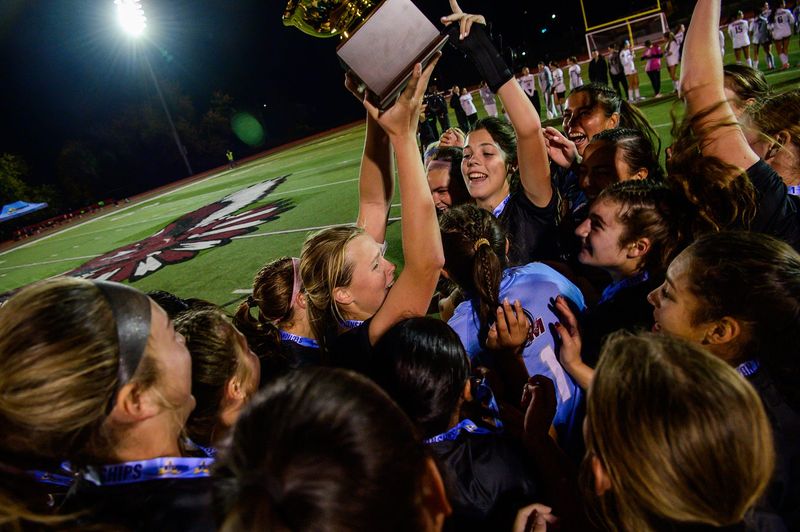
Recent state championship threepeats by the Albertus Magnus girls basketball team and the CBA-Syracuse football team have only fueled the outcry. There are currently 89 non-public school members of NYSPHSAA.
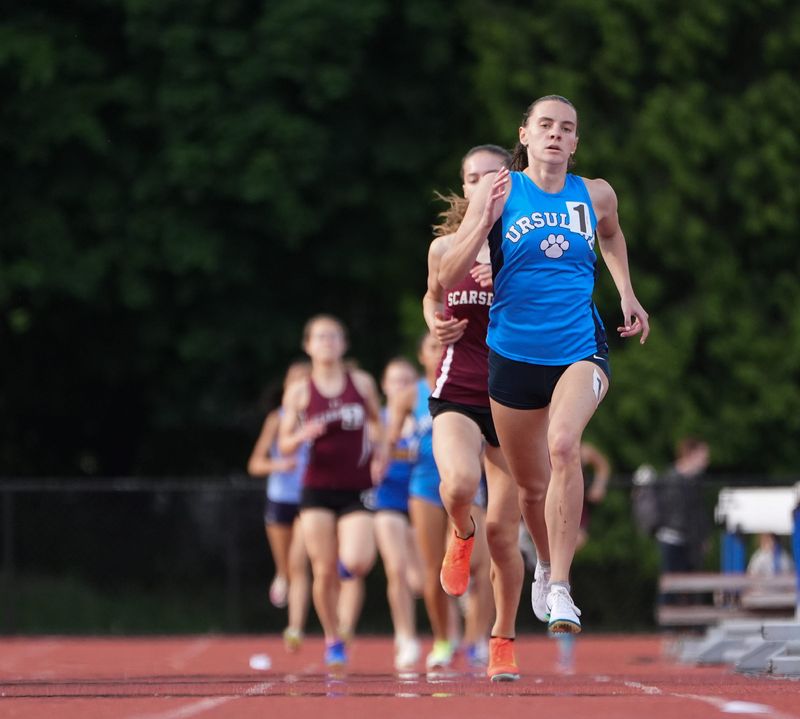
Albertus Magnus, Ursuline, Leffell and Keio are the four private schools in Section 1.
Zayas has been criticized by administrators here for a perceived lack of action on this issue. He was at the Athletic Council meeting on Tuesday.
“I can honestly say in my time here with NYSPHSAA, we have not discussed any one topic to the extent that we have discussed this topic on behalf of Section 1’s concerns,” Zayas said. “Everyone can have their opinion about what they think I should be doing … but I can tell you that we as an association are governed by our schools.
“I continue to receive a tremendous amount of outreach from Section 1. We had the (ad hoc committee) meeting last Friday. I’ve received quite a few concerns from Section 1. I’m not receiving the same type of outreach from other sections.”
The outcome of a statewide vote at the April 24 schools without boundaries ad hoc committee meeting prompted Section 1 to move its constitutional amendment proposal forward.
Representatives from the 11 member sections votes on three proposals last week:
1. Stay with a Classification Oversight Committee (COC) plan that moves private schools up or down in classification based on level of success, and study its impact over the next two years.
2. Continue to examine potential revisions.
3. Separate public schools and private schools for postseason competition.
The status quo proposal received five votes (Sections 5, 6, 7, 10 and 11). The proposal to examine potential revisions received three votes (Sections 3, 8 and 9). The separation proposal also received three votes (Sections 1, 2 and 4).
Issues with the ad hoc committee
Nyack athletic director Joe Sigillo and Putnam Valley superintendent Jeremy Luft were the Section 1 representatives. They were both frustrated by the process, suggesting the end result was a consensus for change.
The presentation of the proposals at the ad hoc committee Zoom meeting is also a source of contention. According to Section 1 officials, the state included a caveat about potential lawsuits on the proposal to run separate public- and private-school tournaments.
“I think the legal component is the largest deterrent to any movement in the state and I don’t believe it to be a reality at the level of concern that NYSPHSAA has shared,” Sigillo said. “I think it’s been a deterrent that’s been thrown out there to derail any momentum toward any type of separation. … They expressed that the third option had litigation tied to it. Section 1 superintendents, going back to October, told Robert that if the Oversight Committee stays and there is no other movement (toward separation), Section 1 is already looking into litigation and is prepared to bring litigation forward. We felt that should have been tied to the first option.”
Biaocco also feels an edit of the second option removed needed context.
“Our representatives noted the specific hybrid model and classification adjustments that were originally included in Option 2 were stripped from the final agenda,” he said. “That was potentially misleading as it might have impacted how the sections voted.”
Section 1 was hoping to present a hybrid example that included the creation of Class AAAA for private schools currently in Class AAA, AA and A and left the COC in place to move Class B, C and D private schools up or down accordingly.
“We were told to block out two hours on Zoom and the meeting was 15 minutes,” Sigillo said. “We were basically told, ‘It’s not a discussion, we’re just voting.’ ”
There appears to be a geographical or philosophical divide impacting opinions.
“We’re bringing these structural inequities to NYSPHSAA and they’re attempting to categorize them as a wealthy community issue,” Baiocco said. “It was publicly stated the Lower Hudson Council of School Superintendents represents wealthy communities and that’s why we are ‘whining’ about this when in fact we represent 78 districts with vast socio-economic diversity.”
It’s possible that parents in other parts of the state are not making the same level of noise as parents in Section 1, which covers Westchester, Rockland, Putnam and Southern Dutchess.
“Depending on where you are and what sports you play, you can be impacted in different ways by this issue and other issues,” Zayas said. “What’s important in the North Country may not even be on the radar on Long Island. We represent 11 very diverse sections, almost 800 schools and half a million students, there’s not always going to be consensus.”
Back on the home front
Following a Section 1 Constitution Committee meeting on April 24, minor revisions were made to the proposal. The language was reviewed on Tuesday by the Athletic Council, which moved it forward to be voted on by the schools.
A ballot will be put together and distributed to the 78 member schools in the coming days. The deadline for voting is unclear, but could be completed before the end of May.
Passage requires a two-thirds majority.
“We’re exploring that timeline right now,” Baiocco said. “I want to make sure all of our member districts are fully equipped with all of the information prior to making a decision. And unlike our NYSPHSAA parent organization, we’re going to do so through a democratic process.”
If the proposal is ratified, Albertus Magnus, Ursuline, Leffell and Keio would be ineligible for Section 1 and NYSPHSAA tournament play starting with the 2027-28 school year. The private schools would have the option to compete against each other in a parallel tournament but would not be allowed to advance to states.
The inability to play in a meaningful postseason tournament would have a more profound impact on Albertus Magnus and Ursuline.
“I’m a major advocate of keeping the non-publics in our section” Baiocco added. “What we want is a two-bracket system once we get to the regionals and (state) championships. It’s to everyone’s benefit to keep playing those schools (in the regular season).”
Would it be a surprise if any of the schools remained in Section 1?
“Initially, no,” Sigillo said. “Long term, probably. I’m sure they’ve been doing their due diligence and exploring other options that are best for their school community and student athletes.”
Change may come someday, maybe
Zayas understands the flaw in a system that relies on a committee moving teams up in classification in response to repeated state championship seasons. There is nowhere for teams like Albertus Magnus girls basketball and CBA-Syracuse to go.
He agreed that a hybrid solution might eventually quell the concerns.
“I think we’re working in that direction,” Zayas said. “I think that would help because the issue with our current system is that eventually there’s nowhere for those non-public schools to be moved. Eventually, they hit a ceiling – AAA basketball, soccer, volleyball, baseball and softball and AA football. It’s the one drawback. I’ve spoken on this nationally. There are very few states that have a better system to address non-public school participation than we have in New York.”
Convincing other sections that isn’t accurate is the only way change is going to happen on a statewide level.
“I encouraged Section 1 at the Athletic Council meeting to continue to bring proposals forward to see if they can get support from the membership,” Zayas added. “Each section has the ability to bring anything they want forward and if they can get five other sections to go along with a proposal, then it’ll be implemented.”
Mike Dougherty covers high school sports for The Journal News/lohud.
This article originally appeared on Rockland/Westchester Journal News: Section 1 discusses litigation to compel NYSPHSAA to change postseason
Reporting by Mike Dougherty, Rockland/Westchester Journal News / Rockland/Westchester Journal News
USA TODAY Network via Reuters Connect