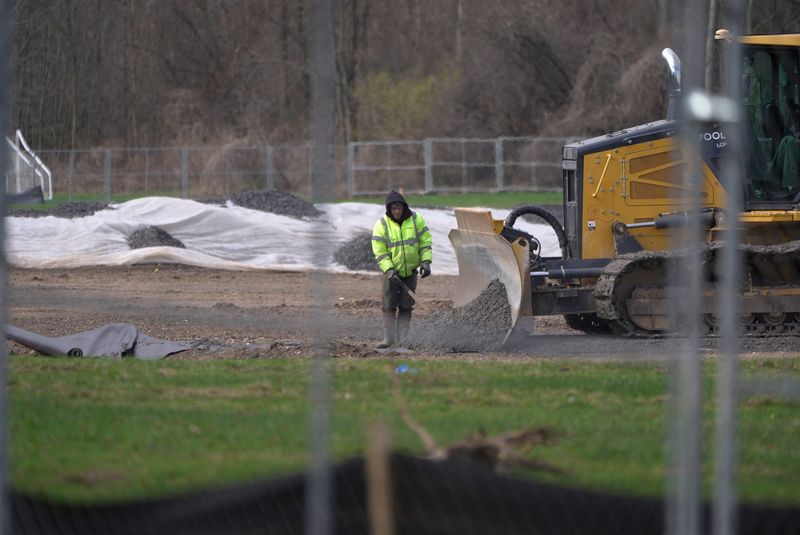
Tarps and clean rock fill have been placed over uncovered ground at Brighton High School, where work on controversial new synthetic turf athletic fields remains halted.
Lead identified in two testing sites was found to exceed the state’s hazardous waste thresholds, according to new information from the school district and its consultants. The discovery of old industrial trash like ash, glass and cinders from an old brick factory at the site has put work on hold since Jan. 20.

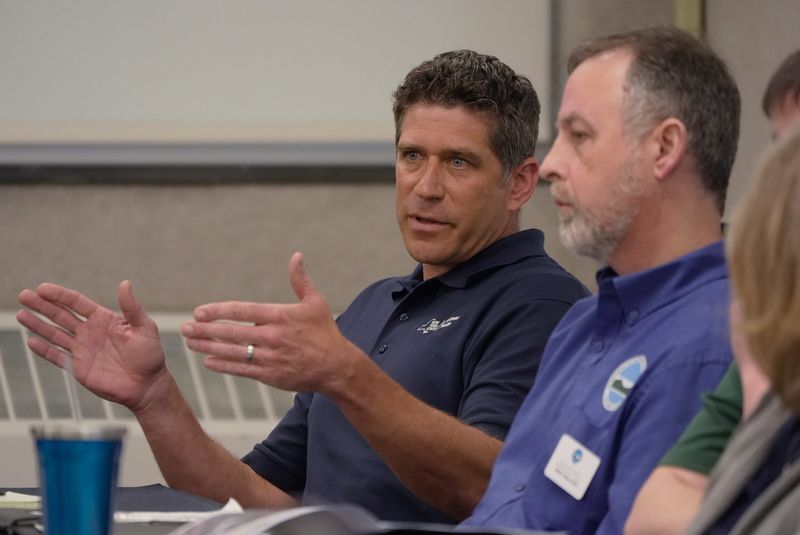
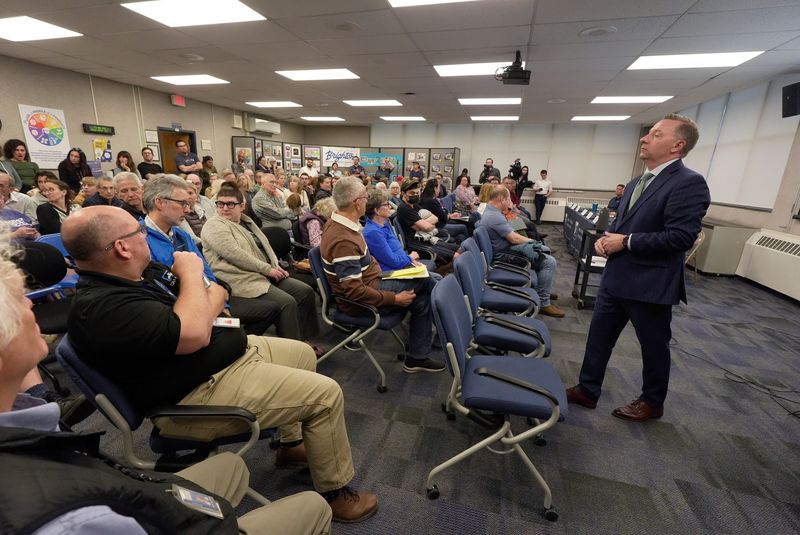
On April 22, residents, parents and students attended informational meetings on the state of the remediation process, which will be overseen by the state departments of Environmental Conservation and Health. Among the contaminants found are arsenic, mercury, barium and semi-volatile organic compounds.
While the historic waste from the factory and clay quarry was known, the degree of contamination was greater than anticipated.
“When they started excavating and digging in, they found that it wasn’t necessarily a silty sand with ash, but it was more of an ash and cinders and miscellaneous filled with bottles and other debris present,” said Michelle Whitman, a principal at environmental consultant Terragon.
While the waste has been at the site for more than 100 years, it has been found below the topsoil in the field and, until grass was removed and dirt was moved from construction, there is no reason to believe there was exposure to the contamination, said Justin Deming, from the state Department of Health.
After a site management plan is developed, any work will be conducted with air monitoring instruments in place to make sure dust is contained.
How much the remediation will cost is as of yet unknown. And Brighton Central School District Superintendent Kevin McGowan said options to cover the site could include modifications to the previous plan to install synthetic turf. The former stormwater retention depression will be replaced with a chambered, subsurface storage.
“I will tell you that our commitment is to create a financing plan that does not increase taxes,” McGowan said.
Updates on the site management for the soil will come at least monthly, McGowan said.
— Steve Howe reports on suburban growth, development and environment for the Democrat and Chronicle. An RIT graduate, he has covered myriad topics over the years, including public safety, local government, national politics and economic development in New York and Utah.
This article originally appeared on Rochester Democrat and Chronicle: Contaminated soil continues pause on Brighton High sports fields
Reporting by Steve Howe, Rochester Democrat and Chronicle / Rochester Democrat and Chronicle
USA TODAY Network via Reuters Connect