Florida’s summer heat is almost here. Will we be seeing more of our scaly invasive neighbors?
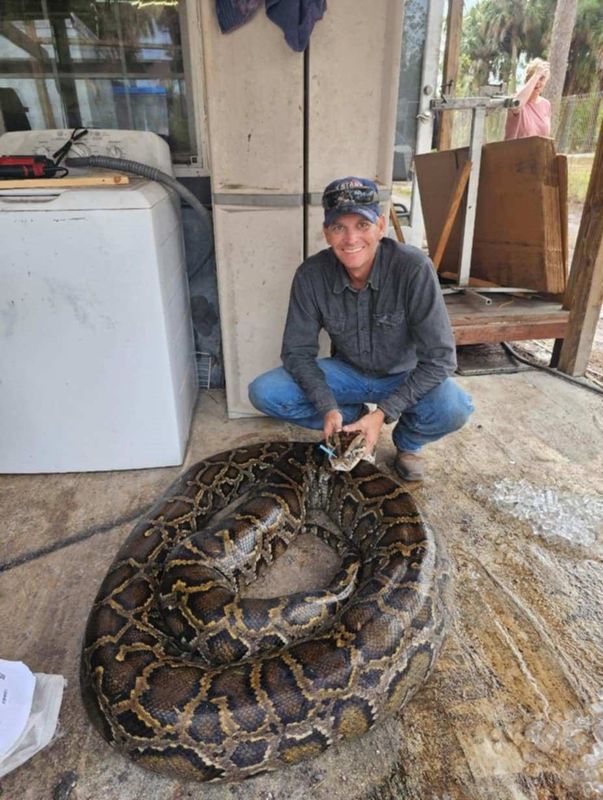
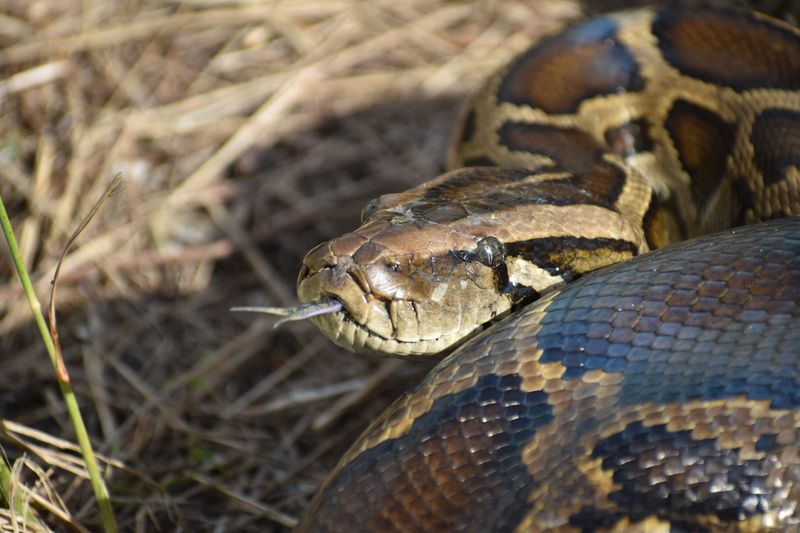
The Burmese python is a large, nonvenomous constrictor snake that is an invasive species in Florida. Burmese pythons were introduced to Florida through the pet trade in the 1970s and have since become well-established in the Everglades, posing a significant threat to the ecosystem.

They are one of the largest snakes in the world. Adult Burmese pythons caught in Florida average between 6 and 9 feet, and the largest one captured in Florida measured 19 feet.
Will Florida’s hot weather bring out more pythons?
Are Burmese pythons more active in warmer months?
Yes, Burmese pythons are more active and easier to spot in the warmer months.
During the summer months, when it is quite hot during the day, they may remain sedentary when the sun is up, but at night they may become more active and easier to spot crossing levees or roadways.
What is a python’s habitat?
The large snakes typically live in rainforests near streams, although they have been known to survive in a variety of habitats, such as grasslands, swamps and rocky foothills.
In Florida, the FWC notes that Burmese pythons are semi-aquatic and are often found near or in water
Could pythons tolerate the weather up north?
Colder weather does limit the range of the Burmese python.
In their native habitats in India, lower China, the Malay Peninsula, and some islands of the East Indies, they need a tropical and warm-temperate climate. Burmese pythons experience temperatures of around 88 degrees in the sun, similar to the climate seen in South Florida.
But, according to a USGS report on Burmese pythons in Florida, “there is evidence that evolutionary change has already altered parts of the genome responsible for cold tolerance, and there is the potential for behavioral plasticity to enhance cold tolerance.”
“This evidence suggests we may at least expect that pythons can tolerate climatic conditions farther north than where the population is currently established south of Lake Okeechobee,” the report says.
What should you do if you see a Burmese python?
The Florida FWC advises that if you have a non-native species, do not release it. If you come across one, report it to the Invasive Species Hotline immediately at 888-Ive-Got1 (888-483-4681), providing an exact location and photos.
The FWC says you can humanely kill Burmese pythons on private land at any time with landowner permission. You don’t need a permit to kill the invasive species. Here are the basic guidelines from the Fish and Wildlife Commission:
Contributing: Mark H. Bickel, Fort Myers News-Press and Jennifer Borresen, USA TODAY
Samantha Neely is a trending reporter for the USA TODAY NETWORK-Florida, covering pop culture, theme parks, breaking news and more. You can get all of Florida’s best content directly in your inbox each weekday by signing up for the free newsletter, Florida TODAY, at https://floridatoday.com/newsletters.
This article originally appeared on Naples Daily News: Are pythons more active in Florida during spring, summer months?
Reporting by Samantha Neely, USA TODAY NETWORK – Florida / Naples Daily News
USA TODAY Network via Reuters Connect