What began as a minor traffic stop in Westchester County quickly mushroomed into a life-altering event for Juan Esteban Rosas Jimenez.
The 22-year-old was driving to church with his wife on a Sunday morning last fall when a Port Chester police officer pulled him over, saying his car windows were too tinted. According to court papers and his attorney, Rosas Jimenez was also told, to his surprise, that his insurance coverage and registration had been suspended.

Instead of joining fellow worshippers in prayer, he was taken away in handcuffs and brought to the police station on that November day, records show.
That’s when his trouble deepened. He was held for hours and questioned further, now solely about his immigration status and not anything do with his car. Rosas Jimenez, who came to the U.S. from Peru in 2022, explained he had juvenile immigrant legal status that allowed him to live here and he had a work permit as well, both valid through 2028.
But the immigration agents who came to take Rosas Jimenez away brushed off those legal protections as they shackled his hands and feet.
“That is nothing,” one is quoted as saying in court papers. “It is gone, it is over. You have nothing.”
Debate in Albany on limiting police work with ICE
That chance stop near his church landed Rosas Jimenez in federal custody for nearly four months, and culminated in late March in his being flown from a Louisiana detention center back to Peru, without his wife.
What happened to him goes to the heart of a critical debate in New York in the second year of a mass deportation campaign by the Trump administration: to what extent should local police be joining with federal agencies in enforcement of civil immigration laws, and where should the lines be drawn?
That question has simmered in Albany for months, ever since the fatal shootings of two U.S. citizens by federal immigration agents in Minneapolis ignited calls for new restraints. Gov. Kathy Hochul has proposed a ban on cooperation pacts that police and sheriff’s departments may sign with Immigration and Customs Enforcement — as eight counties and three villages in New York have opted to do.
Immigrant advocates want to go further, since formal agreements like those are rare in New York and aren’t needed for routine collaboration like the one in Port Chester that proved so costly for Rosas Jimenez. They want the state to enact the long-pending New York For All Act, which would limit all police agencies to interacting with ICE only in criminal cases and when ICE has obtained a judicial warrant.
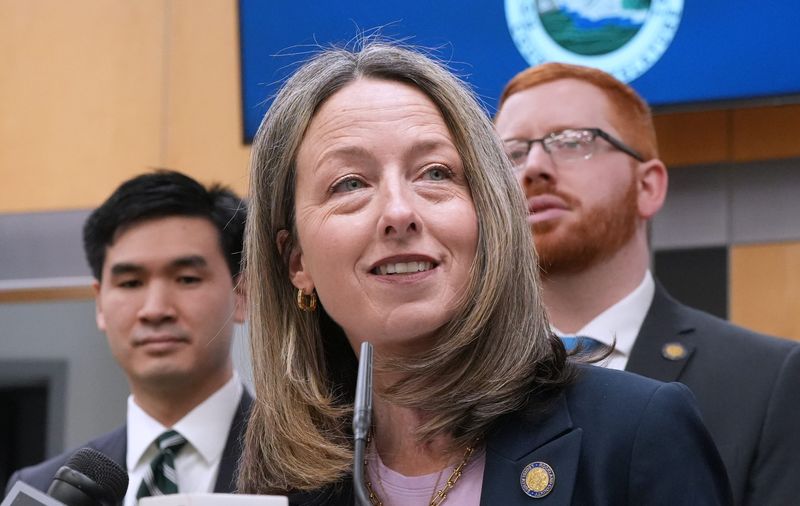
Supporters have invoked the Rosas Jimenez arrest to help make their case, including during a state budget hearing in February. The bill’s Assembly sponsor made it Exhibit A in a City & State column, referring to Rosas Jimenez by his middle name as she explained why banning 287(g) pacts with ICE doesn’t go far enough.
“Even without a formal 287(g) agreement, local officials can and do assist ICE with civil immigration enforcement,” wrote Assembly member Karines Reyes. “Port Chester police could have still shared information about Esteban with ICE or held him in custody for transfer. Under the New York for All Act, such informal collusion would also be prohibited.”
Whether her bill or some version of it is ultimately adopted remains to be seen. Hochul and state lawmakers have discussed several proposed ICE guardrails as part of their budget talks, but have yet to reach a consensus.
In the absence of a statewide policy, local officials are left to stitch a patchwork of divergent approaches. At one end are the ICE contracts that nine New York counties and villages have signed since the crackdown began last year. At the other is a pending proposal in Rockland County to set limits similar to neighboring Westchester’s, allowing cooperation only in criminal cases and with judicial warrants.
Trump pledged in 2024 to wage the “largest deportation” push in history to expel millions of immigrants living in the U.S. under what he views as lax policies of the past. The federal agencies now carrying out that campaign view local police as important partners to extend the government’s enforcement reach. And as of April 10, ICE had enlisted more than 1,600 local departments in 39 states to sign cooperation contracts.
With or without such agreements, opponents deplore the involvement of police officers in a federal responsibility, particularly in the midst of the current crackdown. They argue that local resources shouldn’t be diverted in that way and that cooperating with ICE stokes fear in immigrant communities, discouraging people from reporting crimes or stepping forward as witnesses.
“Under this administration, and seeing the recent actions nationally, I think it’s important for New York to join the other states that have implemented similar laws, so that immigrant New Yorkers feel safe, protected,” said Jonathan Campozano, senior staff attorney at Neighbors Link, a Westchester County immigrant support group. “I think that the biggest thing is being able to communicate with law enforcement and not feel afraid that that’s gonna lead into some sort of interaction with ICE.”
Debate over setting ICE limits in Rockland
The Rockland proposal emerged in January in the midst of the Minneapolis enforcement surge, when public clamor over ICE tactics had reached a peak.
Several Democratic lawmakers in Rockland drafted their own version of a 2018 Westchester law, which would curtail when the jail and other county departments could hold people for ICE or share information in non-criminal matters. It would apply strictly to county employees, not to town and village police departments in Rockland.
The plan quickly set off a political clash. Supporters cheered the prospect of protecting immigrants from overreaching federal authorities, and easing the climate of fear. But Republicans opened fire on what they saw as a needless and potentially dangerous interference in how law enforcement agencies work together.
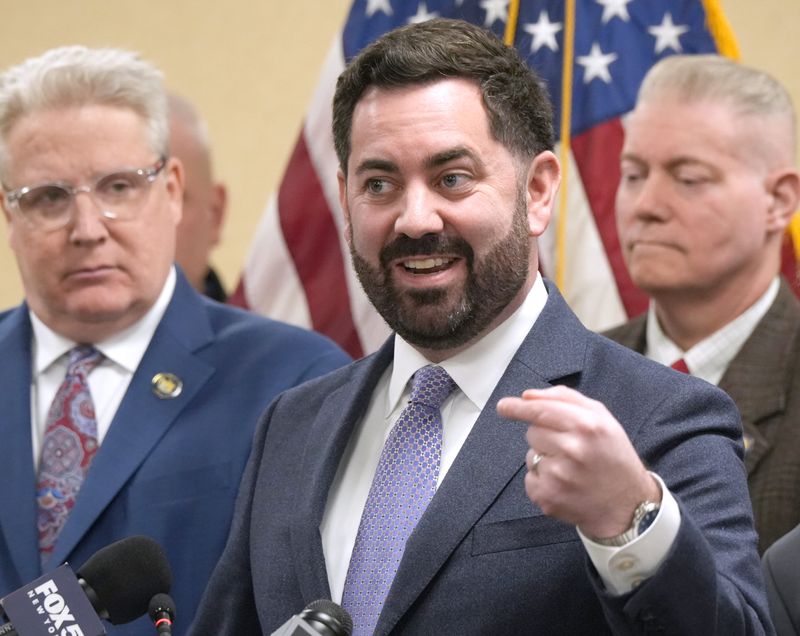
“They want you to believe this is simply about protecting everyone from the evils of civil, federal immigration enforcement,” Rep. Mike Lawler declared at a fiery press conference in opposition to the bill on Feb. 2. “But that is a lie. The bill is 100% a sanctuary law designed to prevent local law enforcement from cooperating with federal law enforcement.”
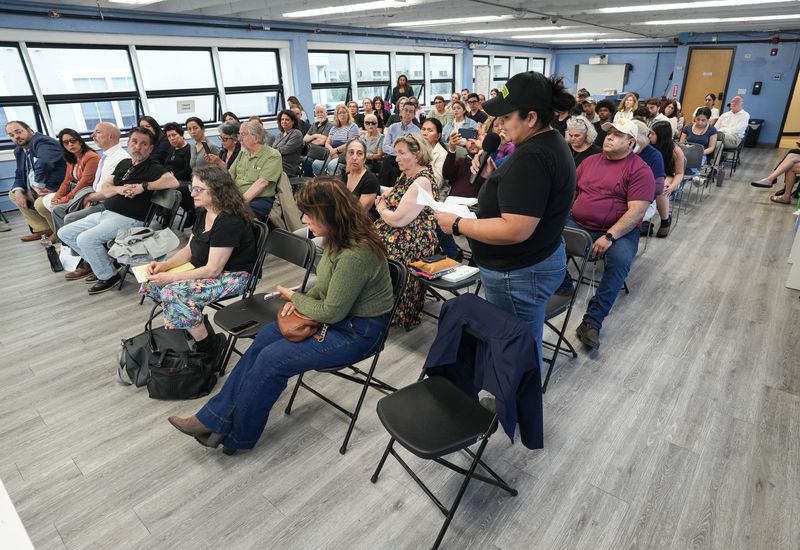
The bill is still awaiting a public hearing and vote. At an initial public discussion before the Legislature, Rockland residents packed the chamber to talk about the proposal, with views on both sides but many speaking in favor of it and criticizing ICE.
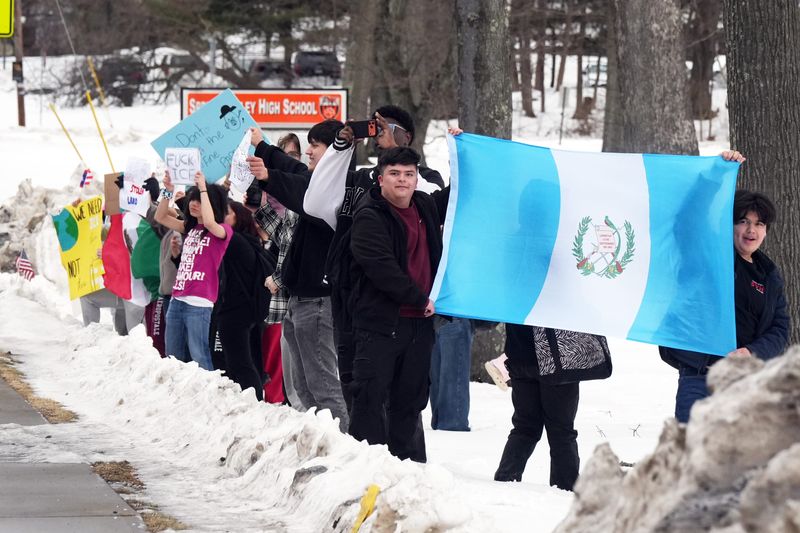
Among those who spoke in support of the Safety and Dignity for All Act at a press conference in February was Carlos Alonso, an organizer with Proyecto Faro, a Rockland-based immigrant support group. In a recent interview, Alonso told the USA TODAY Network his organization has been getting at least 100 calls every month from people worried that they or their loved ones could be deported.
Some have upcoming immigration hearings, he said, and are wondering if they should show up and risk being nabbed by federal agents. Others have decided to leave the U.S. before they find themselves separated from their children, and are looking for advice on how to proceed.
If passed, the county law would send a message to worried residents that their rights will be respected, Alonso argued. He said it might also build momentum for the statewide bill, the New York For All Act.
“It is a start, and it is an important start,” Alonso said.
Jump in ICE requests to NY police to hold suspects
Amid the debate, the detainers keep pouring in.
Whenever immigration authorities want police or a jail or prison to hold someone for their agents to scoop up, they send a detainer request. Nearly 3,400 were sent to agencies across New York in 2024, according to ICE data collected by a research group known as the Deportation Data Project and analyzed by the USA TODAY Network.
That number nearly quadrupled In 2025 under the second Trump administration. New York’s detainers totaled about 12,700 that year, and are on track to surpass that level in 2026, according to the ICE data.
Local authorities are free to decide whether to comply. How they respond is not always stated in ICE’s detainer data, but the records do confirm that some agencies decline some or many ICE detainers they get. The Westchester County jail, for example, will only honor requests backed by a warrant that a judge has signed. So some are granted and others rejected.
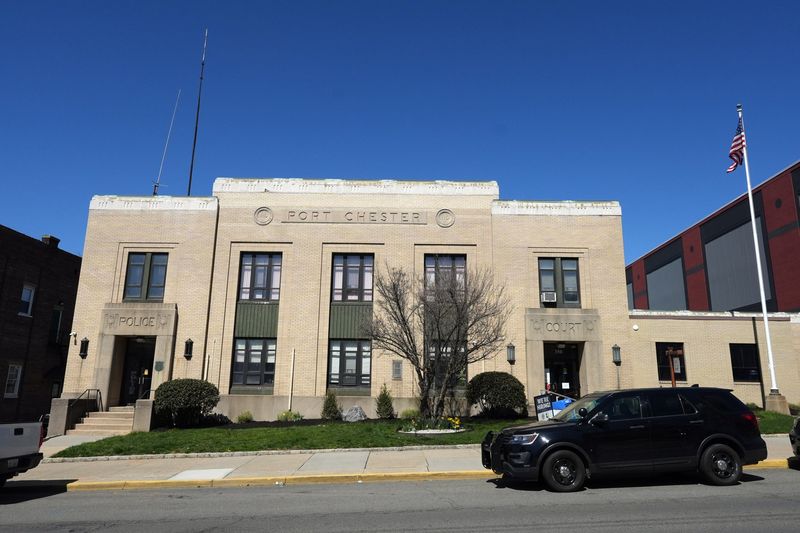
Port Chester police, on the other hand, have been particularly compliant.
Out of 52 people sought through detainers from last September through February, at least 45 wound up in federal detention, according to the data. Among those being pursued, 18 had unspecified criminal charges pending against them, and 15 had convictions dating back as far as 2004 for drunken driving, vehicle offenses, stealing or other charges.
But 19 people sought in that six-month period had no charges or convictions at all, the data shows. And at least nine of those who were then detained, likely after being turned over to ICE by the Port Chester police, already had been deported as of early March.
The data show only one instance out of 52 requests when the department refused a detainer.
The Westchester law requiring that detainers be backed by a judicial warrant applies only to county agencies like the jail and Public Safety Department. It doesn’t regulate the cooperation decisions by the many municipal police forces in Westchester’s cities, towns and villages.
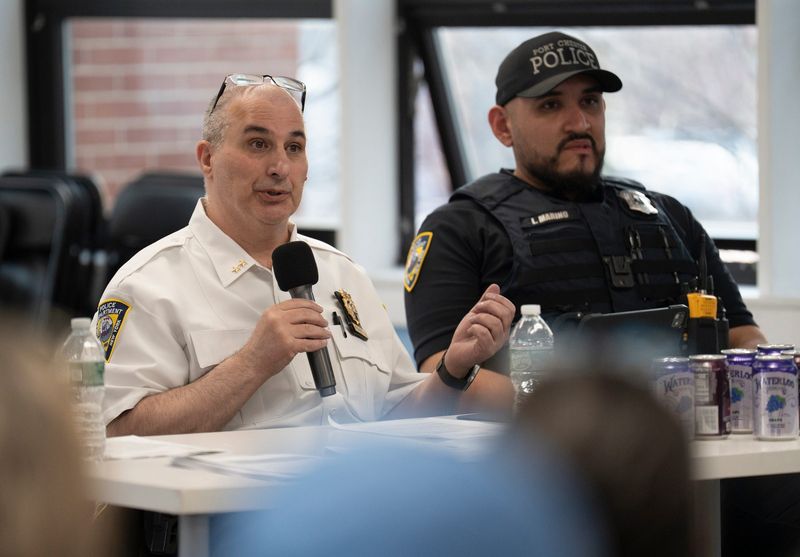
In emailed responses to questions from the USA TODAY Network, Port Chester Police Chief Chris Rosabella said his department’s policy is to hold someone for ICE as long as there’s an active federal arrest warrant or a judicial detainer for that person. It doesn’t matter, he explained, if the warrant is strictly for an immigration violation, without any other criminal charge.
“It can be a warrant for any offense,” Rosabella wrote. “It has been our stance that an arrest warrant is an arrest warrant, regardless of the underlying crime.”
He said the police interaction with ICE often begins right after an arrest, when the officer searches a national database to see if a suspect has any outstanding warrants. That search sometimes triggers an alert in ICE offices.
“This is a standard practice for anyone who is arrested,” the police chief said. “If there is an arrest warrant from any jurisdiction, they would contact us or we would contact them to confirm.”
The USA Today Network reported in February on a spate of ICE arrests and the fear it had stoked in Port Chester, a village of 31,000 in which about 60% of residents are Hispanic and 44% are immigrants. The article recounted the Jan. 3 police arrest of Milton Garcia, a 46-year-old father of two stopped for riding a bicycle on the sidewalk and taken to the police station in handcuffs, according to the arrest report.
Garcia was taken into custody by federal agents outside the police station after being released, and was being detained in MIssissippi when the article was published. He has since returned to Guatemala after opting for “voluntary departure,” according to his attorney. Port Chester police say they have no records of communicating with federal agents about Garcia on the date of his arrest.
ICE officials didn’t respond to questions from the USA TODAY Network about the two separate cases involving Garcia and Rosas Jimenez, to explain why either man had been detained and ultimately induced to leave the U.S. with their families behind them.
Legal protections revoked during detention
Yet Rosas Jimenez had no warrant against him when Port Chester police turned him over to ICE, according to one of the attorneys who waged a futile court fight to free him.
“No, absolutely not,” said Paige Austin, supervising litigation attorney at Make the Road New York, a nonprofit advocacy group. “Not only does he not have an outstanding federal warrant, he had legal status.”
From his arrest to everything that followed, what happened to Rosas Jimenez stands out for Austin amid the flood of deportation cases that are occurring.
“Even by the standards of what we’re going through right now, this was outrageous on so many levels,” she said.
Rosas Jimenez was granted what is known as Special Immigrant Juvenile Status, based on a 2023 ruling in Westchester County Family Court that he had been abandoned by his father in Peru and was better off with his mother and siblings in the U.S., according to a court filing. With that came “deferred action,” a pause that enabled him to stay in the U.S. through 2028 with no fear of deportation.
Rosas Jimenez learned English after coming to the U.S. and got his GED, married last July, and was working at a Dunkin’ Donuts in Valhalla, according to his court papers. He was due to start classes at Westchester Community College in January, with plans to continue the English and electrician classes he had been taking.
All that was derailed on Nov. 30. The officer who stopped Rosas Jimenez says he followed the car because of its tinted windows, and soon learned its registration had been suspended “due to no insurance on file,” according to the arrest report. The account doesn’t say how and why ICE got involved, but ends with a federal agent taking Rosas Jimenez into custody nearly six hours after the stop.
Rosas Jimenez has no criminal record, he and his attorneys say in court papers.
After he was taken from the Port Chester police station, he was held by ICE in Manhattan and Elizabeth, N.J., then flown to Texas. From there he was bused to the Central Louisiana ICE Processing Facility, where he says he was held with other immigration detainees in inhumane conditions and refused medical treatment.
In the meantime, his attorneys learned that once they filed papers to challenge his detention, federal authorities responded days later by revoking his “deferred action,” exposing him to deportation. Austin says the legal team then applied for asylum for Rosas Jimenez but the request was rejected, leaving few remaining options.
Seeing no other recourse and desperate to leave his federal confinement, Rosas Jimenez finally requested “voluntary departure” — deportation back to Peru.
Chris McKenna covers government and politics for The Journal News and USA TODAY Network. Reach him at CMcKenna@usatodayco.com.
This article originally appeared on Rockland/Westchester Journal News: From traffic stop to deportation, this is how NY police cooperate with ICE
Reporting by Chris McKenna, New York State Team / Rockland/Westchester Journal News
USA TODAY Network via Reuters Connect