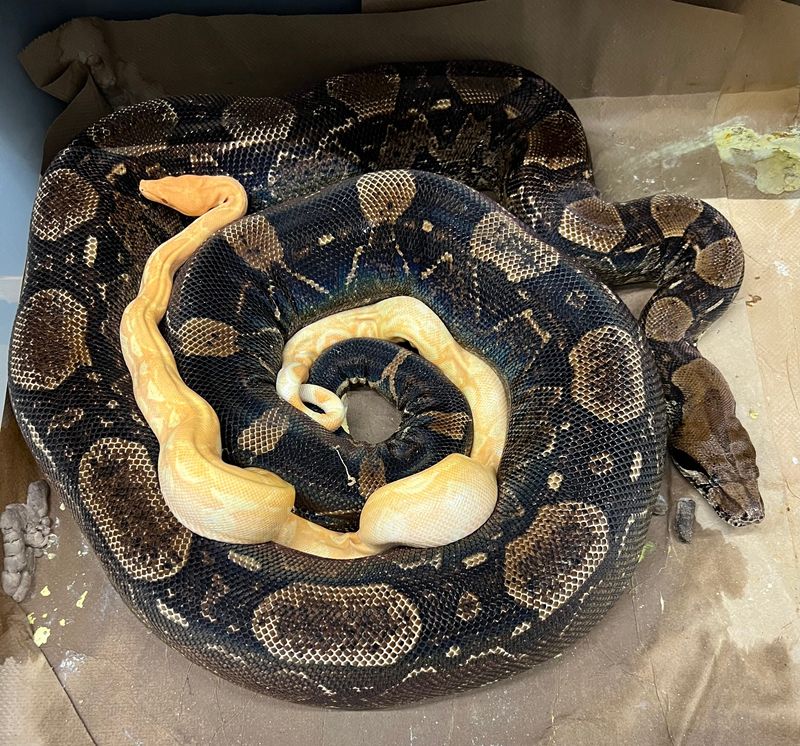
Big Shirl died with a steel bolt in her brain in April 2023 and was still squirming when her owner of more than a decade was called.
The pet boa constrictor, who Bill McAdam had raised since she was just 8 inches long, was hauled from her enclosure in a Broward County warehouse by state wildlife officers — six feet of docile muscle and pregnant — before she was killed.

It was two years after invasive Burmese and reticulated pythons were made prohibited species in Florida as the state scrambled to catch up with a reptilian eating machine that had overwhelmed every furry creature in the Everglades.
But boa constrictors aren’t prohibited and the state admits Big Shirl’s death was a mistake made by officers in a welter of killing that saw more than 30 caged pythons housed in the same facility euthanized.
Now, three years after what snake enthusiasts have dubbed the “Holy Thursday Massacre” because it preceded Good Friday and Easter that year, McAdam is still in court trying to get restitution despite the state’s admission of fault.
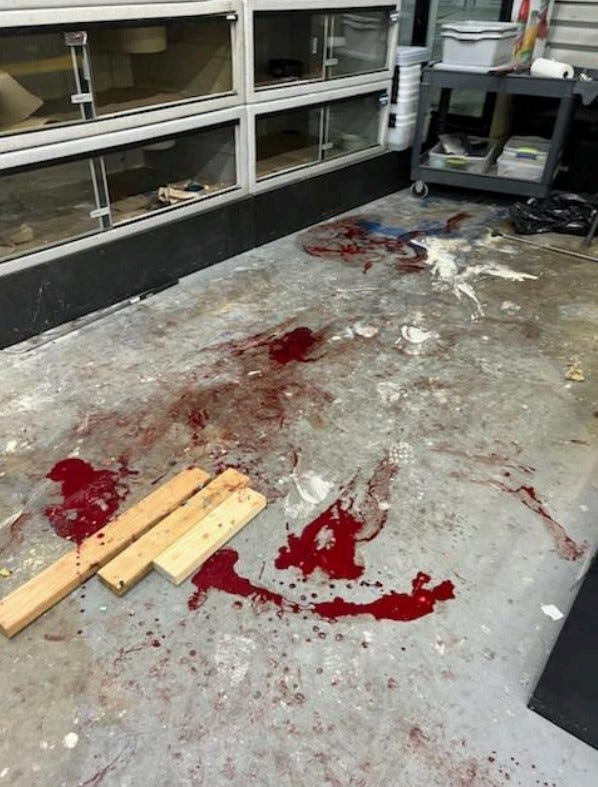
The Florida Fish and Wildlife Conservation Commission added new guidelines on euthanizing animals after gruesome images show a blood and feces-covered warehouse floor following the deaths.
FWC Chairman Rodney Barreto called the incident “bad optics” at the time.
McAdam, who filed a lawsuit against FWC in Leon County in 2023, calls it a tragedy.
“I breed a lot of snakes and when you are doing this, you don’t get attached to a lot of them,” McAdam said. “Big Shirl was just a good snake. She was calm, you didn’t even have to reach in and grab her. Just put your hand in and she would crawl onto it.”
What happened during the ‘Holy Thursday Massacre’?
The 2021 rule change that added Burmese and reticulated pythons to the prohibited species list was lauded by conservationists hoping it will reduce the population of harmful invasive species in the wild. The list also included Argentine black and white tegus, green iguanas and 13 other high-risk nonnative snakes and lizards that pose a threat to Florida’s ecology.
But it was controversial among reptile breeders and lizard-loving pet owners who were allowed to keep their pet tegus and iguanas until death as long as they were chipped and registered.
McAdam and his former partner Chris Coffee were commercial snake breeders that had more than 100 Burmese and reticulated pythons that they needed to find new homes for. The men were able to place all but 32 pythons, McAdam said. The state says there were 36 remaining.
The lawsuit filed by McAdam and Coffee says FWC officers initially came to the warehouse in February 2022 and took “constructive possession” of the remaining pythons but that McAdam and Coffee were responsible for caring for the snakes until removal could take place.
So, the snakes were still there in 2023 when FWC says in its response to the lawsuit that officers arrived and “discussed various options with Coffee regarding his continued possession of the snakes”.
Coffee was “coerced”, according to the initial legal complaint, into allowing the officers to euthanize the snakes, a process McAdam said Coffee thought would involve something less harsh than a captive bolt device.
The device, used often on pythons in the wild, punches and retracts a steel bolt into the animal’s brain. FWC guidelines say the brain must then be scrambled with a screwdriver-like instrument called a pithing tool.
Coffee cautioned the officers not to touch Big Shirl, whose identity was posted on her enclosure. They agreed, acknowledging she was a pet and an allowed species. Coffee set up a camera with the officers’ knowledge to record the euthanasia of the other snakes.
During the more than hour-long endeavor, which left one officer bitten in the hand and where it’s unclear whether pithing occurred, Big Shirl was killed.
Video captures shock, anger in wrongful death of Big Shirl
In a video posted to YouTube by the Florida division of the United States Association of Reptile Keepers, an officer puts his hands to his head in apparent disbelief and another officer’s jaw drops open when they realize they had just killed Big Shirl.
“Oh my God! Why?” Coffee can be heard yelling in the background of the video when officers say the “boa is dead.”
“It was a mistake,” someone says.
“How? I reminded you 10 times!” Coffee exclaims.
Big Shirl wasn’t just a pet, she was also considered a “red dragon” boa constrictor, meaning she carried a rare genetic trait that could produce striking high-value orange and yellow babies. She was carrying 32 snakelets at her death, including 14 that were the coveted red dragon subtype, according to the lawsuit.
FWC admits it messed up when officers killed Big Shirl
McAdam rushed to the warehouse when Coffee called him about Big Shirl’s demise.
“When I got there, it just smelled like iron, like blood. There was blood all over the place,” McAdam said. “I got messages from all over the world afterward. Some people said they weren’t snake people, but that what happened was wrong.”
In a May 2023 FWC Commission meeting Barreto sought to tamp down the international attention saying the reptile community was “taking it a little too far” and acting like “it’s our daily routine.”
Still, FWC Executive Director Roger Young issued a memo in December 2023 with guidance on euthanasia, which he defined as killing a sick or injured animal. It also included guidelines on the humane killing of wildlife that is neither sick or injured in cases where they are a threat to public safety or invasive.
His two-page directive outlines required training and says animals held in captivity cannot be killed at a privately-owned facility without prior approval from a superior officer. Also, the memo notes that officers should “make every effort to euthanize or humanely kill wildlife away from public view.”
“We own the fact that there were some mistakes made in the euthanasia process and the killing of the boa,” Young said at the May 2023 meeting. “That was an accident. That was on us.”
Why won’t the state pay for Big Shirl’s death?
McAdam and Coffee sued FWC on two counts including unjust enrichment for the state making them pay for the care and feeding of the snakes for a year after they were “constructively possessed”, and inverse condemnation for taking their property without due process.
The state tried to have the case dismissed but that was rejected. It appealed. A December 2025 ruling from Florida’s First District Court of Appeal says the state is immune from the unjust enrichment charge but not the inverse condemnation complaint.
A case management hearing has been set for May 19.
Attorney Kenneth Oertel, who is representing McAdam and Coffee, said he is assessing the value of Big Shirl and her snakelets, which were about a month from being born. Boa constrictors have live births.
There’s also the consideration of future worth if Big Shirl had survived and been able to breed more red dragon litters. Boas can live up to 30 years in captivity and breed until about the age of 20. Big Shirl was 11 when she died.
Oertel said he estimates the value as more than $50,000. McAdam said it could be millions of dollars.
“This is unique as far as I know,” Oertel said about the death of Big Shirl and subsequent legal maneuvering. “And I’ve done a lot of wildlife cases.”
Kimberly Miller is a journalist for the USA TODAY NETWORK FLORIDA. She covers weather, the environment and critters as the Embracing Florida reporter. If you have news tips, please send them to kmiller@pbpost.com. You can get all of Florida’s best content directly in your inbox each weekday by signing up for the free newsletter, Florida TODAY, at palmbeachpost.com/newsletters.
This article originally appeared on Palm Beach Post: FWC killed a pregnant pet snake by mistake, but fights restitution
Reporting by Kimberly Miller, USA TODAY NETWORK – Florida / Palm Beach Post
USA TODAY Network via Reuters Connect