Editor’s Note: Jack Becker is the editor of Caprock Chronicles and is a Librarian Emeritus from Texas Tech University. He can be reached at jack.becker@ttu.edu. Today’s article is the fourth of an extended monthly series about Route 66 by frequent contributor Chuck Lanehart, Lubbock attorney and award-winning Western history writer.
“There she sits buddy just a gleamin’ in the sun

There to greet a workin’ man when his day is done
I’m gonna pack my pa, and I’m gonna pack my aunt
I’m gonna take ’em down to the Cadillac Ranch.” —Bruce Springsteen
Few patches of pavement have stirred the creativity of songwriters, filmmakers, artists and authors like Route 66, and many important works were inspired by the Panhandle of Texas.
John Steinbeck’s Pulitzer Prize-winning 1939 novel, “The Grapes of Wrath,” follows the Joad family on its epic journey west from Kansas to California, seeking to escape the Dust Bowl during the Great Depression of the 1930s.
Their course is Route 66, described as “the path of a people in flight, refugees from dust and shrinking land, from the thunder of tractors and shrinking ownership, from the desert’s slow northward invasion, from the twisting winds that howl up out of Texas . . .” Steinbeck’s 66 stretches “across the Panhandle of Texas. Shamrock and McLean, Conway and Amarillo, the yellow. Wildorado and Vega . . . and there’s an end of Texas.” Some call the book “The Great American Novel.”
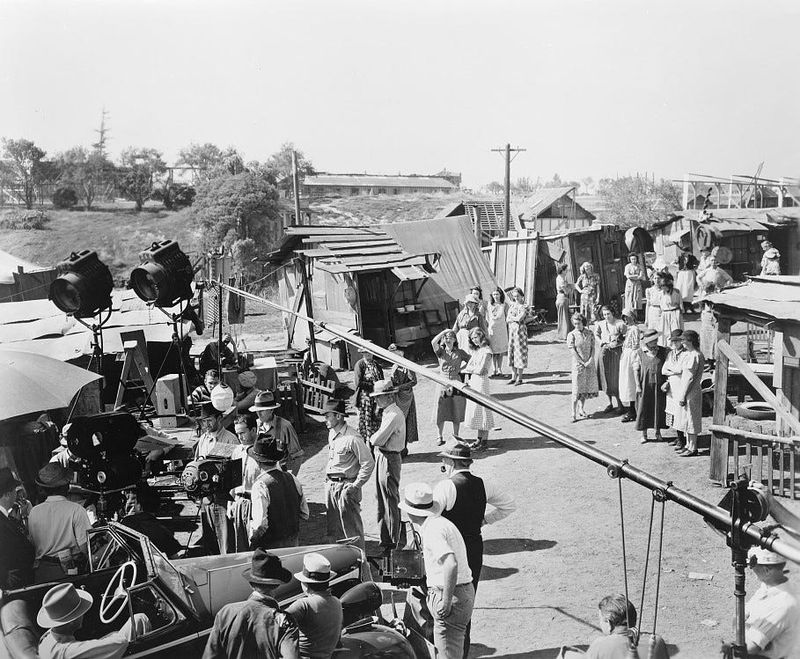
“The Grapes of Wrath” was adapted for a 1940 film of the same title, starring Henry Fonda and directed by John Ford.
Like the book, the movie is considered a classic, one of the greatest of all time. Portions of the movie were filmed in tiny Glenrio on the Route 66 Texas-New Mexico border.
Jack Kerouac’s 1957 novel, “On the Road,” which mentions Route 66, inspired a generation to travel wherever they wished and to see whatever strange, fantastic and different sights they wanted.
More recently, the 2006 Disney/Pixar animated film “Cars,” is the story of Lightning McQueen, a selfish and arrogant young racecar who, on the way to the most important race of his life, becomes stranded in a forgotten town along US Route 66 called Radiator Springs, where he learns about friendship and begins to reevaluate his priorities.
Many of the fictional places depicted in the film were inspired by Route 66 Texas locations, including Shamrock’s spectacular Tower Station/U-Drop-Inn—considered a prime example of Art Deco architecture—called Ramone’s House of Body Art in the movie.
Another Cars location was inspired by Adrian’s Midpoint Café, depicted as Flo’s V-8 Café in the movie.
The popular 1960-1964 CBS television series “Route 66” followed characters Buz Murdock (played by George Maharis) and Tod Stiles (Martin Milner) as they traveled the country in a Corvette convertible, looking for love and adventure.
Twelve of the show’s 116 episodes were shot in Texas, but all were staged well south of the actual Route 66 in the Panhandle.
Episodes like “Kiss the Maiden All Forlorn,” filmed in Lewisville and “The Cage Around Maria,” filmed in Houston, depict every setting other than Route 66 on the Llano Estacado.
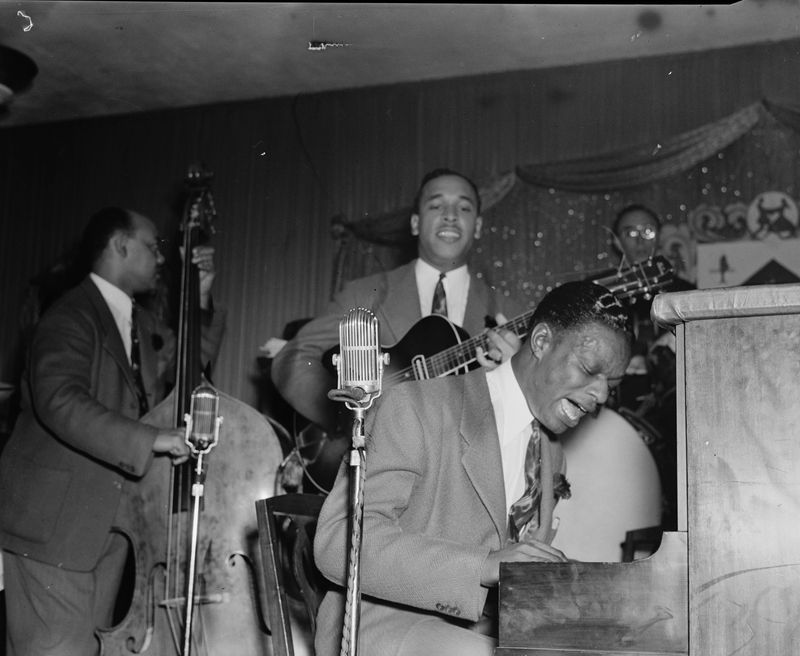
In music, Route 66 was immortalized in the 1946 hit song “(Get Your Kicks on) Route 66,” composed by Bobby Troup and performed by the Nat King Cole Trio. The catchy rhythm and blues number includes the verse:
“Now you go through St. Louis
Joplin, Missouri
And Oklahoma City looks mighty pretty
You’ll see Amarillo
Gallup, New Mexico
Flagstaff, Arizona
Don’t forget Winona
Kingman, Barstow, San Bernardino”
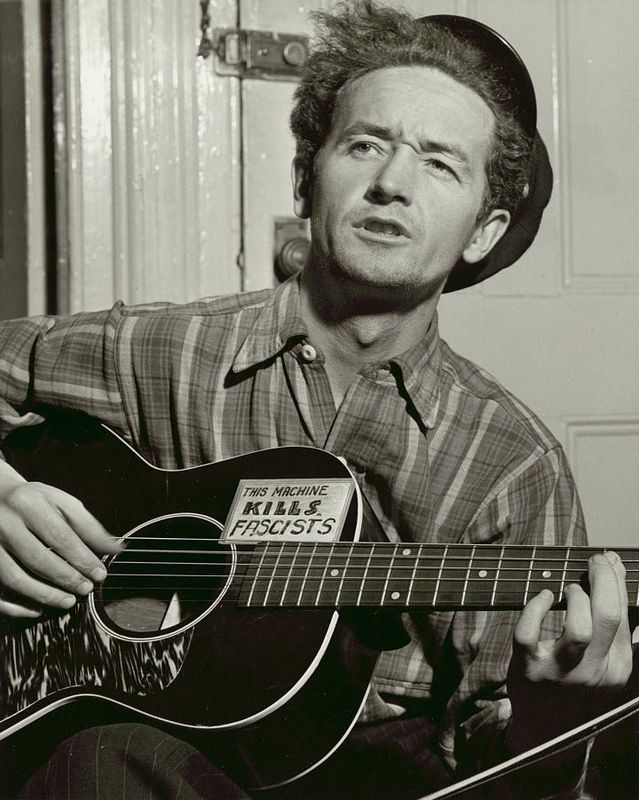
Famed songwriter Woody Guthrie (“This Land is Your Land”), who was raised not far from Route 66 in Pampa, wrote the 1947 folk song “Hard Travelin,” including the lyrics:
“I’ve been walking that Lincoln highway, I thought you knowed,
I’ve been hittin’ that 66, way down the road
Heavy load and a worried mind, lookin’ for a woman that’s hard to find,
I’ve been hittin’ some hard travelin’, lord”
Charley Pride’s 1970 No. 1 country song, “Is Anybody Goin’ to San Antone,” evokes travel on Route 66:
“Rain drippin’ off the brim of my hat
It sure is cold today
Here I am walkin’ down 66
Wish she hadn’t done me that way”
Similarly, country music superstar George Strait recorded a 1982 song associated with Route 66, “Amarillo by Morning,” a huge hit written by Terry Stafford and Paul Fraser:
When that Sun is high
In that Texas sky
I’ll be buckin’ at the county fair
Amarillo by mornin’
Amarillo I’ll be there”
One of the most popular stops along Texas’ Route 66 is the avant-garde work of art “Cadillac Ranch,” created in 1974 by California artists known as The Ant Farm. The sculpture—just west of Amarillo—consists of ten vintage Cadillacs (1949-1963) buried nose-first in a lonely barren field. Their huge tailfins point skyward, and visitors are invited to decorate/deface the vehicles with spraypainted graffiti.
The Cadillac creation inspired Bruce Springsteen’s 1981 song, “Cadillac Ranch.” Another spin-off of the sculpture is The VW Slug Bug Ranch, created in 2002 near Conway, featuring Volkswagen Beetles half-buried in the dirt.
Part five of this extended series, “Jim Crow and The Negro Motorist Green Book,” will be published next month.
This article originally appeared on Lubbock Avalanche-Journal: Caprock Chronicles Kicks on Route 66 part 4, legacy in popular culture
Reporting by By Chuck Lanehart, special for the Avalanche-Journal / Lubbock Avalanche-Journal
USA TODAY Network via Reuters Connect