(This story was written by a student journalist in collaboration with the University of North Florida.)
During Ramadan, billions of people all over the world fast from sunrise until sunset every day for a month. If you don’t know, Ramadan is the holiest month on the Islamic calendar and is a time for fasting, prayer, selflessness, giving to the needy and forgiveness.

Much like the Christian and Catholic observances of the Lent season leading up to Easter, Ramadan’s date on the Gregorian calendar changes each year, since it’s based on the lunar calendar. Ramadan 2026 ended on Thursday, March 19. And today, Friday, March 20, is Eid al-Fitr, or “the Festival of Breaking the Fast.”
Here’s what to know about Ramadan and what Eid al-Fitr is.
How do Muslims practice Ramadan? What is Ramadan?
There are Five Pillars of Islam: profession of faith, prayer, alms, fasting and pilgrimage. Ramadan involves the fourth pillar, fasting. Fasting is performed only from sunrise to sunset during Ramadan and lasts 29 to 30 days. It follows the lunar calendar, and some fasts can last 10-16 hours.
In Islam, there are five daily prayers: Fajr, Dhuhr, Asr, Maghrib, and Isha. During Ramadan, there is an extra prayer called Taraweeh, which is a special prayer during which many mosques recite pieces of the Quran.
Some mosques will read one 30th of the Quran each night of Ramadan and finish reading on the 27th night of Ramadan, which is Laylat-al-Qadr. This night is extremely important for all Muslims. Many mosques have a special prayer to finish the recitation of the Quran. There is another prayer called the Tahajjud or night that can be prayed at any time of the year.
Is Taraweeh only done in Ramadan? What is Tahajjud?
Taraweeh prayer is encouraged. Muslims believe that it multiplies your good deeds and forgives sins. This prayer is only performed during Ramadan. Taraweeh is a prayer that Muslims believe strengthens their faith and brings them closer to Allah. It is important to perform this prayer with sincerity and devotion.
Islamic prayers include Rakats, which are specialized sequences of movement. Each prayer has a specific number of Rakats; the most common practice is performing eight to 20 for Taraweeh, but Muslims perform as many or as few as they like.
Tahajjud is a prayer performed at night and is usually completed after the last obligatory prayer of the day. It is best performed in the last third of the night but can be prayed during any time of the night.
What is Eid al-Fitr? What is the purpose of Eid prayer?
Eid al-Fitr, which is this weekend, celebrates the end of Ramadan. Eid al-Fitr means “the Festival of Breaking the Fast.” It falls on the first of Shawwal (the next month after Ramadan), and Muslims celebrate by wearing new clothes, exchanging gifts, feasting and spending time with friends and family.
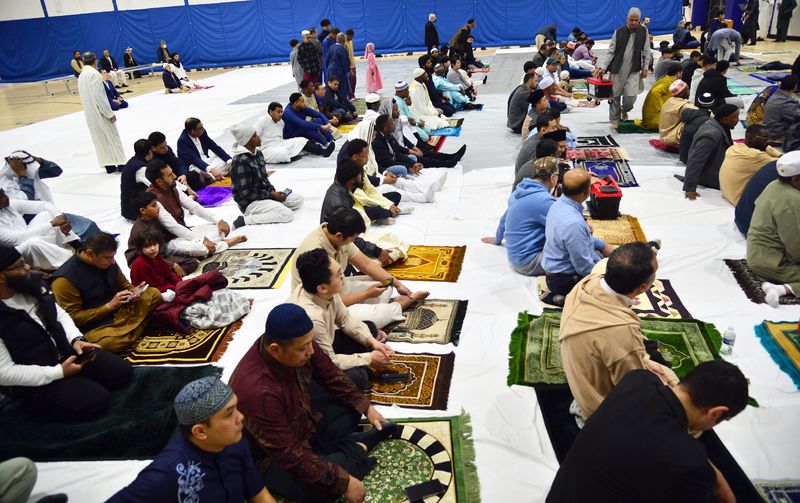
The morning of Eid al-Fitr is when many Muslims get ready for the Eid prayer. This is a special prayer that takes place only on Eid. It typically takes place in very large halls, open fields and mosques. Some mosques collaborate to say the Eid prayer as one large congregation.
When is Eid al-Fitr 2026?
Ramadan ended on Thursday, March 19, and Eid al-Fitr 2026 is today, Friday, March 20. Eid in Arabic means “festival” or “feast,” and Fitr means “breaking the fast.” Eid is a one-day holiday, but celebrations typically continue for around three days.
What are the rules of breaking fast during Ramadan?
There are a few things that can break a fast during Ramadan:
If a Muslim breaks their fast unintentionally, they are required to make up those days at a later date. However, if they intentionally break a fast (Kaffarah), they must fast for 60 consecutive days after Ramadan.
Who is exempt from Ramadan fasting?
People who menstruate or have post-natal bleeding are not allowed to fast or pray, so they make up missed days at a later date. Children who have reached puberty must fast, but young children are exempt.
What are the meals of Ramadan?
At sunset during Ramadan, Muslims break their fast with a meal called iftar. It varies between households, but it can range from Middle Eastern cuisine, like different types of curries (goat or chicken), to American dishes like steaks or barbeque. Staying hydrated (when not fasting) and getting plenty of rest during the busy month is important.
The pre-dawn meal (Suhoor) consists of common breakfast foods: High-protein foods, like eggs, chicken and fruits, like honeydew melon and dates. One tradition is to break your fast with a date, a festive fruit eaten during Ramadan.
Is it OK to say ‘Happy Ramadan’ as a non-Muslim?
Yes, it is OK to say “Happy Ramadan” or “Ramadan Mubarak” (Moo-bar-ack) as a non-Muslim. This shows Muslims that you care and support them during their holy month.
This article originally appeared on Florida Times-Union: What is Eid al-Fitr? Ramadan is over. What to know about breaking fast
Reporting by Fahad Amjad, Lianna Norman, University of North Florida School of Communications, USA TODAY Network – Florida / Florida Times-Union
USA TODAY Network via Reuters Connect