Fifty years ago, on March 17-21, 1976, 14 future members of the World Golf Hall of Fame and 21 current or future major champions were among 159 players who competed in a PGA Tour event on the First Coast.
It was not a Players Championship, despite the field’s star power.

It was the last of 12 Greater Jacksonville Opens, which began in 1965 at the Selva Marina Country Club in Atlantic Beach and rotated with Hidden Hills and the Deerwood Country Clubs. The tournament marked the return of the PGA Tour to the First Coast after the Jacksonville Open was played at Hyde Park and Brentwood from 1945-1953.
Florida Publishing Company President John Tucker and a cadre of other community leaders created the GJO. It later begot The Players Championship when PGA Tour commissioner Deane Beman brought The Players and PGA Tour headquarters to the First Coast in 1977.
Golf was a different sport in the 1970s. It was an era of persimmon woods, blade putters, Balata balls and outrageous plaid pants.
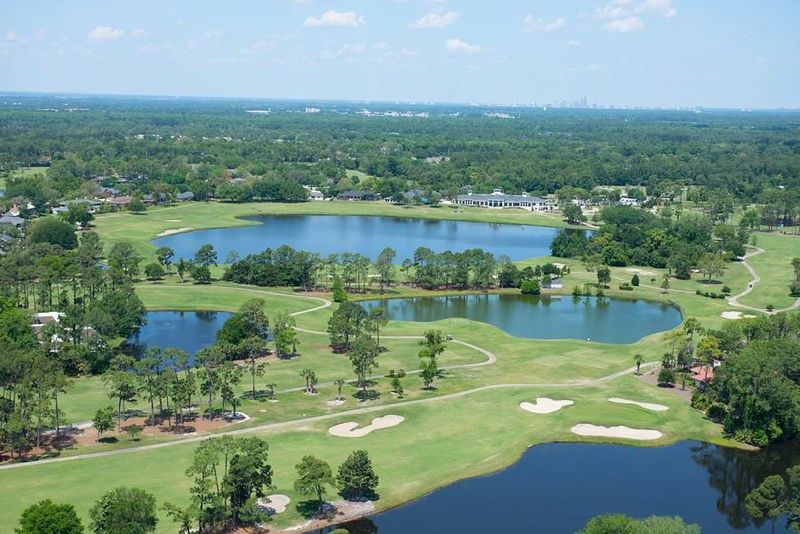
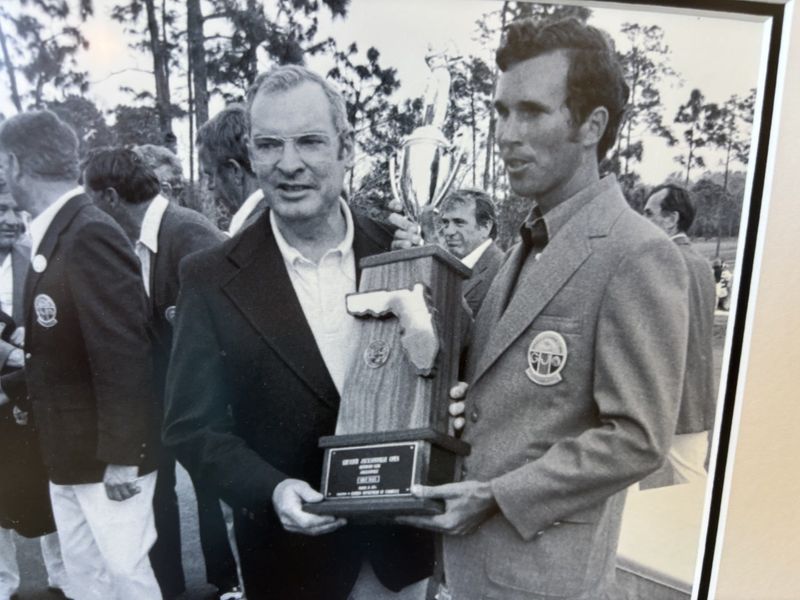
The last “GJO,” as area fans abbreviated it, was at Deerwood, the Southside course that was part of the first gated community in Jacksonville. Hubert Green won the tournament for the second time at 12-under-par 276, beating Miller Barber by two shots and Ed Doughterty and Mike Hill by three.
Green collected $35,000 from a total purse of $175,000. In last year’s Players Championship, Xander Schauffele took home $50,250 for finishing last and the players who tied for 20th made $240,000.
The top 10 in 1976 at Deerwood also included Gary Player, Ben Crenshaw, Lee Elder and Raymond Floyd, who would eventually join Green in the Hall of Fame.
Also in the field were Arnold Palmer, Lanny Wadkins, Tom Weiskopf, Don January, Bob Charles, Tom Kite and future Players champions Jerry Pate, Calvin Peete and John Mahaffey.
That was a leaderboard and a field over which any tournament director and TV network would drool.
GJO had a cozy, familiar atmosphere
But fans and volunteers who were at the 1976 GJO ― who were later credited by Beman for showing him the enthusiasm and support that made him believe the Tour could bring its marquee event to the First Coast ― remembered it as a more intimate affair, sans the corporate atmosphere and worldwide cachet that has come to define The Players.
So did PGA Tour pros who played that week and in previous GJOs.
“It was 100 percent different than the Players,” said Leonard Thompson, who tied for 25th that year. “There wasn’t a major championship atmosphere, but it was still a great field. Almost everyone played all four of the Florida events and many of us viewed it as the beginning of the year, when you were trying to get your game in shape.”
“It was more fun,” said Bob Duval, then the Timuquana Country Club head pro who played in the tournament on an exemption as the PGA Section champion. “It was a party week. People took the whole week off work to come to the tournament. The players didn’t come with a briefcase and an entourage. They were there to play golf, and there was a relationship with the fans that I don’t think you see now.”‘
“I enjoyed the Greater Jacksonville Open thoroughly,” said Bob Dickson, who missed the cut in 1976 and went on to work for the PGA Tour. “It was fun, it was supported so well by the fans, good galleries and I really believe that’s why it evolved into The Players. The volunteers were amazing. The GJO has a great history about it.”
And Beman banked on that spirit and support continuing at The Players.
“It’s my guess that if John Tucker and his friends hadn’t started the GJO, we would have never come here at all,” Beman said. “It was the volunteers and their enthusiasm for supporting the GJO that convinced me our championship would be embraced.”
GJO officials worked hard for good fields
Fred Seely, the Times-Union sports editor at the time, said the tournament volunteer leadership, led by former Florida Publishing Company President John Tucker and 1976 chairman Hamp Walker, was effective recruiters for a tournament that wasn’t pretending to be anything more than it was, but still landed stars such as Palmer and Player, with the occasional appearance by Jack Nicklaus.
“The GJO was not a big national deal,” Seely said. “You didn’t have the grandstands, the huge corporate tents and chalets. It was more of a personal, family-type of event. It was the place to be that week in Jacksonville but you knew everybody. It always got a lot of big names and John Tucker did a great job recruiting players. They’d go on the road to other tournaments, talk to the guys on the range and establish relationships with them.”
Fans parked their cars at homes within the Deerwood gates that had big backyards, or simply parked along Southside Boulevard, then a two-lane road. Among the cars on the side of the road would be the occasional caddies, who would sleep in their vehicles to save hotel costs.
Local businesses sponsored small tents with their own hospitality, food service and bars, and distributed their own passes.
But Duval said the GJO was never exclusive or pretentious.
“You’d be walking past a tent sponsored by a local bank but someone in there would spot you and say, ‘hey, come on in, have a drink,'” he said. “Everybody was welcome everywhere.”
The GJO also wrote the book on player care. The tournament provided courtesy cars for the biggest names, with cars from area Chevrolet dealers. Palmer, however, would usually be given the use of a Corvette that week.
Seely said the GJO was, to the best of his memory, the first tournament to offer child care for players who traveled with their families.
“There were perks that maybe other tournaments the size of the GJO didn’t have,” Seely said.
The GJO also became famous for another aspect of tournament week.
Swingers Tent became the place to party
Ah, yes … the Swingers Tent, with its pointed double entendre.
A large tent, with red and white stripes, the Swingers tent at Deerwood was located behind what is now the 18th green, which at the time was the ninth green.
It was open during the day for anyone with a tournament ticket, and at night, live music began before the player who hit the last putt could fetch his ball from the cup.
“The Swinger’s tent was an entity in itself,” said Anne Nimnicht, the 1997 Players chairman who also was a volunteer at all 12 GJOs.
Robert Davis said his father and Deerwod general manager Don Davis (who would go on to become the Players chairman in 1988 and serve as city council President) would stand outside the entrance to the Swingers Tent and as soon as the last putt went in each day, signal the band to begin playing.
“One time Don was too early,” Seely said. “Those guys started playing rock and roll and one guy still had to putt.”
Robert Davis, who was the Players chairman in 2013 and later the chairman for the Constellation Furyk & Friends, was 17 in 1976 and technically not allowed in the Swingers Tent.
He and some friends snuck in anyway. His mother, Alice, spotted him with a can of Budweiser, took it away, poured it over his head and kicked him out.
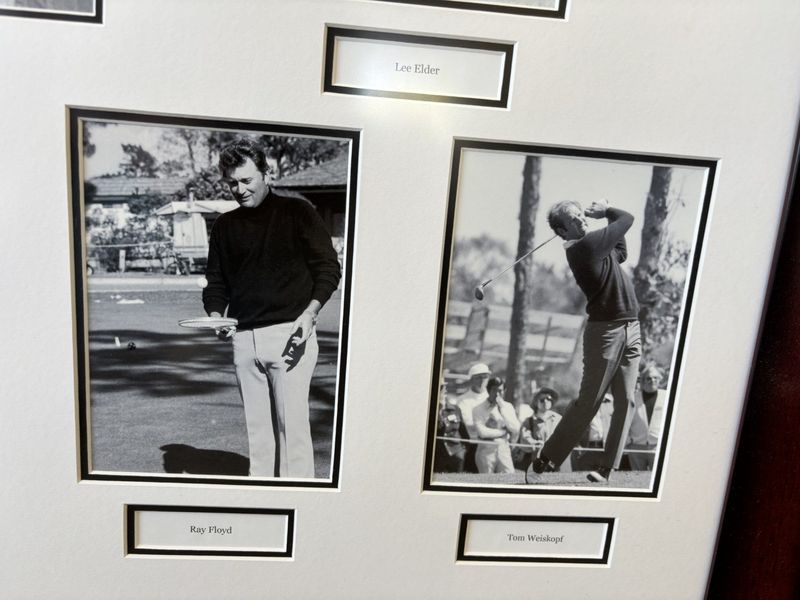
But not before he and his friends spotted Weiskopf and Floyd sitting in a corner, surrounded by women.
“The players came after their rounds,” Davis said. “Not all of them. You never saw Jack Nicklaus in there unless it was the pro-am party and he would have one beer with his partners. But some guys were in there a lot.”
Players didn’t mind hanging out with fans
It was a time before cell phone cameras and social media. Players didn’t have to worry about relaxing with a beer and a few fans ― especially female fans, and no one made a big deal if things got too cozy.
“The Swingers Tent was more fun than anyone could have in Jacksonville back then,” Bob Duval said.
Seely said players told him later it was one of the reasons they enjoyed the GJO.
“A number of guys told me that no other tournament back then did it like the GJO,” Seely said. “Jacksonville, in 1976 … there weren’t a lot of party places to go. The players didn’t have to go too far just to have a beer and fans didn’t take advantage of the situation, like bugging them for a lot of autographs.”
Arnold Palmer would enjoy a vodka martini. Most of the other players favored beer. And it was before weightlifting and physical therapists and traveling nutritionists.
Thompson said the extent of player partying at the Swingers Tent might be exaggerated.
“Maybe there were a handful of guys who went to the party tents at any PGA Tour event,” he said. “Most of us were working on our games and at the GJO, guys were getting ready for the Masters. It’s not like there was a mass exodus to the Swingers Tent after guys finished playing.”
But some of the players who did party were enthusiastic about it.
Past Gator Bowl President Rick Catlett, who caddied for eight-time Tour winner Billy Maxwell during Florida Swing events, said caddies also hit the Swingers Tent.
“I was in there one night with another caddie and we were watching some of the players drinking and having a ball,” Catlett said. “The guy said something to me about us having to caddie hung over the next day. I told him, ‘yeah, but they’ve got to play hung over.’ I think everyone had fun at the GJO, especially in the Swinger’s Tent.”
Tom Weiskopf and his long night
The stories are true about Tom Weiskopf … well, almost all of them.
Especially one, in the third round of the 1976 GJO.
Here’s a composite version drawn from several sources.
Weiskopf, a 16-time PGA Tour winner and the 1973 British Open champion, was staying at the Old Sea Turtle in Atlantic Beach and rooming with fellow Tour player Ed Sneed the week of the 1976 GJO. Weiskopf had an early second-round tee time and shot 69 to make the 3-over cut by five shots, while Sneed shot 7-over to miss the weekend.
The two then began hitting various Beach hangouts and returned to the Sea Turtle in the wee hours. At some point, Sneed woke Weiskopf up and got him in a courtesy car, with his Saturday tee time looming.
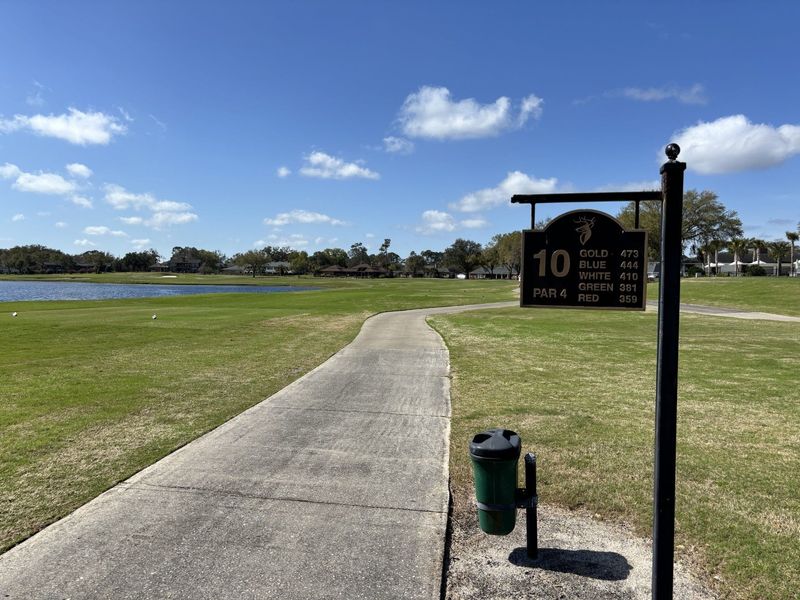
They made it, just after Weiskopf’s playing partner hit his tee shot at No. 10 (Now No. 1). There are mixed recollections about whether Weiskopf hit the tee shot barefoot and then put on his golf shoes, and whether he hit the fairway or sliced a drive off a tree, with the ball caroming into the fairway.
Either way, when Weiskopf got to his ball, he called for a rules official. Pete Sesso, a veteran member of the Tour rules staff, drove up in a cart, expecting Weiskopf to ask a question about his lie.
Instead, Weiskopf told Sesson, “Go get me a fried egg sandwich.”
When Sesso asked in surprise, “Why?”
Weiskopf replied, “Because if you don’t, I’m going to throw up on my ball and withdraw.”
Sesso went to the clubhouse, ordered the sandwich, and delivered it to Weiskopf on the second tee. Weiskopf went on to shoot a 71, followed it the next day with a 72, and tied for 15th.
“The greatest 71 I ever saw,” is the quote Sneed reportedly delivered.
“It’s all true,” Robert Davis said.
Weiskopf, who passed away in 2022 at the age of 79, stopped drinking in 2000 and acknowledged publicly that it cost him during his career.
“I challenge myself all the time: Why couldn’t I have done that? Why couldn’t I have worked out? Why did I drink?” he said in a Golfweek.com interview. “Well, I’m 20 years sober. It’s my greatest accomplishment. Because I was a partier, a good time guy. I had so much talent that I could turn it on at times when I wanted to, when I needed to, but it wasn’t important to me.”
1976 GJO had an intriguing field
In addition to the numerous Hall of Famers and major champions, the field at Deerwood had some interesting players.
Of local interest were Steve Melnyk (who went to Glynn Academy in Brunswick), Duval, Jackson High graduate and past CJO champion Dan Sikes and Hyde Park Golf Club co-owner Chris Blocker
There were future TV analysts Ken Venturi, Roger Maltbie, Gary Koch, Melnyk, Wadkins, Weiskopf, Bob Murphy and Andy North.
There was also 1975 U.S. Amateur champion Fred Ridley, who was a member of the University of Florida’s national championship team of 1973. He played in the GJO as an amateur and missed the cut with scores of 77-70. Ridley went on to become President of the USGA and in 2017 became chairman of the Augusta National Golf Club.
Future PGA Tour rules official Slugger White played and missed the cut (76-74).
Three players in the GJO fathered sons who later competed in The Players Championship: Duval (David, who won the 1999 Players) Dave Stockton (Dave Jr.) and Bobby Cole (Eric).
What’s been lost about the GJO?
Melnyk, who regularly played in the GJO, said that with its transition to The Players Championship, certain concessions had to be made to Beman’s goal to elevate the tournament.
“So many local guys worked hard to get the GJO off the ground, and it sort of pivoted, became more of a corporate thing,” he said. “It became different. Deane wanted total control of the tournament, wanted it to be special and have major status. They’ve done a fabulous job with that over the years and they don’t need to apologize for anything.”
Beman did keep a link to the GJO by hiring Tucker as the Players’ executive director in 1983.
The Swingers Tent eventually went away, with chalets rented by businesses, strictly for their employees and clients. The Players sponsors a concert on Military Appreciation Day but there is no other live music on the premises during Players week.
The volunteers that Beman cited are still an integral part of The Players and now number more than 2,000.
The contact Players have with fans on the course is limited to the autograph area, or just a wink, a nod or a smile, perhaps a fist bump to a kid while passing by. Players have their own dining area in the clubhouse and almost all of them return to their hotels or rented homes after playing or practicing.
With cell phone cameras and social media, players aren’t about to let video of them dancing on a table at the Lemon Bar go viral.
“It’s been hard to ever duplicate the GJO atmosphere at The Players,” said Bob Duval, whose son David won The Players in 1999. “There are big crowds, and I think everyone enjoys themselves. But it’s not quite the same.”
Robert Davis called the GJO and The Players, “two different animals.”
The GJO was a great community event,” he said. “So is the Players, but it’s got national and international attention. The GJO, the heritage of that tournament, got us to where we are today.”
This article originally appeared on Florida Times-Union: Greater Jacksonville Open was a First Coast party, especially at Deerwood
Reporting by Garry Smits, Jacksonville Florida Times-Union / Florida Times-Union
USA TODAY Network via Reuters Connect