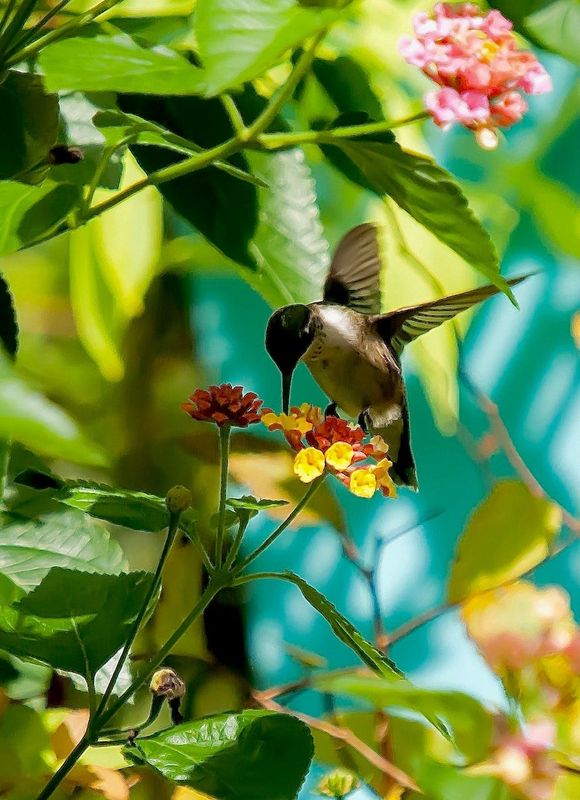
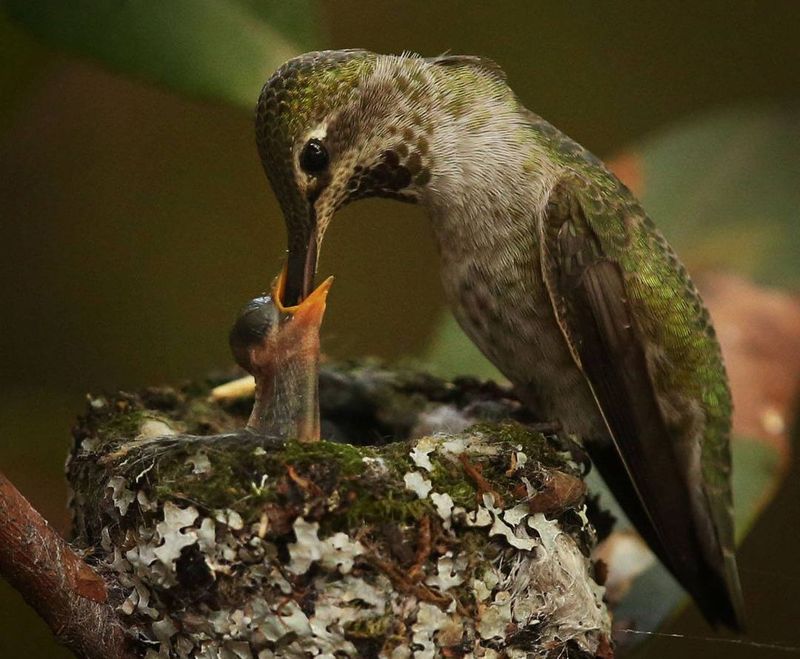
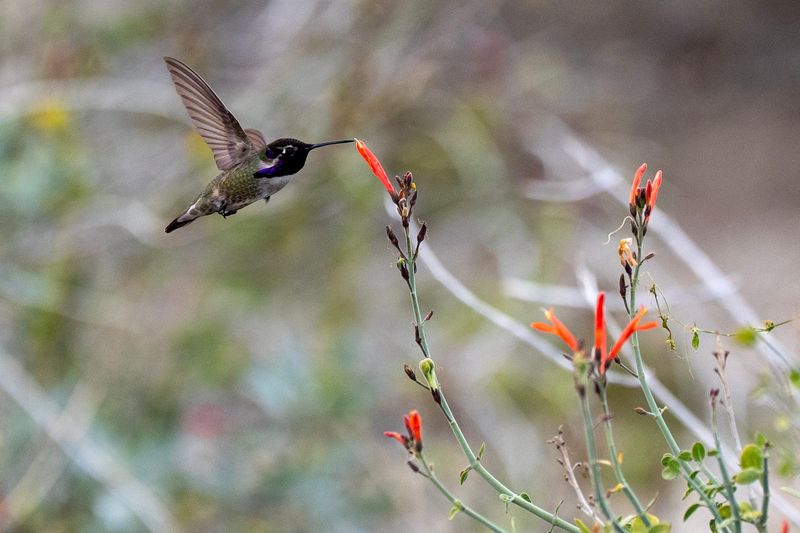
With spring nearly upon us, migrating hummingbirds are making their way across California.
Beginning in February, many hummingbirds left their winter homes in Central America or Mexico and began migrating north to their breeding grounds in the southern United States.

The speedy birds will continue further north late into the spring, stopping along the way to seek nourishment from flowers, shrubs, vines, spiders, and aphids.
By May, hummingbirds are expected to flood the U.S., especially east of Kansas, while small “charms” (groups) will move into the central mountain ranges, the Pacific Northwest and Northern and Southern California, according to the hummingbird spring migration map.
The first hummingbird arrivals in spring are usually males. Some, however, do not migrate, in areas like California, the upper Pacific coast, the southern U.S., and southern Atlantic Ocean areas, Hummingbird Central reported.
After their stay, the hummingbirds will make their southward journey home in the fall.
Hummingbird species in the Golden State
Some of the hummingbird species of California are migratory, generally wintering in the southwestern U..S and Mexico and pushing northward and toward the coast for summer breeding, according to the U.S. Department of Agriculture.
Anna’s Hummingbirds can be found throughout much of California year-round, while Costa’s and Allen’s are primarily found in Southern California year-round.
As of March 3, Anna’s hummingbirds were spotted in Los Angeles and near Chico and Redwood Valley, the migration map showed.
How to attract hummingbirds
You can sit patiently among the flowers while waiting and hoping that hummingbirds will arrive, or you can attract them to your home or place of business.
In California, where hummingbird charms are smaller, it’s best to draw them with red flowers. Planting petunias, salvia, and hibiscus around your property is an ideal way to help attract the birds that can flap their wings 15 to 80 times a second.
People can also lure the birds with a homemade nectar solution of 1 part sugar to 4 parts warm water in a feeder, which should be washed weekly.
According to Hummingbird Central, there’s no need to use red dye or pre-mixed commercial nectar, as it can be harmful to hummingbirds.
Placing multiple feeders on your property will prevent males, who can be territorial, from clashing with one another during feeding time.
How to photograph hummingbirds
People who want to view or photograph hummingbirds can wait for them to arrive, or mount one or several cameras near bird feeders.
Many bird lovers rave about outdoor-mounted, wireless, solar-powered security cameras with motion detection that can be viewed on mobile devices.
The National Audubon Society shared a few tips on how to photograph perched and moving hummingbirds, including:
Practice on birds at a feeder, experimenting with the camera-to-subject distance, framing, exposure, and even behavior.
If you have an entry-level SLR with a kit lens, you can still get great close-up shots of hummingbirds—all you need is a wireless remote control for your mounted camera.
Long focal-length lenses provide greater isolation from the background, allowing the photographer to be further from the subject.
Fast auto focus is not too important for perched birds; however, that changes when you migrate from perched to in-flight shots of the “small, fast, erratic, and entirely unpredictable hummingbirds.”
Auto focus is one of the few areas where more expensive cameras will produce markedly better results than cheaper ones.
Daily Press reporter Rene Ray De La Cruz may be reached at RDeLaCruz@VVDailyPress.com. Follow him on X @DP_ReneDeLaCruz
This article originally appeared on Victorville Daily Press: Here’s how to spot migrating hummingbirds in California this spring
Reporting by Rene Ray De La Cruz, USA TODAY NETWORK / Victorville Daily Press
USA TODAY Network via Reuters Connect