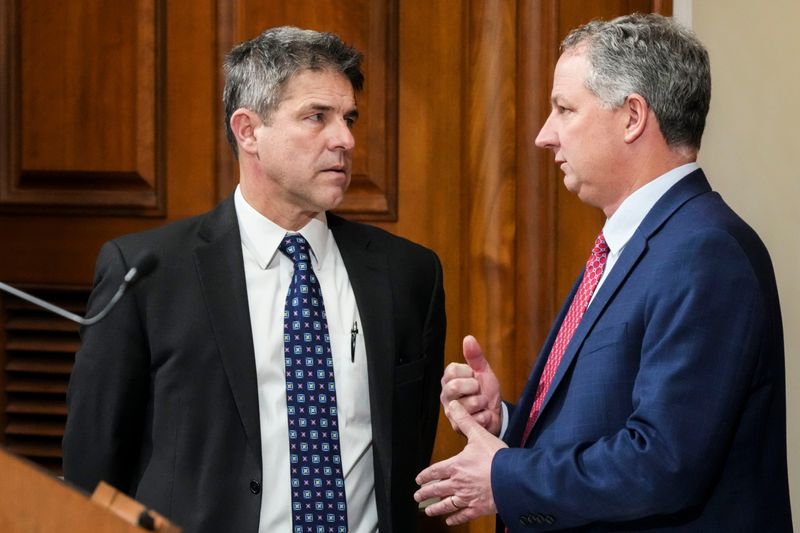
The Indiana House adopted a slate of tax changes from President Donald Trump’s One Big Beautiful Bill Act on Feb. 23, including temporary state-level tax cuts for workers earning tips and overtime pay that will sap millions from the state’s coffers.
Senate Bill 243 would conform to several provisions of the president’s signature legislation and allow retailers to begin rounding up or down to the nearest nickel or dime on cash transactions in response to the dwindling number of pennies. It passed out of the House in a 77-19 vote, but the Senate needs to give it final approval before it can go to Gov. Mike Braun for signing.

Indiana is one of a handful of states that have appeared willing to adopt the tax relief in the OBBBA, a key priority of the Trump administration as it rushes to address affordability concerns before the midterm elections. Bucking Trump’s tax cuts could have earned the state another dose of his wrath, too: the White House has publicly grilled Democratic states who have chosen to decouple from the bill.
“These state income tax cuts are a concrete way we can help hardworking Hoosiers keep more of their hard-earned money,” Senate President Pro Tempore Rodric Bray, R-Martinsville, said in a January news release.
Under the bill, Hoosiers could deduct up to $25,000 in tips and up to $12,500 in additional overtime pay. That could be significant, particularly for service industry workers who often have low base pay and may struggle through tax season if they don’t accurately calculate what they owe.
The tax relief effort comes just a year after the state issued last-minute budget cuts in response to a predicted shortfall. Now, buoyed by a higher-than-expected revenue forecast, the state is preparing to cut loose $174.3 million in projected income tax revenue in fiscal year 2027, according to Legislative Services Agency projections of the bill.
That number includes updates to the Internal Revenue Code and deductions for tips, a portion of overtime pay and auto loan interest payments, so long as the vehicle was purchased new and manufactured in the U.S.
While the state would also see a revenue increase of up to $55 million due to the bill’s changes to the tax amnesty program, according to LSA, it would still be down more than $100 million in revenue.
Another provision in the bill to phase out the penny would lose the state up to $2 million in sales tax revenue, according to the LSA, by allowing retailers to round down during cash transactions.
Local governments that impose a local income tax wouldn’t escape unscathed, either. After accounting for slight revenue increases and projected decreases, they would lose around $84 million in 2027. Those losses will hit as changes from Gov. Mike Braun’s sweeping property tax reform bill continue to take effect, pushing local governments away from relying on property taxes and encouraging them to adopt local income taxes instead.
“That’s not walkaround money,” Rep. Gregory Porter, D-Indianapolis, said on the House floor Feb. 23. “That’s survival money.”
But the bill’s House sponsor, Rep. Jeff Thompson, R-Lizton, focused instead on how the bill would keep millions of dollars with Hoosiers.
“When people keep more of their own money,” the bill’s House sponsor, Rep. Jeff Thompson, R-Lizton, said Feb. 23, “that’s a benefit for them.”
The provisions affecting tips and overtime would expire January 2027, meaning they could only be applied to the 2026 tax year. That’s a shorter window than what other states have done; for example, Idaho’s version of the bill, like the federal legislation, would apply the provisions from Jan. 1, 2025, through 2028.
While temporary, the Indiana legislature could choose to extend the tax cuts the following legislative session.
Contact breaking politics reporter Marissa Meador at mmeador@gannett.com or find her on X at @marissa_meador.
This article originally appeared on Indianapolis Star: Indiana House approves Trump tax cuts. Here’s who would benefit
Reporting by Marissa Meador, Indianapolis Star / Indianapolis Star
USA TODAY Network via Reuters Connect