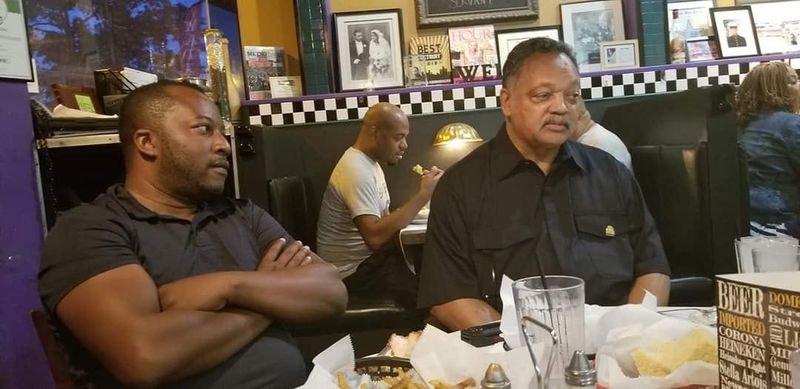
It has been one of the greatest honors of my life to spend as much time as possible with the Rev. Jesse Louis Jackson Sr., the man who picked up the mantle of civil rights leadership after the 1968 assassination of the Rev. Martin Luther King Jr.
His death at the age of 84, announced by the Jackson family in Chicago on Tuesday, draws the curtain on the strategic campaigns by King’s deputies, who not only protested in the streets, but also knew how to negotiate in the halls of power. In doing so, Jackson and others expanded opportunities for Blacks and other minorities. That is why the demise of Jackson, one of the last remaining lieutenants of King, leaves a huge void in the quest for a commanding moral force in these challenging times.

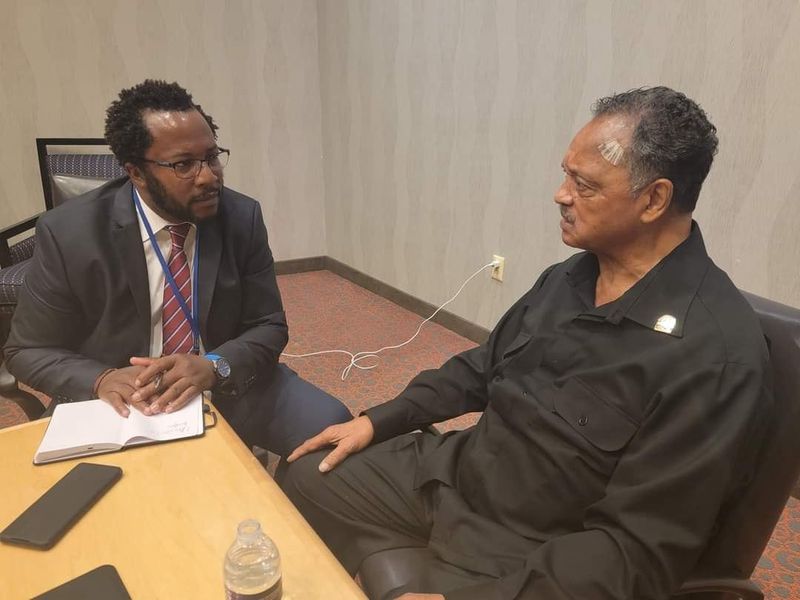
For more than two decades, I chronicled Jesse Jackson’s crusades for economic justice and political empowerment — the central missions of his Rainbow PUSH Coalition — giving me an up-close view of a larger-than-life figure.
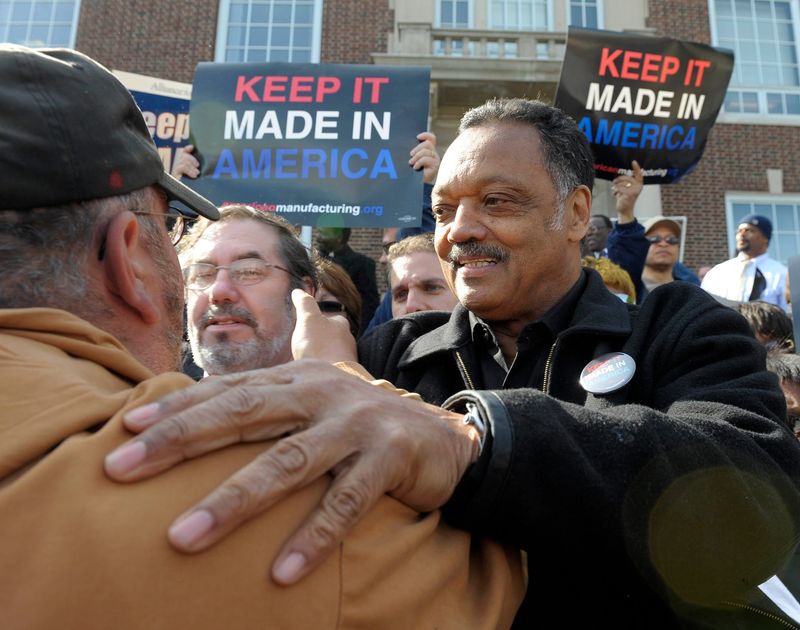
The encounters I had with Jackson revealed a man who had profound humility and was not dismissive of those who approached him, wherever he was, for help or sought his counsel in addressing their needs. When Black contractors were left out in the cold and needed the opportunity to fairly compete for business, Jackson’s signature on a letter carried enormous moral weight, and every CEO understood what it meant to have a demand letter signed by the Presidential Medal of Freedom recipient on their desk, asking them not to do business as usual.
Despite his superior ability to speak the language of the media, frame the conversation and carve out messages that can instantly arrest the attention of those in power, he always reminded journalists and historians the unfinished business of the movement once led by King is anchored on providing economic opportunities for those who live in abject poverty in urban and rural America.
That is why Detroit was key to his national campaigns. He visited the city regularly, urging local leaders to address issues of structural inequality. He didn’t want the recovery of the city to benefit only those with means and access to economic power, while vulnerable residents are left dealing with income inequality and other challenges that routinely make living in Detroit expensive for the poor.
Jackson, whose groundbreaking presidential campaigns in 1984 and 1988 paved the way for the ascendancy of former President Barack Obama and former Vice President Kamala Harris, knew how to get attention on behalf of those without a voice. He gallantly fought the White liberal elites of the Democratic Party in seeking to dismantle the caste system and open up the party to broader participation from those most impacted by public policy. And he influenced the elevation of Blacks to top ranks inside the Democratic National Committee.
In doing so, Jackson made himself as accessible as possible because he understood that one of the attributes of having crossover appeal was to stay close to the victims of inequality, the ones for whom there is no exit sign in the corridors of neglect and economic subjugation.
I had a vivid reminder several years ago of his accessibility to those who feel shut out. In August 2018, on the eve of the funeral of the Queen of Soul, Aretha Franklin, Jackson called me to say that he was at the Marriott Hotel- Renaissance Center and asked that I join him for dinner. I drove to the hotel, parked my vehicle and got into his and we drove together to Beans and Cornbread restaurant in Southfield.
When we got to the restaurant and sat down for a meal, he started cracking jokes about each of us. At one point, I almost asked him if he was competing for a role with comedian Chris Rock. But he was at ease at the dinner and started sharing stories about the movement; he even joked about some of his fellow freedom fighters.
In the middle of the dinner, we were interrupted by another customer who was seated a few tables away from us. He was trying to get Jackson’s attention because he had some posters of iconic Black people that he was selling, and he generously asked if Jackson could sign one of them. One of Jackson’s aides, appearing skeptical, wanted to find out right away what the request was really about, but the civil rights leader immediately got up from our table and went and sat next to the man who had been trying to get his attention. His aides looked at each other, and I just smiled.
Jackson sat at that customer’s table for 10 minutes talking with him as if they were old buddies, and then signed several posters for him. I remember hearing the man talk about how his family looked up to Jackson, and he confessed that he never imagined that he would meet him for the first time in a soul food restaurant that evening.
I also recall during the tense negotiations between the United Auto Workers and the carmakers, Jackson, even as his health was declining, felt the need to throw his weight behind the rank and file of labor. He called me from Chicago to say he was observing the tug of war between labor leaders and auto executives and made it clear that working people must be made whole.
For all that Jackson has done and represents in the political stratosphere, not much has not been said about his compassion at the human level. Despite his huge accomplishments on the national and global scene, including freeing hostages, Jackson remained grounded and authentic to the pilgrimage he led.
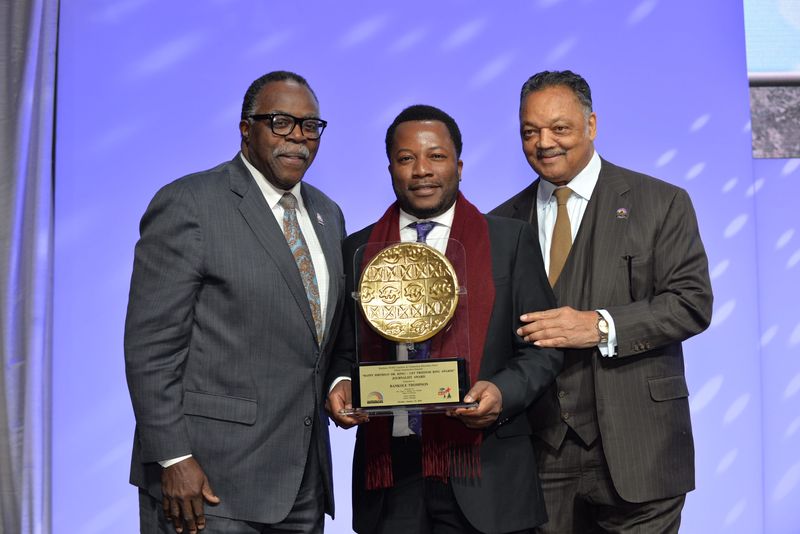
And he seemed to have imparted that to his children. For example, when I invited his daughter, Santita Jackson, the godmother of Obama’s daughters, to serve as the master of ceremonies for one of my book releases in 2010, she readily accepted my invitation and told me over the phone how much her father respected my work focused on poverty alleviation. That is why I also felt deeply honored in 2018 when he personally presented me with the Rainbow PUSH Coalition’s “Let Freedom Ring” Journalism Award to mark the 50th anniversary of the death of King.
The challenge now is for those who have benefited from his experience, generosity and years of wisdom, as well as his children, to carry forward his transcendent legacy. In fact, I had that conversation with his son, Congressman Jonathan Jackson, four weeks ago, when we met for dinner in downtown Detroit. I asked about his father’s health and told him that many are expecting him to be the conscience in Congress.
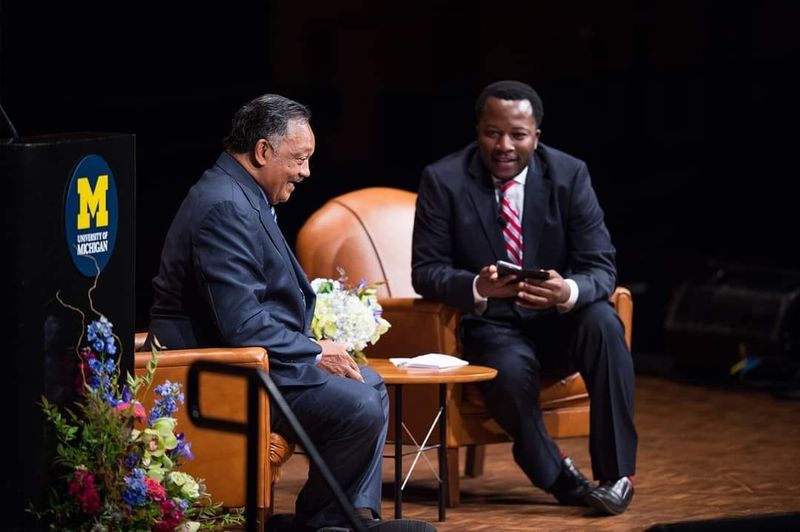
At a 2016 national symposium to mark Jackson’s five decades of civil rights leadership that I initiated and moderated at the University of Michigan in Ann Arbor, he told the audience at the Rackham Auditorium that “people need to have the capacity to have a balanced meal everyday,” while urging the students to “fight to forgive student loans, fight for that which are meaningful to you.”
Jackson has now joined the ranks of departed defenders of freedom like King, Mandela, Mahatma Gandhi and Pope Francis.
X (formerly Twitter): @BankoleDetNews
bankole@bankolethompson.com
Bankole Thompson’s columns appear on Mondays and Thursdays in The Detroit News.
This article originally appeared on The Detroit News: Thompson: Jesse Jackson’s legacy is humility, accessibility and compassion
Reporting by Bankole Thompson / The Detroit News
USA TODAY Network via Reuters Connect