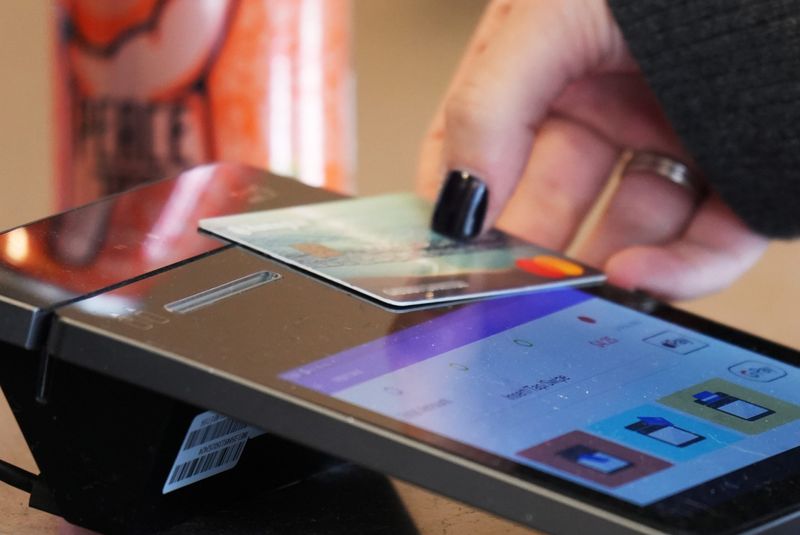
A federal court has upheld the Illinois Interchange Fee Prohibition Act, making Illinois the first state in the country to restrict banks and credit card companies from charging swipe fees on server tips.
On Feb. 10, a federal court in Illinois upheld the state law stopping swipe fees on taxes and tips.

As defined in the bill, an interchange fee is a charge or fee established by a card network for the purpose of compensating the bank for its involvement in an electronic transaction. The fee is levied as a way to protect businesses at the risk involved for using credit, compensation for the bank and maintenance to continue updating and protecting cards.
Merchants operating in Illinois have to pay a percentage of the transaction as an interchange fee, including non-revenue generating tip and tax.
Typically, a percentage of the transaction amount plus a fixed fee, varying from card to card. Percentages can range under one percent, all the way up to three percent.
Illinois Retail Merchants Association CEO and President Rob Karr said following the upholding of the bill Illinois ruling was a “historic win” over Wall Street.
“As the first law in the nation to restrict onerous swipe fees, we hope this measure can serve as a model for other states to seek relief for businesses and working families struggling with higher costs,” Karr said.
Karr said he plans on working with Gov. JB Pritzker, Senate President Don Harmon, House Speaker Emanuel “Chris” Welch and members of the General Assembly to ensure the law is implemented beginning July 1, 2026.
U.S. District Judge Virginia Kendall, who made the 47-page ruling, told Illinois businesses before that July 1 deadline a process for compliance must be set up.
“The Interchange Fee Provision is indisputably disruptive, requiring additional investments, hires, and new procedures to replace the current process,” the ruling reads.
At the heart of the act, Illinois businesses for the first time will no longer have to pay processors the portion of the fee that comes from out of their pockets, on tips and taxes. The state caps the amount businesses can save through not paying interchange on taxes to $1,000 per month, compared to previously 1.75% of total sales tax.
Kendall outlined that while compliance will be hard to install for banks, the state will always have a compliance cost, no matter who ends up bearing it.
The Illinois Bankers Association and Illinois Credit Union League among other national agencies released a statement the law will lead to higher costs and administrative headaches, as most businesses don’t have software to cut the tip and tax portion out of the chargeable swipe fee – a cost small businesses will have to make a one-time purchase for.
The bill was previously passed in 2024 and was to go into effect in July of 2025 but was blocked in federal courts by opponents of the bill like the American Bankers Association and who sued to block the bill.
An appeal on the federal court’s ruling has already been filed.
(This story has been updated with new information.)
Claire Grant writes about business, growth and development and other news topics for The State Journal-Register. She can be reached at CLGrant@usatodayco.com; and on X (Formerly known as Twitter): @Claire_Granted
This article originally appeared on State Journal-Register: Federal court upholds ban on credit card swipe fees in Illinois
Reporting by Claire Grant, Springfield State Journal-Register / State Journal-Register
USA TODAY Network via Reuters Connect