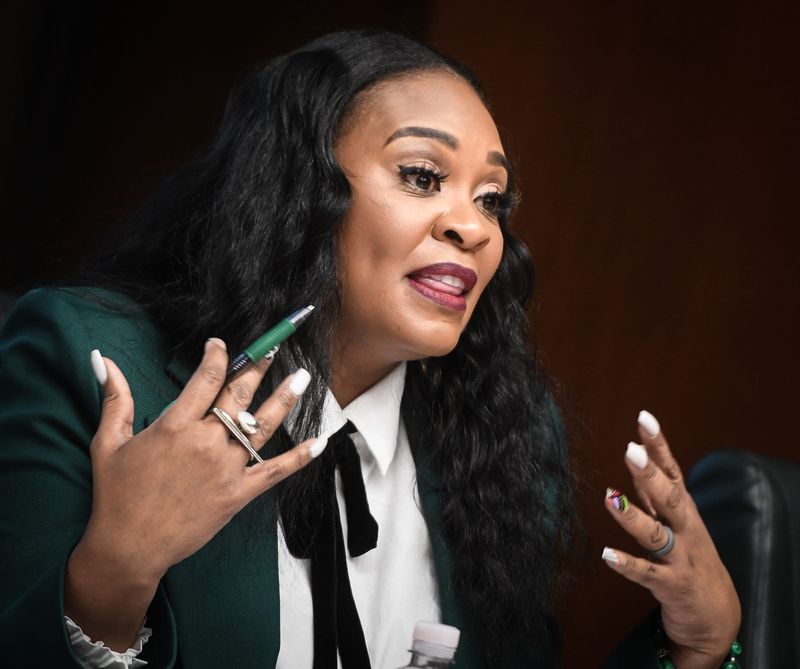
EAST LANSING – Michigan State University Trustee Rema Vassar is at odds with key university leaders after she called for the college to reverse changes to diversity, equity and inclusion made since President Donald Trump took office.
Vassar authored an opinion column on Feb. 2 that was published by Bridge Michigan, and called for MSU to reinstate numerous DEI-focused initiatives and support programs across campus.

“MSU must act immediately to reverse every decision made under the false pretense of legal compliance,” Vassar, a Detroit Democrat, wrote in the column. “MSU now stands exposed: Every decision to dismantle equity infrastructure was a choice, not a legal requirement. And that choice was made not just without legal justification, but in defiance of constitutional protections.”
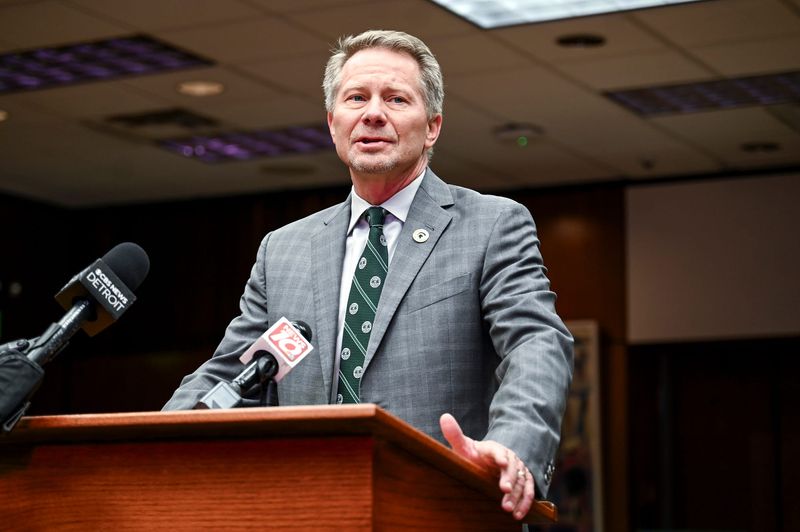
Some university officials took issue with the editorial, including Michigan State President Kevin Guskiewicz and board chair Brianna Scott, D-Muskegon. Guskiewicz said the column was inaccurate and misleading, and Scott said it had several mischaracterizations. Both said said they had not seen the column prior to its publication.
“Like many on our leadership team, we were disappointed by the op-ed, believe that it was misleading and mischaracterized many of the efforts that we’ve made as an institution to support our communities, during a challenging time with changes coming out of the federal government,” Guskiewicz said.
He said after the board’s Feb. 6 meeting that the university is working to correct “several inaccuracies” in the op-ed and that officials will be taking the time throughout the week to “meet with members of those communities to reinforce our commitment to them.”
“We have continued to support groups, I’ve met with a lot of students, as have members of my leadership team over the past year, reinforcing our commitment to them as a proud land-grant institution where access is afforded to everyone who earns their path here,” Guskiewicz said. “And then, most importantly, that we help students thrive while they’re here survive and thrive, and a lot of our programming is continuing to do that to support our community.”
Vassar, when contacted by the State Journal, declined to directly address the column and referred a reporter to leaders of the Black Students’ Alliance.
“Please consult BSA students and their advisor and ask them if I mischaracterized their experiences,” Vassar wrote. “They matter most and their voices are the most important ones to represent.”
MSU Black Students’ Alliance President Jayanti Collins said that no members of MSU leadership have reached out to her or other members of the Black Students’ Alliance, and that she felt the op-ed was accurate to her experience.
“Yes, Dr. Rema bravely spoke about the experience of Black organizations and students here at MSU, echoing and amplifying what we’ve been trying to convey about what our organization has been going through,” Collins wrote in an email. “That type of advocacy is exactly what is needed to get real accountability and change in motion.
“No, no leadership from the university has reached out since this article came out,” she wrote. “The President of the Black Faculty, Staff, and (Administrators) Association (BFSAA) here at MSU, Dr. Denise Troutman, did reach out to converse about it and see what they can do in support, but other than that no university leaders have said anything directly to us or inquired about our thoughts.”
BSA Advisor Jason Worley did not immediately respond to the Sate Journal’s request for comment.
The column is just the latest in a series of infighting among trustees. In the fall of 2023, Scott, in a letter, made public allegations of bullying against then board-chair Vassar. Her allegations led to an investigation that ultimately cost the university more than $2.4 million and resulted in the board censuring Scott for writing the letter, and Vassar and Trustee Dennis Denno, D-East Lansing, for misconduct. The board asked Gov. Gretchen Whitmer to remove Vassar and Denno from office, but the fellow Democrat declined. The censures expired Dec. 31, 2024.
The university recently reached a $300,000 settlement with Jack Lipton, former faculty senate chair. It is the latest fallout stemming from the investigation, which substantiated some of Lipton’s complaints against Vassar. Vassar has called the investigation “inaccurate,” “incomplete,” “flawed,” and lacking due process.
What did the opinion column say?
Vassar called for the reinstatement of various policies and changes made since Trump took office in January of last year.
In July, the university removed the use of DEI statements from faculty reappointment, tenure or promotion decisions.
Vassar argued that because the Trump administration withdrew its legal appeal of the federal court ruling that determined the anti-DEI guidance to be unconstitutional, the university should reverse decisions recently made.
“The legal uncertainty that universities claimed justified their actions for the systemic dismantling of equity programs? Gone. The pending litigation they pointed to as requiring caution? Abandoned. The federal threat they used to justify cuts? Ruled unconstitutional,” Vassar wrote. “There is now zero legal justification – not even the pretense of pending litigation – for Michigan State University’s actions. Yet MSU continues operating as if the Trump administration’s unconstitutional orders carry force of law.”
Vassar argued MSU is targeting Black students at a time when they face escalating violence on campus.
“Anti-Black violence has plagued MSU for years: nooses in the school store and on a student’s door, racial slurs painted across campus buildings, persistent hateful language students encounter simply attending classes.”
She noted that CORES, the Council of Racial and Ethnic Students, was once funded at about $100,000 but now is allotted $4,500.
“MSU chose the moment when students faced documented racial violence to strip programs designed to address such crises, and students now navigate campus hostility with minimal institutional backing,” Vassar wrote.
How did MSU respond?
Guskiewicz said multiple claims within the article were inaccurate. Vassar wrote that “the university eliminated the position of vice president for diversity, equity and inclusion.” In October, the trustees approved with a 6-1 vote changing Jabbar Bennett’s title from “vice president and chief diversity officer” to “vice president and chief inclusion officer.”
Bennett is still a member of the university’s leadership team, Guskiewicz noted, and and said that he requested the title change “to better reflect the work that he and his team do.”
He said the university started reimagining various titles “long before the Trump administration put executive orders in place” as part of the revised MSU 2030 Strategic Plan.
Vassar wrote that less funding was available for student groups than what was previously guaranteed, and now they are fighting for it more. Guskiewicz said the funding “is still available to student groups, there’s some changes in the way that they may have to request the funding, but it’s still available to them.”
Guskiewicz said the university is still required to follow state and federal law, and the decision to withdraw the appeal “does not suggest that the department of justice is not investigating institutions, they in fact still are investigation institutions around issues of affirmative action, and we have a responsibility to follow federal and state laws.”
He said a compliance review has given confidence that the university is in compliance while “still providing the types of resources we believe our students need.”
“From my perspective as board chair, I believe that our roles as trustees are to try, in whatever capacity that we can, to support what our administration is doing as long as they’re doing the right thing,” Scott said. “And in this particular case, I wholeheartedly believe that the decision making that has been done by our administration has been appropriate. As has been stated, the work that we put into making sure that there’s equity and inclusion, and a sense of belonging here at this university continues.”
Scott said she thinks Vassar’s column cast doubt on the university, and would rather highlight the resources the university is offering while remaining supportive of student groups.
Scott said she met with student groups last week, and that some student groups felt there were truths behind what Scott sees as “mischaracterizations.”
“We are gonna continue to try to work towards rebuilding those relationships, allowing for healing to take place amongst those relationships,” Scott said. ”And hopefully, we’ll have a path forward where everyone will understand that we will continue and will remain supportive of them, and that nothing will change from that aspect.”
Contact Karly Graham at kgraham@lsj.com. Follow her on X at @KarlyGrahamJrn.
This article originally appeared on Lansing State Journal: Trustee says MSU needs to reinstate DEI, draws criticism from officials
Reporting by Karly Graham, Lansing State Journal / Lansing State Journal
USA TODAY Network via Reuters Connect