Following recent tremors, Coachella Valley residents are asking what “The Big One” might actually feel like. This timeline explores how a catastrophic quake could isolate our community.
Might go better, but it might go worse.

T-Minus 1 Minute
8:16 AM. Chris Anderson is inside his Palm Desert home. The air conditioning hums; his phone is charging.
T 0:00 to 0:30 — Rupture
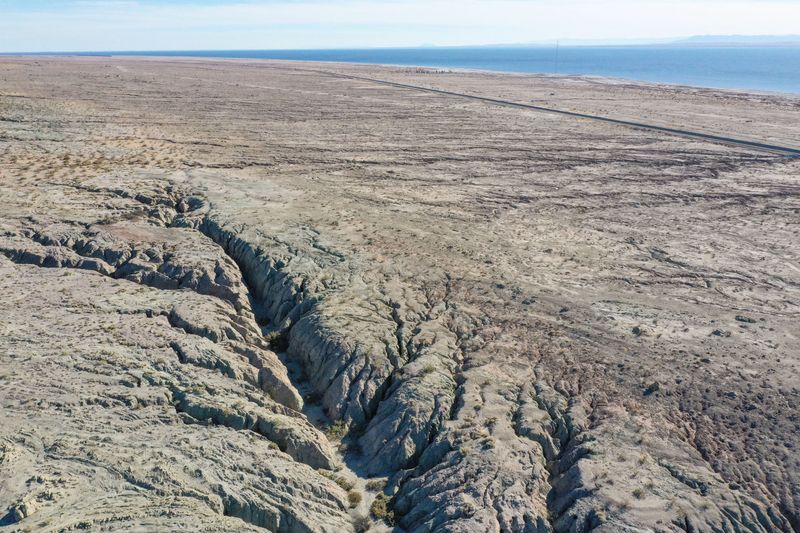
A magnitude 7.8 earthquake strikes the southern San Andreas Fault at the San Gorgonio Pass near Beaumont. The rupture tears southeast and northwest, with surface displacement exceeding 19 feet.
Critical lifeline corridors intersecting the Pass (Union Pacific, electricity, water, gas pipelines, and fiber-optic cable all run alongside I-10) experience immediate failure.
T 0:30 to 2:30 — Shaking
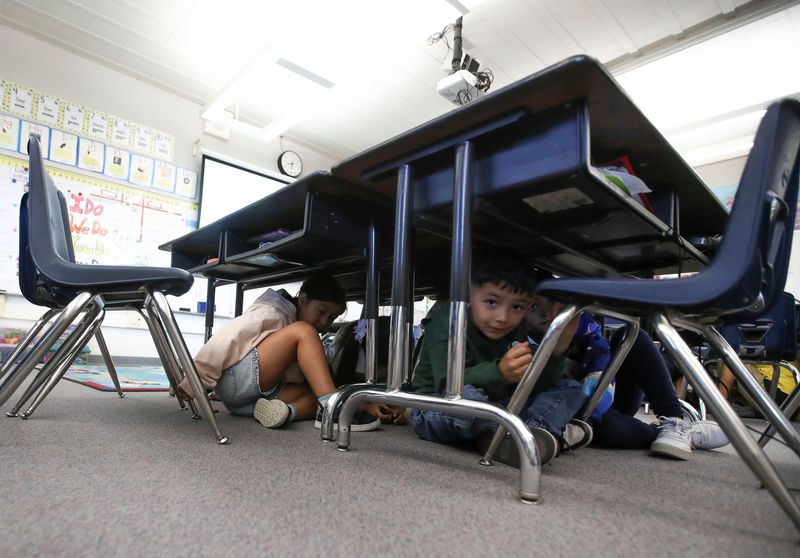
Primary waves hit Palm Desert within seconds, followed by violent, sustained shaking for nearly three minutes. Chris dives under a table as objects fly, and cabinets burst open. High-voltage lines trip offline; the air conditioning dies.
T 2:30 to 10:00 — System Failure
Aftershocks come one after another. Natural gas pressure drops as valves trigger and pipelines rupture.
Water pressure fades as feeder lines lose integrity, and pumps lose electricity.
Cell service goes erratic. With the fiber-optic backhaul severed, networks overload.
Chris tries to send a text. He’s not sure if it goes through.
T 10:00 to 30:00 — No Instructions
Chris steps outside to a landscape of dust, collapsed chimneys, and twisted roofs.
Emergency systems are overwhelmed; radio news reports focus on the Inland Empire, which was hit harder.
Palm Desert is not even mentioned.
1 to 4 Hours — Escape to Safe Harbor
Chris grabs a go-bag and attempts to flee. Half tank of gas. Not great, not terrible.
With no electricity, he lifts his garage door open (a first) and heads for I-10.
He is blocked by the CHP westbound; the freeway has suffered multiple bridge collapses. He heads east toward Arizona, but traffic grinds to a halt amid reports of closed bridges. Finally, he attempts Highway 74, but rockslides and fallen poles have choked that route.
The valley is sealed.
Day 1 to 5 — Isolation
Palm Desert is dark. Grocery scanners and gas pumps don’t work. Airports are restricted to emergency services.
Eisenhower Health operates on generators with uncertain fuel resupply.
911 is out, so Chris helps a neighbor with cuts from the broken glass everywhere.
By Day 3, sewage systems fail as pumping stations remain offline. Neighbors share bottled water and battery-powered radios.
By Day 5, some power returns to western Riverside County, none reaches the desert.
Day 6 to 9 — Partial Reconnection
Limited convoys attempt to reach the desert. A handful of fuel tankers arrive under escort. Temporary water distribution points emerge, with long lines. Electricity returns, but sporadically. The reality of a long-term crisis sets in.
Day 10 to 13 — The Supply Gap
Grocery shelves remain bare. Supply chains are strangled by the severed rail and road links through the Pass. Heat-related illnesses spike as cooling centers reach capacity.
Officials estimate that full restoration of fault-crossing infrastructure will take months.
Day 14 — A New Baseline
Two weeks in. Electricity is no longer assumed; water is strictly conserved.
The real disaster wasn’t the earthquake, it’s the ongoing aftermath.
So the time for each of us to prepare is now.
Get ShakeAlert, build a kit, take a CERT class.
Because when The Big One hits the Coachella Valley, we’re our own.
But we’re on our own, together.
Eric Cunningham of Rancho Mirage is a writer and his neighborhood’s emergency preparedness lead. He can be reached at cunningham.eric@gmail.com. Mitch Brown of Rancho Mirage is president of the Coachella Valley Disaster Preparedness Network. He can be reached at info@cvdpn.org
This article originally appeared on Palm Springs Desert Sun: Minute by minute, what it might be like when huge earthquake strikes
Reporting by Eric Cunningham and Mitch Brown, Special to The Desert Sun / Palm Springs Desert Sun
USA TODAY Network via Reuters Connect