In Florida, law school graduates will no longer need to graduate from a law school accredited by the American Bar Association to take the state’s bar exam.
The Florida Supreme Court decided to amend its rule which originally had made the ABA the sole accreditor for law schools. And graduating from an ABA-accredited law school was the only way to take the bar examination.

In a decision announced Jan. 15, the court decided to give a pathway to other accreditor options, amending the rule for law school accreditation to extend to a “programmatic accrediting agency” or “institutional accrediting agency” recognized by the U.S. Department of Education, for example.
The majority said the reason for the rule change was to create opportunities for additional entities to accredit law schools.
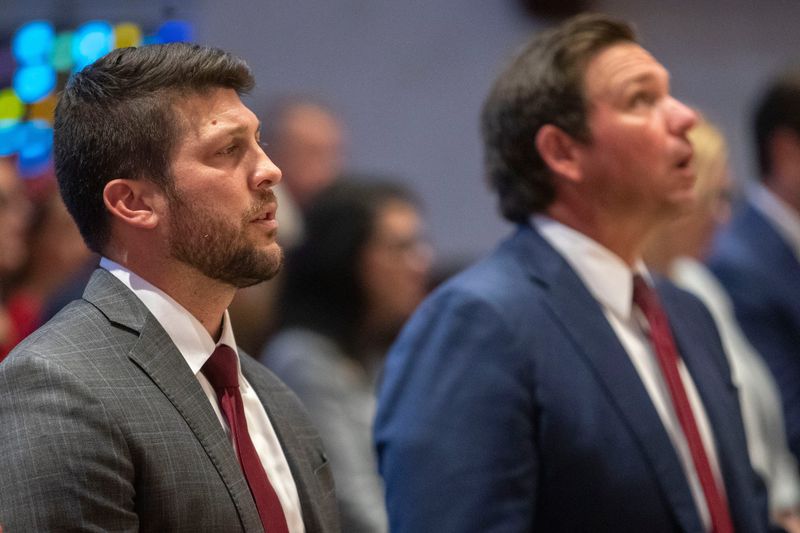
To be sure, Gov. Ron DeSantis and Florida Attorney General James Uthmeier – who called the ABA “a captured, far-left organization” – had encouraged the state’s high court to sever ties amid conservative backlash against the nearly 150-year-old organization.
“… (The) Court is persuaded that it is not in Floridians’ best interest for the ABA to be the sole gatekeeper deciding which law schools’ graduates are eligible to sit for the state’s General Bar Examination and become licensed attorneys in Florida,” the opinion read.
Justice Jorge Labarga, the only dissenter, said the ABA “has cultivated unmatched proficiency in dealing with Florida law-school-specific issues that would require decades for any successor to develop.”
Labarga, now the only member of the court not appointed by DeSantis, added that “… refinements can always be made. However, replacing an established entity with an unknown alternative is detrimental in the context of disputes.”
In a statement, the American Bar Association noted that the court’s order says Florida law schools can continue to seek accreditation from the ABA.
The court “reinforces the authority that it has always had over the licensure of JD (juris doctor) graduates and which law schools it recognizes as accredited,” said Jenn Rosato Perea, managing director of the ABA Section of Legal Education and Admission to the Bar.
Florida part of conservative backlash against ABA
Florida isn’t the first to move away from the ABA. Last week, Uthmeier praised the move by the Texas Supreme Court to cut ties with the ABA and instead accredit law schools itself.
“This is a good start,” Uthmeier posted on X in response to the Florida Supreme Court’s rule change. “The ABA … should not dictate the ability of Florida students to sit for the Bar.”
Uthmeier also confronted the ABA in recent months by accusing the organization of anti-Christian discrimination against a Florida Catholic law school.
And Jason Weida, DeSantis’ chief of staff, posted simply: “Mission accomplished.”
The Trump administration decided over the summer to remove the ABA’s longstanding special access to review federal judicial candidates.
But the Florida Supreme Court already was considering whether to revise its rules on whether someone who wants to practice law in Florida has to graduate from an ABA-accredited law school.
In March, the Florida Supreme Court appointed a workgroup to study the issue, and the majority of the Justices said it made its Jan. 15 decision based on that group’s report, which included options for reducing the ABA’s “near monopoly” on law school accreditation.
“Although the Court has not finalized the procedure governing (its) approval of institutional accreditors, it anticipates contacting such accreditors to assess their interest in accrediting law schools,” the opinion said.
As of Oct. 1, 2026, however, “graduates of ABA-accredited law schools will continue to qualify to sit for the state’s General Bar Examination, and graduates of law schools accredited by any subsequently recognized programmatic accreditor will be afforded the same eligibility.”
That means this year’s test takers won’t be affected. Florida, as do most states, offers its bar exam twice yearly, in February and July.
If you can’t view the document above, click here.
(This story was updated to add new information.)
This reporting content is supported by a partnership with Freedom Forum and Journalism Funding Partners. USA Today Network-Florida First Amendment reporter Stephany Matat is based in Tallahassee, Fla. She can be reached at SMatat@gannett.com. On X: @stephanymatat.
This article originally appeared on Tallahassee Democrat: Florida Supreme Court ends ABA ‘gatekeeper’ role for law schools
Reporting by Stephany Matat, USA TODAY NETWORK – Florida / Tallahassee Democrat
USA TODAY Network via Reuters Connect