“I will say that the story of America is unique and beautiful. The beauty is offset by tragedy. The tragedy forms the background of the beauty and reveals its perfection. … I will say that we can bear suffering if it has a meaning. Only this could bring an end to the Civil War. Only this could ameliorate the sin of slavery and restore the friendship of those who fought over it.”
– Hillsdale President Larry P. Arnn, Ph.D., previewing a speech he will make on the National Mall honoring the 250th birthday of the Declaration of Independence.

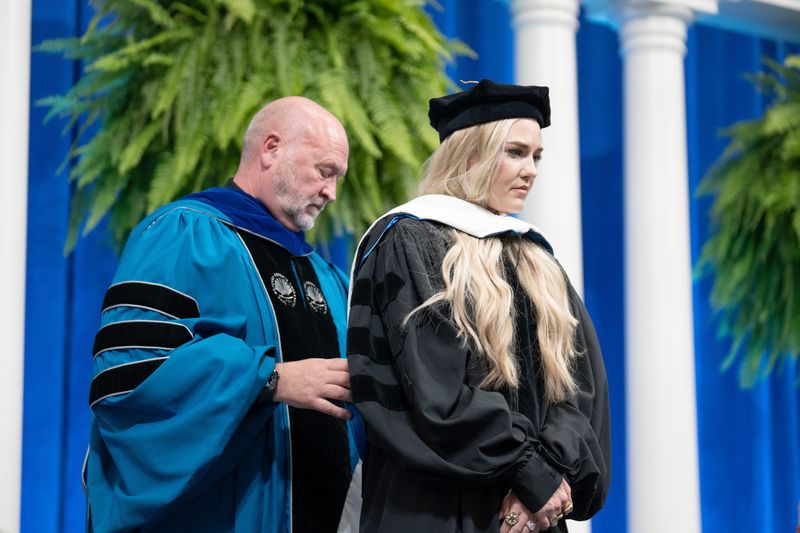
HILLSDALE, Mich. — At Hillsdale College on the eve of Mother’s Day, roughly 5,000 people gathered for commencement exercises at a school founded by Free Will Baptists, who fought to abolish slavery in America and are known for constitutional conservatism and unapologetic faith.
My Saturday afternoon assignment in this Southwest Michigan community of 8,000 was to hear the commencement speech of Erika Kirk, chief executive officer of Turning Point USA and the widow of its founder, Charlie Kirk. When Kirk was announced as speaker in March, some seniors publicly decried the choice, believing their graduation day would be diminished by a partisan political message.
Their concern was not without merit. Charlie Kirk barnstormed college campuses inviting students into free-wheeling debates that dived head-first into controversy, some particularly beguiling to me as a Black man in America. This included calling the passage of the Civil Rights Act of 1964 a mistake and demonizing Diversity, Equity and Inclusion initiatives (which undermine and discredit the hard work and excellence of folks like me).
I’ve given a graduation speech or two. The model is to inspire, impart wisdom and get off the stage for the stars of the show — the graduates. Erika Kirk’s speech checked the boxes. It was mild. If it could be seen as partisan, it would be because of who she represents but not because of her words.
After all, this was not the time or place for political theater. Instead, her 12-minute speech nudged graduates to live with purpose, aim high at worthy things, form good habits and — true to her traditionalist lifestyle message — marry early “but not rushed.”
I did that in my 20s. And I saw plenty of young parents in the audience, specifically dads carrying babies in their arms. That was also me once.
Frankly, I did not know what to expect to be on Hillsdale’s campus for the first time. Maybe division. Maybe more ideological chest-thumping. Perhaps another reminder of how fragmented America has become. I left Hillsdale with hope but also a bit confounded.
I also thought about unity and humanity. Not perfect agreement. Not ideological surrender. I think of it as living in the center of the Venn diagram.
Inside the Venn diagram are the things most Americans still share even while arguing bitterly outside its borders: faith, family, sacrifice, purpose, grief, hope, patriotism, love of children and belief in the possibility of a better future.
And no decent society should lose the ability to recognize another person’s humanity simply because we disagree with them — even though our society’s actions are littered with the unpleasant reminders of inhumanity.
As a Black man raised in the South, I do not approach questions of race, power or political rhetoric casually. I have family members who endured humiliations and injustices that remain difficult to discuss even today. History matters. Language matters. Conduct matters.
But humanity matters, too.
One of the most revealing moments in the commencement came from President Arnn, who recalled his first meeting Charlie Kirk when he was a teenager. Arnn admitted he initially thought the young activist was too loud, too eager and too anxious to jump into public life without studying and — as Arnn put it — suffering.
“I told him he had to suffer,” Arnn recalled telling him.
It was an old-fashioned lesson about maturity, discipline and humility.
That image complicated the caricature.
Then Erika offered another glimpse into the private man behind the public figure. Charlie was supposed to disconnect from work during their honeymoon. He carried only an emergency phone. Yet even there he was listening to lectures from Arnn, still studying, still learning, still searching.
Again: humanity.
Not sainthood. Humanity.
The day before her speech would have marked her fifth wedding anniversary. The weekend also marks her first Mother’s Day raising her two children without her husband. No political affiliation makes that burden lighter.
Reconciling past and present
Hillsdale College itself complicates modern assumptions. Those familiar with Hillsdale hear the school’s name and immediately sort it into ideological boxes. But history is more layered than that. Founded in 1844, Hillsdale was among the first American colleges to prohibit discrimination based on race or sex and became deeply connected to the abolitionist movement before the Civil War.
That history matters because it reminds us that America has always been a nation of paradoxes — flawed, striving, unfinished. Especially today, it seems, it is sometimes regressing, with contemporary problems regurgitating the same old ones.
President Abraham Lincoln understood that truth. Invoking Lincoln’s second inaugural address, Arnn touched on the truth America keeps relearning: bloodshed answered with more bloodshed deepens national wounds. Lincoln’s greatness was not simply that he won a war. He imagined reconciliation afterward.
“Malice toward none, charity for all,” Lincoln said in his second inaugural address.
That may be the most important phrase for modern America.
We flatten human beings into hashtags and voting blocs. We stop seeing people as parents, spouses, children and mourners and as human.
And yet I sat among 5,000 people — many who likely disagree with one another on many issues — watching graduates prepare to enter adulthood with hopes remarkably similar to everyone else’s: meaningful work, loving families, purposeful lives and communities where they belong. And along the way we must remember that every public figure, every protestor, every voter and every grieving widow is still a human being carrying burdens that we cannot fully see.
This is the Venn diagram. And this is where I seek to live daily. It is a place where Americans of all political stripes, creeds, colors and beliefs still have a chance to discover each other in our similarities rather than our differences.
Here is what I’m sure of, though. We all have inherited the land. Every one of us. And if America at 250 ceases to strive to become a more perfect union for all of us, knowing what we know right now, what was it all for?
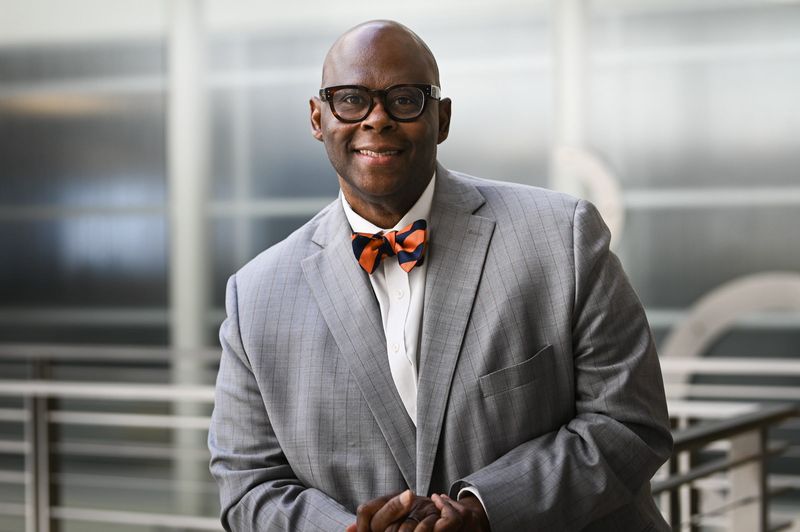
Byron McCauley is regional columnist at USA Today Co. Email bmccauley@usatodayco.com. Call him at (513) 504-8915.
This article originally appeared on The Holland Sentinel: Why Erika Kirk’s commencement speech surprised me | Opinion
Reporting by Byron McCauley, Holland Sentinel / The Holland Sentinel
USA TODAY Network via Reuters Connect