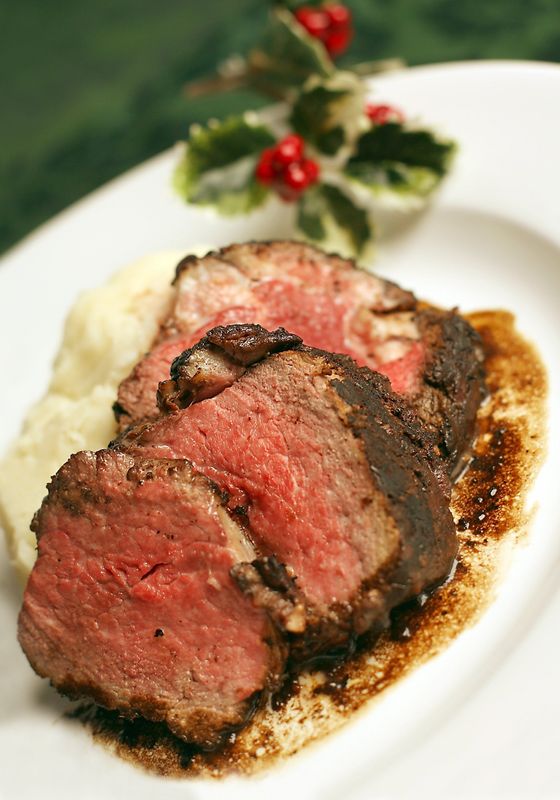
Is a whole beef tenderloin part of your holiday meal this year?
It’s no doubt a popular and tasty choice.

A whole Beef tenderloin with a nicely browned crust and cooked to a nice pink center is a showpiece.For some people, the holidays are the only time they cook a beef tenderloin.
With that in mind, it’s time for a beef tenderloin roasting refresher.Beef tenderloin is a super-expensive cut of meat, especially this year, as beef prices have been on the rise, and you need to take care when cooking it.
One of the most important reminders is cooking the tenderloin to the correct temperature for doneness.
My preference is medium-rare. And most of all, most recommendations from chefs, meat experts, and in many cookbooks wouldn’t call for anything past medium.
The whole big cut of beef can be intimidating because of its size and, let’s face it, what that hunk of meat costs.Undercook it, and it might be too cool in the center, and too rare for some guests. Overcook it and, well, not that it will go to waste (or shouldn’t) but guests will still enjoy the feast.
Here’s what to know before your roast.
You need a thermometer
We say this every year: make sure you have an instant-read thermometer at hand. Why? This is the best way to check the roast’s internal temperature. An expensive tool, instant-read thermometers, do just that. You will find them at grocery stores, hardware stores, and big-box retailers.
Preparing the roast
If you bought a whole tenderloin, you’ll need to trim it. Trim the meat of any excess fat (there shouldn’t be a lot) or silver skin. Also cut off what’s known as the “chain” — a long piece of meat with fat and part of the muscle that holds the tenderloin to the bone. (Grind that chain meat or cube it and freeze for another use.)You might see many recipes that fold the narrow, tapered end underneath the tenderloin. I’ve never had great results doing that so I cut off the tapered end and cook it separately or freeze it. That way, you’ve got an even, center-cut hunk of meat.
Let it sit to dry: Place the meat on a rimmed platter. Pat it dry with paper towels and set it in the refrigerator. Season the meat with coarse salt and freshly ground black pepper. Refrigerate the meat, at minimum, overnight, but it’s perfectly fine up to two days.Before roasting: Tie the roast in several spots so it holds a nice shape. Let it rest for at least another hour (at room temperature) or in the refrigerator for up to six hours.Sear and roast: Remove the tenderloin at a minimum one hour before roasting and let it come to room temperature. Preheat the oven to 400 degrees. In a large skillet, heat 1-2 tablespoons of oil over medium-high heat. Add the tenderloin (it might be a snug fit) and sear it until nicely browned on all sides. Transfer the tenderloin to a rimmed baking sheet and place it in the oven. Cook for 10 minutes. Reduce the temperature to 325 degrees and continue cooking for another 15 to 20 minutes (for about a 3-pound tenderloin) or until it reaches an internal temperature of 115 to 120 degrees in the thickest part for rare to medium-rare. The temperature of the roast will continue to rise as it rests.Roast and reverse sear: Reverse searing means that the tenderloin is first cooked low and slow in the oven. When the tenderloin reaches a desired doneness temperature, it gets a final blast of high heat from the oven, broiler or in a skillet with a little oil.Here’s the basic recipe for reserve sear: Season the beef roast all over with salt and pepper and let sit overnight in the refrigerator. Before roasting, bring the tenderloin to room temperature and tie it with kitchen twine so it holds together. Preheat the oven to 250 degrees with the oven rack to the middle position. Place a wire rack on a rimmed baking sheet, placing the tenderloin on the wire rack. Roast until meat registers about 120 degrees (for rare to medium-rare) or 125 degrees (for medium) about 1 hour 40 minutes for a center cut piece. (Time will vary on tenderloin size and exact oven temperatures. Be sure to use an instant-read thermometer to check the temperature.) Keep in mind the temperature will continue to rise when meat rests. Transfer roast to a carving board, tent with aluminum foil, and let rest for 10- 20 minutes. A recipe at americastestkitchen.com instructs to pat the tenderloin dry with paper towels. Heat oil in a 12-inch nonstick skillet over medium-high heat until just smoking. Add the roast and sear on all sides until well browned, five to seven minutes. Transfer roasts to a carving board, remove twine, and slice ½ inch thick, then serve.A recipe at seriouseats.com from noted culinary consultant J. Kenji López-Alt, drizzles browned butter and onions over the tenderloin before placing it under the broiler for its final sear.For the browned butter, heat ¼ cup of butter in a skillet until the foam subsides and the butter is lightly browned. Add a few sprigs of thyme and one sliced shallot. Sauté a few minutes. Pour the butter over the tenderloin to coat it, making sure the thyme sprigs and onion slices are not on top. Place under the broiler and broil, turning every 30 seconds until the meat is well browned on all sides and the tenderloin’s center reaches 125 degrees for rare or 130 degrees for medium rare.Let it rest: Allow the tenderloin to rest for about five minutes before slicing it into 1/4-inch-thick slices.Note: The final temperature for medium-rare should be about 125 degrees. Remove the meat when it registers about 115-120 degrees in the thickest part. It will be rare, but as the meat rests, the roast will continue to cook and the temperature will increase some at the final sear.
Here are two recipes to make your holiday beef tenderloin.
Classic Roast Beef Tenderloin for a Crowd
Serves: 12 to 16 / Prep and cook time: 2 to 2⅔ hours, plus 12 hours saltingWe set out to create a foolproof recipe that would lessen the anxiety of cooking this showstopping roast. Salting the trimmed beef tenderloin overnight seasoned it throughout, giving it more intense flavor. Roasting it in a low 250-degree oven ensured even cooking and gave us a larger safety net to prevent overcooking. Cutting the tenderloin in half before searing it in a piping-hot skillet made it easy to fit in the pan and ensured a deep-brown crust5 pound beef tenderloin (1 roast), trimmed2 tablespoons kosher salt2 tablespoonsVegetable oilThe roast must be salted and refrigerated for at least 12 hours before cooking. If you’re buying an untrimmed tenderloin, be sure it weighs 6 to 7 pounds.Cut tenderloin crosswise at base of head to make 2 roasts. Using kitchen twine, tie head at 1-inch intervals. Tuck the tail end of the second roast underneath by 3 to 5 inches to create more even shape. Tie tucked portion with kitchen twine at 1-inch intervals to secure.Place 1 roast on large sheet of plastic wrap and sprinkle all over with 1 tablespoon salt. Wrap tightly in a double layer of plastic. Repeat with remaining roast and 1 tablespoon salt. Refrigerate roasts for at least 12 hours or up to 24 hours.Adjust oven rack to the middle position and heat oven to 250 degrees. Set a wire rack in a rimmed baking sheet. Season roasts with pepper and place on prepared wire rack. Roast until meat registers 125 degrees (for medium-rare) or 130 degrees (for medium), 1 hour 20 minutes to 1 hour 40 minutes for tail-end roast and 1 hour 40 minutes to 2 hours for head-end roast. Transfer roasts to carving board, tent with aluminum foil, and let rest for 20 minutes.Pat roasts dry with paper towels. Heat oil in a 12-inch nonstick skillet over medium-high heat until just smoking. Add both roasts and sear on all sides until well browned, 5 to 7 minutes. Transfer roasts to a carving board, remove twine, and slice ½ inch thick. Serve.
From America’s Test Kitchen.
Roasted Whole Beef Tenderloin
Serves: 8-10 / Prep time: 20 minutes / Total time: 1 hour (plus standing and marinating time)Have the butcher trim the tenderloin for you. Cut the tenderloin so you have one even center cut. Roast the tapered end separately and for less time than the center cut.1 whole beef tenderloin (about 5 pounds), trimmed⅓ cup balsamic vinegar⅓ cup olive oil, plus 2 tablespoons, divided2 cloves crushed garlic3 tablespoons reduced-sodium soy sauce¼ teaspoon dried crushed rosemary leavesFOR THE SAUCE1 cup reduced-sodium beef broth⅓ cup balsamic vinegar2 tablespoons of butterYou will need an ovenproof skillet large enough to hold the whole tenderloin, or you can cut it in half or use a heavy-duty roasting pan that will fit over two burners and can take direct high heat.Trim the beef tenderloin of any fat. Place the tenderloin in a sealable plastic bag. In a glass measure, whisk together the vinegar, ⅓ cup olive oil, garlic, soy sauce and rosemary. Pour the marinade over the beef and seal the bag. Marinate at least 1 hour and up to 3 hours.Preheat the oven to 400 degrees.Heat the 2 tablespoons of olive oil in a large, ovenproof skillet over high heat. Add the marinated tenderloin, discarding marinade, and sear for about 3 minutes on all sides until browned and crusty. Transfer the skillet to the oven and roast for about 20 minutes or until desired degree of doneness. (If the skillet or pan becomes too dry, add a little beef broth or water.) For medium-rare, the internal temperature should register about 120 to 125 on an instant-read thermometer.Remove the roast from the oven and transfer to a platter. Tent with foil and let it rest 10 to 20 minutes before slicing.For the sauce: In the skillet the tenderloin was roasted in, add the beef broth. Heat over high heat, scraping up any browned bits on the bottom of the skillet. Whisk in the balsamic vinegar and continue heating. Whisk in the butter until the sauce thickens slightly.Slice the tenderloin and serve drizzled with sauce.From and tested by Susan Selasky for the Free Press Test Kitchen.
This article originally appeared on Detroit Free Press: How to slow-roast beef tenderloin to perfection: Tips and recipes
Reporting by Susan Selasky, Detroit Free Press / Detroit Free Press
USA TODAY Network via Reuters Connect