This story was updated to correct an inaccuracy.
They call themselves “the quiet professionals.”

Theirs is a job that is often thankless, often unheralded, but also often crucial to the interests of the United States.
They are the men and women who serve in the Air Force Special Operations Command, the air commandos who stand ready at a moment’s notice to deploy and, as retired Brig. Gen Brad Heithold likes to say “do things other people aren’t willing to do.”
The air commandos got their start in March of 1944 in the jungles of Burma when the First Air Commando Group conducted Operation Thursday, the first airborne invasion in military history, according to a brief history of the air commandos.
There were 523 volunteers who took part in a mission to go behind Japanese lines and work to disrupt the enemy. They were credited with building remote air strips, cutting supply lines, bringing in 9,000 troops and delivering 500,000 pounds of supplies.
The air commandos even prevented a Japanese invasion of India.
“Operation Thursday proved that small adaptable air forces could do the impossible,” the history said.
Air Force Special Operations Command, established May 22, 1990, is headquartered at Hurlburt Field. It is one of 10 major Air Force commands and serves as the Air Force component of the U.S. Special Operations Command.
For years, the brass at Hurlburt Field have contemplated construction of an Air Commando Museum at which the story of the quiet professionals could be laid out for people to see and appreciate.
After more than a decade of discussion, all of the pieces finally fell into place last year and an organization that has come to be known as the Air Commando Heritage Foundation stepped up to take the lead in raising the estimated $20 million it will take to make the museum reality.
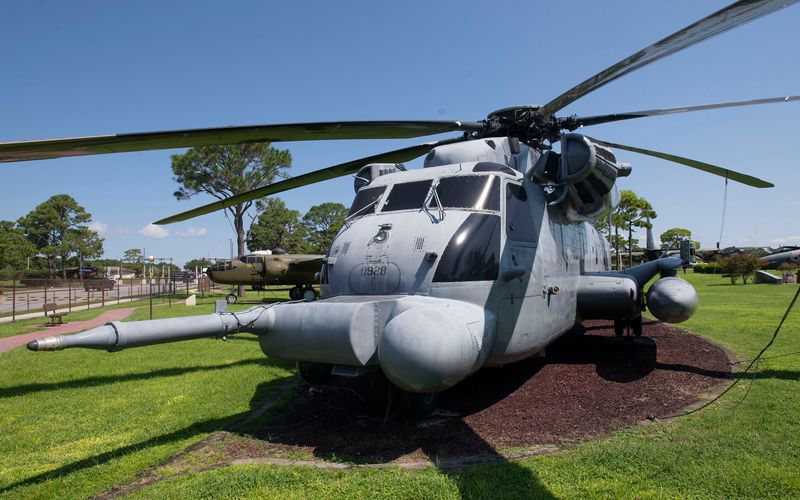
The Heritage Foundation hopes that within five years it will able to begin museum construction within the confines of an already existing publicly accessible air park located outside of the Hurlburt Field front gate. The air park is presently home to 36 planes utilized by air commandos since WWII, said foundation spokeswoman Kristi Beckman.
But it’s the inside of the museum that very obviously excites those working on the project.
Brenda Cartier, another retired brigadier general and the president of the Air Commando Heritage Foundation, spoke of what are known to Special Operation forces as “sof” truths. First among those truths is “humans are more important than hardware.”
“The things that bring the machines to life are the people. The entire air commando nation is the people who do all the jobs that make the mission happen, not just those who fly the planes,” Cartier said. “To build a museum that makes the first sof truth reality is what makes the foundation work, to me, most enjoyable.”
Within the planned 25,000 to 30,000 square foot museum building visitors will encounter displays that will make use of interactive devices to bring the world of the air commando to life. The foundation will turn over the constructed building to the First Special Operations Wing, which will be charged with laying out exhibits.
Plans do call for space within the building to conduct promotion ceremonies, changes of command or retirement events.
Heithold envisions the military hardware assembled in the air park around the museum giving visitors a sense of the evolution of the fighting machines and capabilities of the air commandos. It will be inside though, where visitors will come to know the heroes of special operations warfare.
“We want the people that visit that museum to enter the world of the air commando and when they step out want to wrap themselves in an American Flag. We are going to capture the long legacy of valor of all air commandos, starting in World War II and forward to today. Everybody on the team is leaning into that hard,” he said. “We want kids coming out of the museum wanting to be an air commando.”
Following a year of organizing, the foundation has turned to the goal of raising the funds necessary to build the museum. Cartier said as initial steps are being taken to procure funding, the organization has run into what she termed “kind of a good challenge to have.”
“There are so many people in the air commando community both locally and writ large that want to be involved in this project,” she said. “We’re trying to organize all the talent that wants to be involved to put their talents to use.”
Likewise, she said, many working within the foundation have known each other for years of military service in what is still a relatively small, tight knit Special Operations Command.
“We know each other well,” she said, “so it’s easy to go forward understanding what each of us are doing and having trust in one another.”
The foundation secured the services of DC Architects and now has a rendition of what the museum will look like. The HAAS Center based at the University of West Florida undertook a look at the potential economic impact the museum can have on the community.
According to that study the Air Commando Museum at Hurlburt Field will have a $65 million total economic impact with $26 million of that coming through direct expenditures and $39 million through indirect expenditures.
HAAS Center calculates the museum and air park willl draw 550,000 visitors annually, create 107 full time equivalent jobs, generate $18 million in household revenue and another $9 million in tax revenues.
To accommodate the Air Commando Museum, the Air Force has plans to essentially double the length of the driveway that is presently utilized by traffic entering and leaving the base through its main gate. The longer entrance will bring visitors to the front gate as well as help push base traffic off of congested U.S. Highway 98.
When constructed, the museum will be the third of its kind standing generally along the U.S. 98 corridor in Northwest Florida. The National Naval Aviation Museum is located west of Hurlburt Field at Naval Air Station Pensacola and the Air Force Armament Museum can be found east in Okaloosa County on Eglin Air Force Base in Shalimar.
This article originally appeared on Pensacola News Journal: Air Commando Museum proposed at Hurlburt Field to celebrate military’s ‘quiet professionals’
Reporting by Tom McLaughlin, Pensacola News Journal / Pensacola News Journal
USA TODAY Network via Reuters Connect