Success tends to foster more success. Just ask the folks at The Columbus Partnership.

In January 2025, as quiet doubts began to grow louder that Intel might delay its multibillion-dollar semiconductor plants in Licking County yet again, the Columbus region pulled off another, perhaps even more spectacular, win.
Defense technology company Anduril Industries announced plans to build an advanced manufacturing facility in Pickaway County near Rickenbacker International Airport. The new facility, which will build cutting-edge military drones, is expected to create 4,000 new jobs over 10 years—the largest single job-creation project in state history.
Add to that indirect employment, and the total by 2035 is projected to be more than 8,500 jobs.
The resulting financial impact is also expected to be immense: More than $2 billion in annual economic output and over $1 billion from in-state labor income will be generated, according to state officials, with projected tax revenues estimated to be roughly $800 million.
All in all, Anduril’s 5-million-square-foot Arsenal-1 facility is expected to add nearly $1 billion to Ohio’ GDP, which in 2023 was $709.8 billion, adjusted for inflation, according to a March report from the Bureau of Economic Analysis.
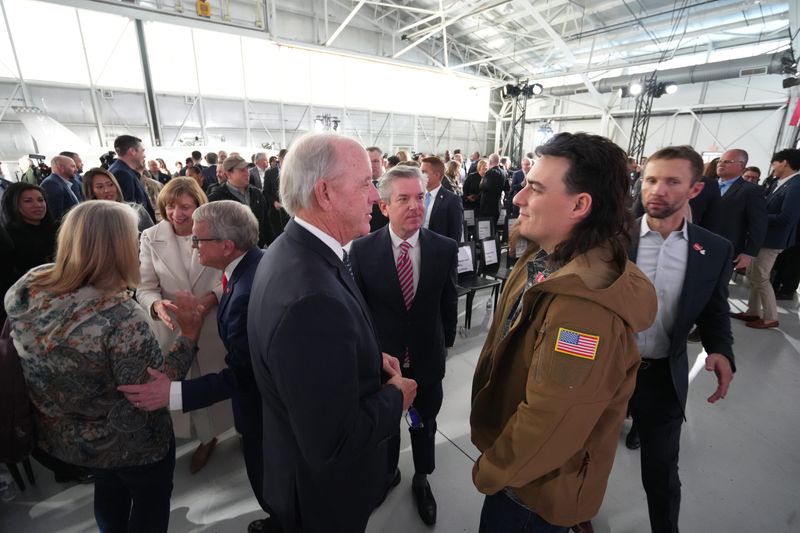
For Ohio native Zach Mears, head of strategy at Anduril Industries, the decision to build the facility in Central Ohio was “a moment of serendipity to me. As Ohio was rising in profile, and Columbus specifically, being able to reengage in relationships when I first moved back to Ohio was a welcome discovery.”
Mears, a former senior Pentagon staffer during the Obama administration, had returned to Columbus from Washington, D.C., in 2016 to hold dual roles at Battelle and Ohio State University. In 2021, he joined California-based Anduril, which over the past few years has become a leading startup building technology for the Department of Defense.
Most recently, Anduril has focused on building a new military drone prototype. Having successfully manufactured that prototype, Anduril faced the daunting prospect of quickly ramping up production of the unmanned aircraft.
“We had to find a location to build a campus for Arsenal-1,” Mears says. “We started the search over a year ago, and we had some constraining factors. We needed a location where we could ultimately scale up quickly, going from site selection to delivery of products in mid-2026.
“That naturally constrained us to states and sites that had existing infrastructure, including power, water and so on, and had a skilled workforce,” Mears says.
The company also needed a location that could easily accommodate a 5-million-square-foot plant.
“Those factors alone limited the pool,” Mears says. “The funnel narrowed down to a handful of states, and sites. For a project of our size and the pace that it needs to be developed, we needed to identify state and local partners who understood and could move as quickly as we were.”
Ultimately, Central Ohio won—even over other areas in the state—by being closer to the workforce and to Rickenbacker, while also near drone-testing facilities in Springfield, at Wright-Patterson Air Force Base in the Dayton area and other government sites. It didn’t hurt that numerous entities, including the state, multiple economic development organizations, Pickaway County and others, all worked together to help land the deal.
Central Ohio public and private entities “really do cooperate … to target opportunities for continued growth,” Mears says. “It really does differ from other states.” The cooperation among JobsOhio, One Columbus and the Partnership “is incredibly strong.”
The fact that the region had successfully wooed a project as big as Intel “certainly did not hurt” in making the decision, Mears says. “It did give us confidence that Ohio has a pedigree and experience in large projects.”
“This is one of the great strengths of Columbus,” says Doug Kridler, President and CEO of The Columbus Foundation and a longtime member of the Partnership.
“This is a community in pursuit of achievement, not looking to fall back on past glory days,” Kridler says. “The wins are the stuff of headlines, but the actual doing is just about bringing people around the table. I know in a lot of cases in other cities, this kind of effort isn’t happening. It’s everyone for themselves. In some other places, they say, ‘Who put you in charge?’ rather than, ‘Let’s get around the table.’ ”
Columbus Competes for Federal Funding
Several years ago, Kridler, along with the leaders of the Partnership and the Mid-Ohio Regional Planning Commission, saw other opportunities “to enhance our ability to win as a region.”
In an effort to win more federal grant money, they created the “War Room,” a coordinated campaign with a team of stakeholders who share grant opportunities and match them with area projects that would be good candidates.
Ann Aquillo was hired as director of federal funding investment for The Columbus Partnership in January 2023. The first meeting was in February of that year. More than 100 leaders are engaged in some capacity, with 30 to 40 participants hopping on the War Room Zoom calls each month.
The idea originated after conversations with colleagues in Rhode Island about their approach to federal funding on a trip to Washington, D.C., that Kridler took with One Columbus President and CEO Kenny McDonald and Jeff Polesovsky, senior vice president of government affairs at the Partnership.
The War Room has had some major victories. In one case, the Central Ohio Transit Authority was awarded more than $40 million through a U.S. Department of Transportation program. The grant will help connect communities along West Broad Street with safe and affordable transportation access.
There have been disappointments, too, including an unrealized effort to win a large “Tech Hub” grant through the U.S. Economic Development Administration.
Federal funding has been “a very high stakes game—and you are competing against other ‘teams’ for those dollars,” Kridler says. With current uncertainty in the federal government over all funding, the War Room has become even more important to local efforts. “There’s a sign above the office door that says, ‘We can all win here,’ ” Kridler says. “That’s not present in every community, not even in every business association. It sounds trite, but when executives come to Columbus they really say, ‘What? You’re really working together?’ ”
Business Leaders Join Fans to Save the Columbus Crew
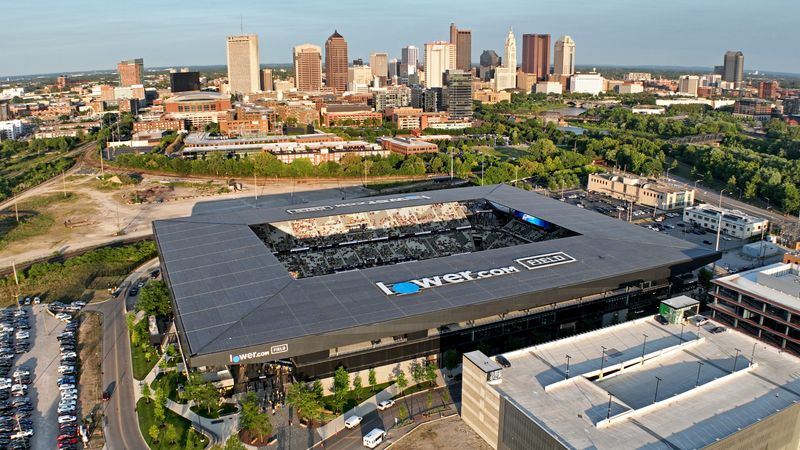
Working together to achieve a goal that will benefit the whole community is exemplified by the successful effort to keep the Columbus Crew, says Dan Snyder, co-founder and CEO of Lower.
“Most people don’t even know who the Columbus Partnership is, which is fine,” Snyder says. “But when there was talk that the Crew was going to be leaving Columbus, the Partnership was like, ‘No, no, no. It’s not happening.’ I wasn’t even part of the Partnership at the time. But they had all the influence, money, creativity and strategy to keep the Crew and pave the way for the best soccer stadium in the country.”
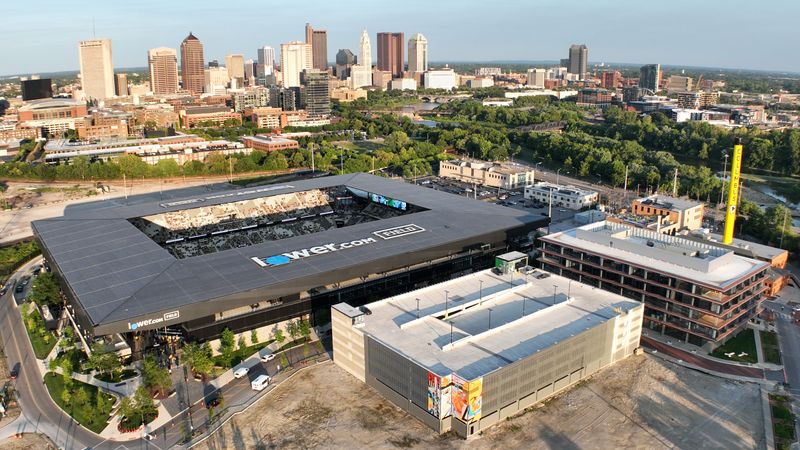
In 2021, Snyder’s company gained naming rights to the stadium before it opened in July.
“They were reaching out to various companies, and I was like, ‘No way we’re even going to be in the running, even close,’ ” Snyder says. “I tell my family we’re the largest company in Columbus no one’s ever heard of.
“But that all changed with Lower.com Field,” Snyder says. “It’s really cool. One of the main reasons why I was so eager to plant our flag with the naming rights is when you look at what it means to be in a city where you really want to live and work, having a team like the Crew is important. It’s like the Browns are pretty important in Cleveland—even if they don’t win, they still fill the stadium.
“We’re happy to be partners with the Crew, and it’s a perfect example of the power the Partnership has and their mission of public/private cooperation in making the community better in a meaningful way.”
Columbus Partnership Efforts Include Arts Advocacy
While Anduril’s decision to invest in Central Ohio “certainly comes down to nuts and bolts,” Mears says, other factors made the area attractive, as well.
“Our workforce is younger and urban, and having a set of cultural offerings accessible to that community will only add to our ability to attract the right kind of talent,” he says.
“One of the things that has been striking to me is how much [Columbus] has changed since 2016,” Mears says, with Downtown developments and rapidly growing entertainment offerings. “We definitely want to play the long game here, not just as good neighbors but investing in the community.”
The Partnership has long backed cultural and artistic ventures, including advocating for the proposed new $275 million concert hall for the Columbus Symphony Orchestra. Supporting the visual arts is particularly important to some of its members.
One of the city’s newer pieces of public art is a mural adorning the Astor Park garage along Columbus Crew Way. “Inter-Play” by Ohio State University fine arts graduate Odili Donald Odita, was funded by the Greater Columbus Arts Council, the city of Columbus, Haslam Sports Group, the Edwards family and the Pizzuti Cos.
“To get the kinds of people we want to attract, and the kind we want to retain, it’s really important to have a great quality of life,” says Joel Pizzuti, president and CEO of the Pizzuti Cos.
“People want to be proud of the city they live in. It’s crucial for the city to have not just physical art, but also performing art and live music—especially for young people.”
The mural, part of a curated art collection at Astor Park, is just the latest example of the art and design that the developer incorporate in all of its projects, inspired by the influence of founder and noted art collector Ron Pizzuti, Joel’s father.
In fact, the company has “an original piece of art in every office in our headquarters,” Pizzuti says. “We want people who walk in to be inspired. Living with art is important in all of our buildings. When people are around art, they appreciate it.”
“It’s fun stuff,” Pizzuti says, “and it all adds value to our projects, and to our city. You know, every great city—whether big or small—has a focus on the arts. It’s an important part of daily life.”
Tim Feran is a freelance writer.
This story is from the Columbus Partnership feature package in the July 2025 issue of Columbus CEO. It has been updated to correct inaccurate attribution on information about the War Room.
This article originally appeared on Columbus CEO: Columbus Partnership and Other Organizations Work to Advance Business and the Community
Reporting by Tim Feran / Columbus CEO
USA TODAY Network via Reuters Connect