LAFAYETTE, IN — Lafayette resident Sara O’Brien has a name for President Donald Trump’s sweeping tax and domestic policy bill making its way through Congress this week ahead of his self-imposed July Fourth deadline for its passage.
It isn’t the one Trump uses.

“The whole big, awful bill,” she said. “I feel sorry for the families, I do.”
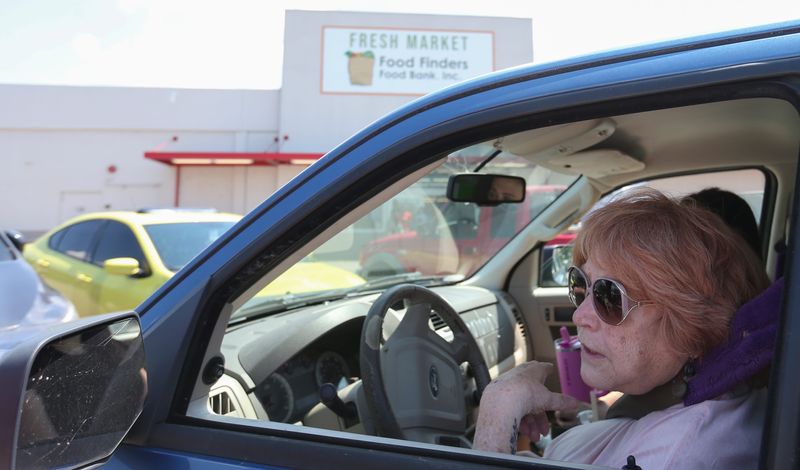
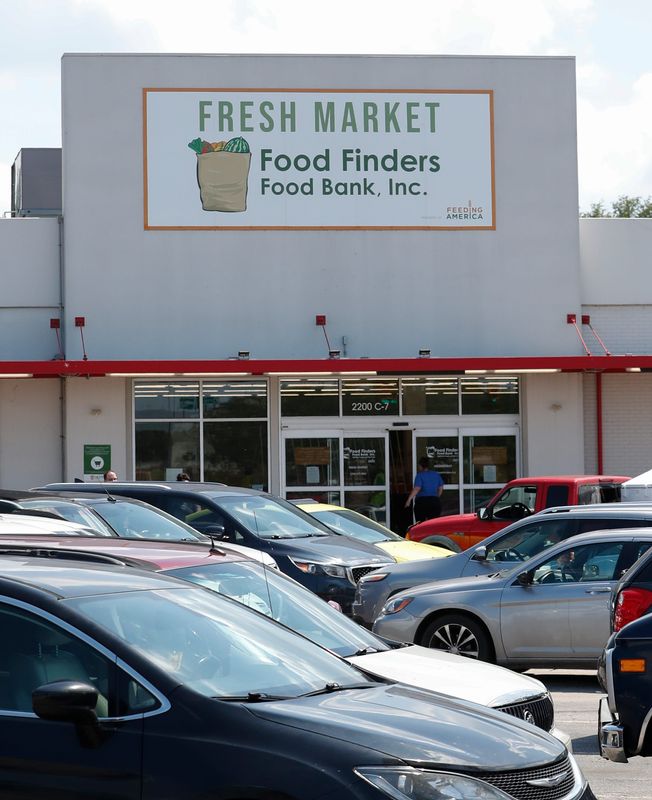
O’Brien, 75 and living on her Social Security checks, was sitting in her vehicle Tuesday afternoon after picking up groceries from the Food Finders Fresh Market food pantry on Greenbush Street. She’s one of about 600,000 Indiana residents who use the Supplemental Nutritional Assistance Program, a fund bracing to absorb the largest cut in its 61-year history barring significant, last-minute changes as a result of Trump’s so-called “One Big, Beautiful Bill.”
O’Brien’s benefits aren’t large; she lives alone with a pet cat. But she says she’s worried about others, because she’s seen the news.
The nearly 900-page bill, which squeaked through the U.S. Senate just hours before O’Brien visited the Fresh Market on Tuesday, will make permanent the 2017 tax cuts Trump engineered in his first term and pay for them in part by slashing Medicaid and food assistance, among other programs.
Even with the cuts, the Congressional Budget Office estimates a $3.3 trillion increase to the national debt in the next decade. The House, which must approve the bill before it can be signed into law, intends to make few changes under pressure from Trump.
The estimated 12% and 20% cuts to Medicaid and SNAP, respectively, are intended by Republicans to eliminate the “waste, fraud and abuse” they say the programs are rife with.
But advocates say the hundreds of billions being pulled will debilitate an already straining bulwark against mass hardship.
“Even though Food Finders Food Bank and our network of faith-based and partner pantries are doing everything we can to meet rising demand, federal nutrition programs provide an unmatched scale and efficiency so people can access the food they need,” Kier Crites-Miller, Food Finders President and CEO, said in a statement Tuesday to the Journal & Courier.
“While we are still learning what was passed through the Senate today, the last iteration of the bill had the largest cut to food assistance and health care, specifically SNAP and Medicaid, in our nation’s history. These programs have been our nation’s front line defense against hunger and hardship for more than 60 years.”
Officials with Lafayette Urban Ministries and the Lafayette Transitional Housing Center, other local social safety net organizations, were not available for comment Tuesday.
The reduction in funding to SNAP and Medicaid will come largely from the expansion of program work requirements and by forcing states to pick up a greater portion of SNAP costs starting in 2028, provisions included in both the House and Senate versions of the bill.
And because both SNAP and Medicaid target low-income people, the cuts will come as a sort of double jeopardy for many: 78% of SNAP users also rely on Medicaid, according to the most recent data available in 2022.
Changes to SNAP could put an overwhelming strain on many state budgets, including Indiana. The amount the state will need to foot to cover services previously provided by the federal government could come in the hundreds of millions; Food Finders estimates that cost to be the equivalent of up to 133 million meals.
Families with young children and the elderly, who make up the majority of those receiving SNAP, will be hit hardest.
Scott Hans, a father of three daughters, was placing plastic grocery bags into his family’s SUV and helping his young daughter into her booster seat Tuesday afternoon in the Fresh Market parking lot before they went to volunteer with their church.
He said his family had been on SNAP before he took a new job as a sous chef at the Whittaker in West Lafayette and exceeded the program’s income threshold, but he reapplied in June. From conversations with those who determine his benefits, he expects to receive about $200 a month on his SNAP grocery card once accepted.
That would go a long way for Hans’ family, he said. He used the maximum payment to a family of five in Indiana of $1,158 as an example — two months of that would feed his family for the rest of the year.
SNAP might even help Hans, his wife and daughters move out of the hotel they currently call home.
“I pay $2,100 a month to live out of a hotel,” he said. “And after taxes and everything I’m looking at maybe $700, $800 left to pay car insurance, I have a pull-behind camper with everything we own in it, I have insurance on that. Cell phones and food costs and then gasoline to get everyone to and from where they need to go. $700 a month to cover all that, and half of that is insurance and bills.”
He said he’s been on the wait list for a Section 8 voucher from the U.S. Department of Housing and Urban Development — another program targeted repeatedly for budget cuts by the Trump administration — for three years.
“I wouldn’t have to worry about $2,100 a month in income to supply a place to live,” he said. “There’s an extra $2,000 in my pocket every month going into savings or going to what my kids need.”
As Hans held his young daughter, he brought up a May initiative that made Indiana the first in the country to prevent SNAP dollars from being spent on sugary foods, another irk of those who defend the dignity of choice and say those foods already make up a small proportion of SNAP spending anyway.
But that won’t affect his family so much; he limits his daughters to a couple of sodas a week.
“This one,” he said, and placed a finger on his daughter’s nose, “likes frozen hot chocolates. But they’re completely 100% sugar-free.”
He went on about his struggle to find a permanent home for his family. Local agencies that specialize in finding people homes, such as LTHC, have turned him away. They have their hands full with the many who sleep on sidewalks and in vehicles, people far less fortunate than the Hanses.
His daughter interrupted him.
“Daddy,” she said. “Daddy!”
He placed her on the ground. A curly brown lock fell across her face. She wore leggings with a butterfly decal and Mario slides.
“What?” he asked, with a tone of slight exasperation.
“Can I have hot chocolate?” the child asked.
He laughed.
“We’ll try, baby.”
Israel Schuman is a reporter for the Journal & Courier. He can be reached via email at ischuman@gannett.com
This article originally appeared on Lafayette Journal & Courier: As SNAP, Medicaid cuts loom, Lafayette food banks and the hungry brace for impact
Reporting by Israel Schuman, Lafayette Journal & Courier / Lafayette Journal & Courier
USA TODAY Network via Reuters Connect