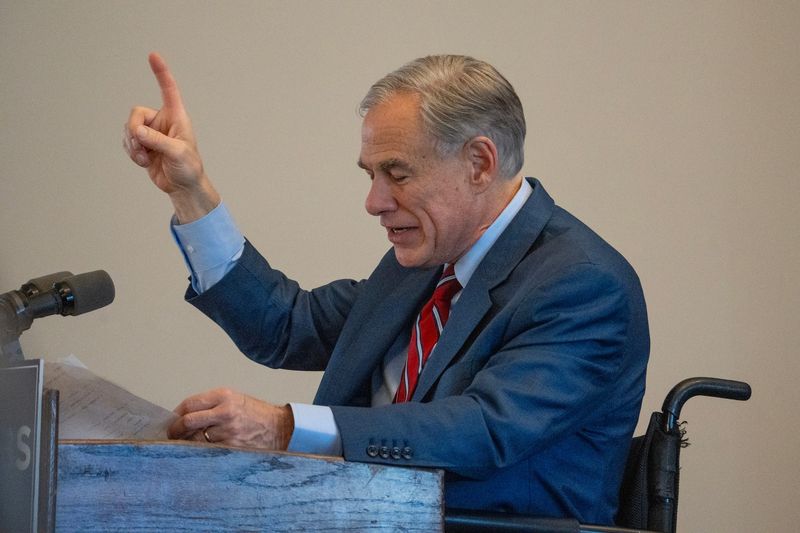
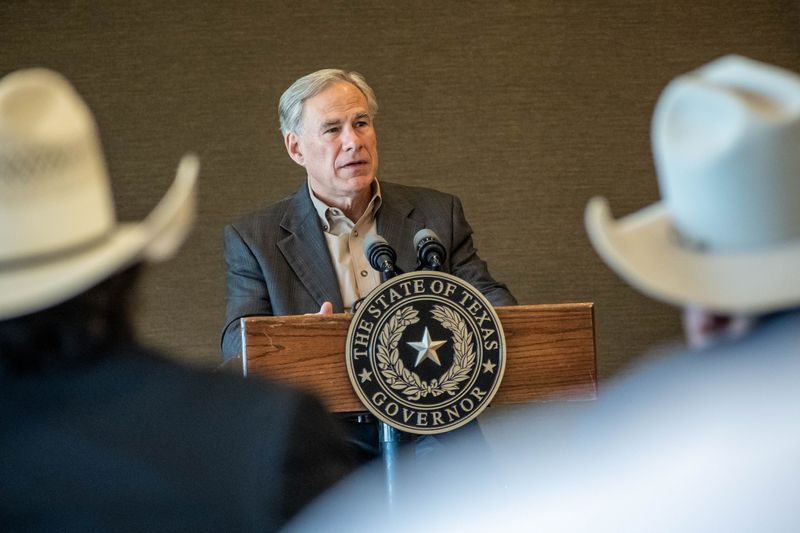
Of the nearly 1,200 bills approved by the Texas Legislature this year, Gov. Greg Abbott only vetoed 28.
Most notable among the list of vetoed bills was SB 3, which would have banned hemp-derived products in the state. Abbott is clearly in support of some ban on hemp products and is already planning to call lawmakers back to Austin to iron out a plan.

Along with SB 3, legislators will be taking up five other bills vetoed by the governor during the upcoming special session set to kick off July 21.
Following is a breakdown of the other bills set to be tackled in the upcoming special session:
The remaining vetoed bills are dead, at least until the Legislature reconvenes in January 2027 for the next regular session.
Vetoed bills
Following is a breakdown of the remaining 22 bills vetoed by the governor and his explanation on why each one was rejected, as detailed in veto proclamations:
“House Bill No. 305 laudably seeks to promote the timely resolution of criminal cases following a defendant’s restoration to competency but does so by imposing a rigid procedural mandate that could create legal problems.”
“House Bill no. 413 is a common-sense reform that ensure pre-trial detention does not become a form of punishment and will save taxpayers money. However, the bill fails to specify that the method of release must provide sufficient sureties to ensure public safety and appearance at trial.”
“The increased prevalence of sexually explicit deep fake media is alarming. However, the author of this bill requested it be vetoed because other, more comprehensive approaches to this issue were passed this session and signed into law.”
“Enacting and enforcing laws are not just things that sovereign governments do; it is the very embodiment of sovereign power … House Bill No. 705 would cede Texas’s sovereign power by subjecting it to a Cosmetology Licensure Compact comprised of other states.”
“In a session focused on securing water resources, House Bill No. 1690 sends the opposite message. This bill would increase the regulatory hurdles to convey water resources. And it would do so needlessly.”
“House Bill No. 2243 rightly seeks to address the issue of teacher satisfaction and retention and to build upon work of the Teacher Vacancy Task Force that I convened in 2022. However, the bill would allow a newly-created commission to hire staff and legal counsel and procure goods and consulting services without adhering to competitive bidding rules or the Professional Services Procurement Act — both important safeguards for the use of taxpayer dollars.”
“House Bill No. 2520 is framed as subjecting a (Texas Education Association) – appointed board of managers to the Open Meetings Act. But that is already the law … If a board of managers is not doing its duty, the answer is not to duplicate laws already on the books.”
“House Bill No. 3120 is a well-intentioned effort to make child detention facilities, and the communities around them, safer. To that end, the bill would direct facility operators to seek a Memorandum of Understanding with a local government that includes plans for reporting and preventing illness, conducting quarterly inspections, safely evacuating residents, and reporting periodically on occupancy and facility incidents … But these sorts of arrangements should be things of the past.”
“House Bill No. 4530 would allow private individuals to dedicate their groundwater to the Trust. But it fails to explain how groundwater percolating below the surface of the Earth is to be transferred to a surface water trust focused on instream flows, water quality, fish and wildlife habitat, and bay and estuary flows.”
“I veto this bill.”
“This session I signed laws that secure water resources for generations of Texans to come so that our great state can continue to thrive. As with any government investment, we must make sure it is properly managed with sufficient oversight. House Bill No. 5671 does the opposite.”
“In its attempt to streamline responses to health care complaints, this bill would inadvertently raise hurdles to protecting public health and safety. Senate Bill No. 268 aims to ensure a health care complaint is handled by the right regulatory board … But it would also prohibit the original board from taking any disciplinary action for portions of a complaint within its jurisdiction.”
“As the Supreme Court of the United States recognized nearly two centuries ago, a final criminal judgment is ‘binding on all the world.’ That is why efforts to reopen a state court judgment in habeas proceedings must be the rare exception … Senate Bill No. 614, however, encourages convicted criminals, defense attorneys, and state courts to embrace the notion that the writ of habeas corpus ad subjiciendum is merely a fifth, sixth, or seventh round of review.”
“Appraisal review boards serve as arbiters in the local property tax imposition process. And it is imperative that board members are free from allegations that their professions colors their judgment, especially when one of the entities that could benefit from a board decision may be a board member’s employer. While the intent of Senate Bill No. 974 is well taken, we must ensure members of appraisal review boards can exercise judgment without compromise.”
“The Governor’s University Research Initiative was primarily intended to aid public institutions of higher education in recruiting distinguished researchers from around the world to come to Texas public universities. Senate Bill No. 1032 would expand GURI program eligibility to private institutions. That may be a worthwhile cause. But the reality is that the legislature did not fully fund the program.”
“Senate Bill No. 1838 invites attorneys appointed ad litem to argue with the courts that appointed them – at taxpayer expense – about how much money they are owed. This not only expands the existing cottage industry of post-judgment fee disputes, it also incentivizes court-appointed attorneys to inflate their fees in anticipation of later contesting any downward modification.”
“Senate Bill No. 1937 would impose a rigid mandate requiring nuclear DNA testing in every capital case, even where that method is not scientifically appropriate for the biological material at issue.”
“Senate Bill No. 2502 seeks to give indigent parents greater freedom to select legal counsel for proceedings that affect the parent-child relationship. But it goes too far. Under this bill an attorney could be ‘selected by the parent’ to be ‘compensated by the county,’ only for the parent to ‘substitute counsel’ over and over again — for any reason or no reason at all.”
Adam Powell covers government and politics for the El Paso Times and can be reached via email at apowell@elpasotimes.com.
This article originally appeared on El Paso Times: Gov. Greg Abbott vetoed 28 bills after the 2025 Texas legislative session. Here’s why
Reporting by Adam Powell, El Paso Times / El Paso Times
USA TODAY Network via Reuters Connect