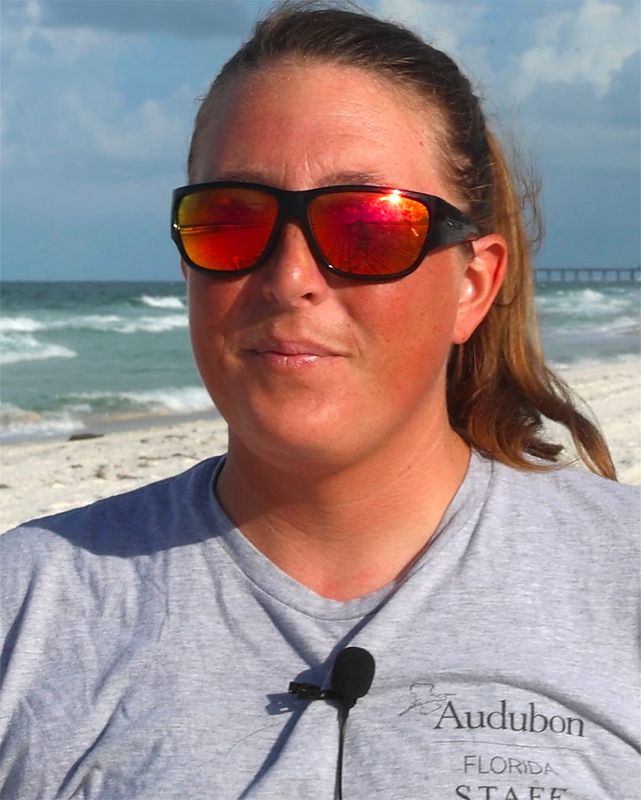
As fireworks light up the skies this Independence Day, and extended three-day weekend, Collette Lauzau, a shorebird program manager with Audubon Florida, urges beachgoers to be mindful of nesting birds.
The News Herald caught up with the wildlife biologist as she monitored a least tern and black skimmer colony on Bid-A-Wee Beach in Panama City Beach.

Question: What’s going on this morning?
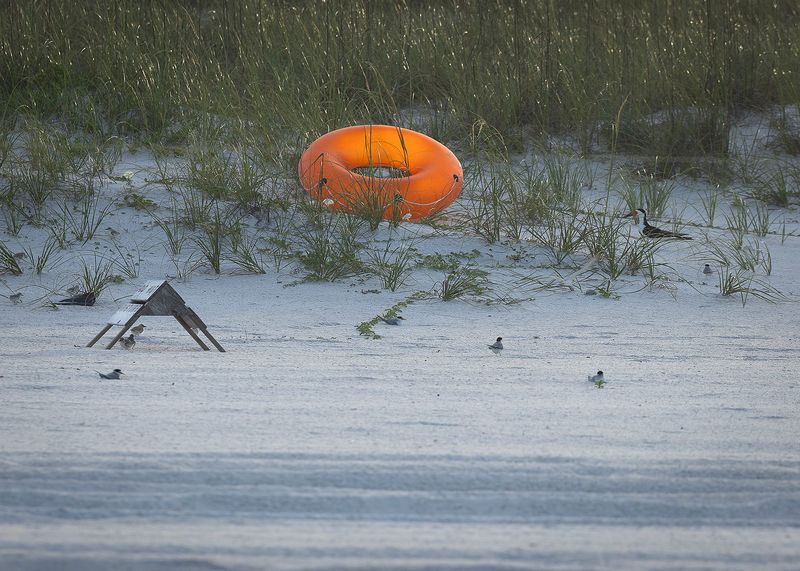
Answer: We’re at one of the largest least tern and black skimmer colonies in Bay County. They’re very active right now. You might hear them squeaking. They have eggs and chicks in this colony; so, we’re checking out the nesting.
What are some of the concerns for these birds as we approach the Fourth of July?
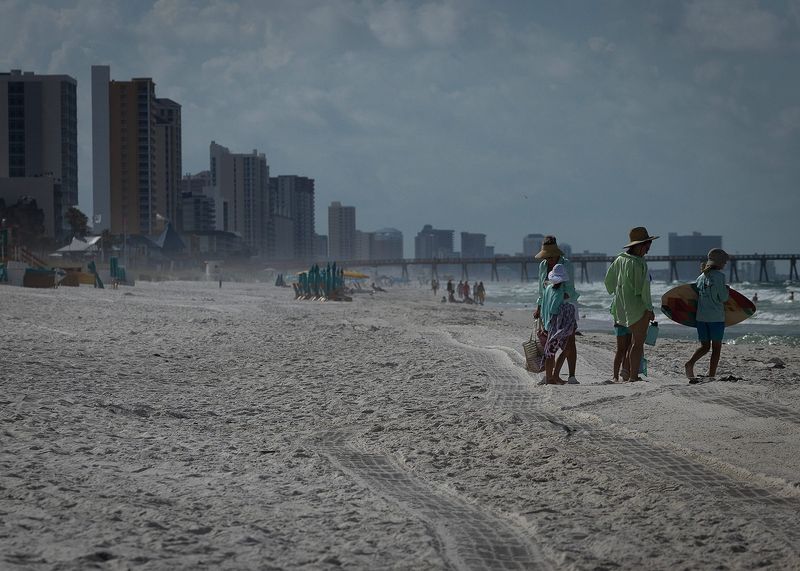
The Fourth of July is a wonderful holiday that attracts a lot of people to our beaches, and there’s a few different concerns for the birds. (This holiday) is a very vulnerable time of year for these birds because they do have chicks and the chicks are not capable of flying away to get out of the area.
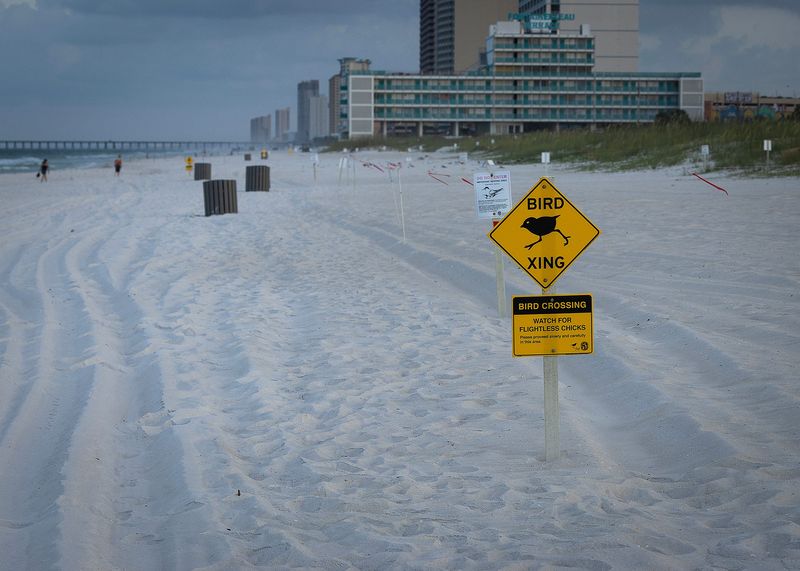
So, one of the big concerns is people actually stepping on the chicks, or not giving enough room to the adults and the chicks. We do set up large posted areas to try and keep the birds in (the protected zone). And when the birds have eggs, they stay very well in there. But (when the eggs hatch) the chicks can also roam outside of the posted areas.
We also have concerns about people playing frisbee and beachball too close to the colony because sometimes those toys can get away and wind up in the posted area. So, if you see a posted area, the best thing to do is play those games away from the posting so that risk doesn’t happen.
How do these nesting birds interact with beachgoers during this busy time of season?
The birds don’t want to interact with us at all.
The least terns are very aggressive. They will dive bomb, make a lot of noise and occasionally hit people in the head and defecate on you. Least terns definitely make themselves known, and will tell you if you’re too close.
The black skimmers, on the other hand, are a little less aggressive. Even though they’re larger, (when threatened) they make this noise that’s very much like a dog bark and they’ll start kind of flying at you. They may also, if they have chicks, do something called “broken wing,” where they drag their wing and fake that they’re injured. This is to draw you to them and away from the eggs and chicks that might be vulnerable in the area. If you do see a black skimmer doing that, just walk away, and give it some room.
How long are these birds in the area?
Both black skimmers and least terns are migratory. With the black skimmers, you may see them year round. But the colony (here) is very specific to the summertime. The least terns, on the other hand, come here just for breeding season and they leave as soon as they’re done. So, breeding season for these two species tends to be from about the beginning of May until the end of August.
We do have the snowy plover in the area. That’s one of the solitary birds. And the snowy plover will start nesting as early as Valentine’s Day. But generally by the end of August, everybody’s done.
The wooden decoys, why do you use them?
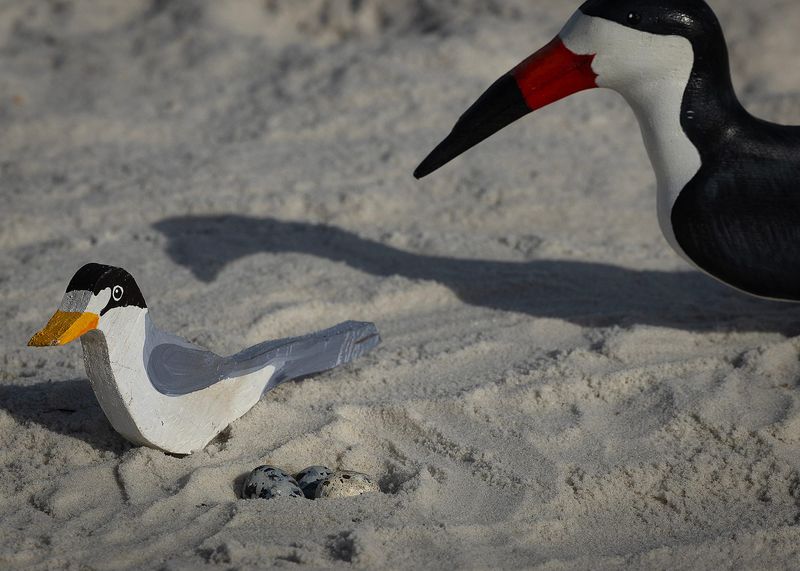
If biologists want to move birds from one area to another, a safer area, they may use decoys. This only works at the very beginning of the nesting season. (These decoys) stay in the colony for the whole nesting season because we don’t want to flush the birds by going in and getting them. And the other decoy is fake eggs; they are colored just like our regular shorebird eggs.
The birds nest directly on the sand, so they’ll just scrape away a little hole and lay these directly on to the sandy beach. That’s one of the main reasons why we give these big posting areas around the nesting colony is because even for trained biologists, these eggs can be incredibly hard to see.
What about dogs and cats? How do they affect the birds’ parental care behavior?
When you’re at places where there are a lot of these birds, one of the other threats to the birds are dogs, especially off leash dogs. Although any bird will see a dog as a predator, at least if it’s on a leash, it’s controlled and kept away from the colony. Dogs see these birds and these flightless chicks as a quick snack. And even ones that you think would never (hunt birds) will often be a threat to these birds. Same with cats. If you have cats, please keep them indoors. Cats can get into these colonies.
Is there anything else you’d like to say about the Fourth of July weekend and bird safety?
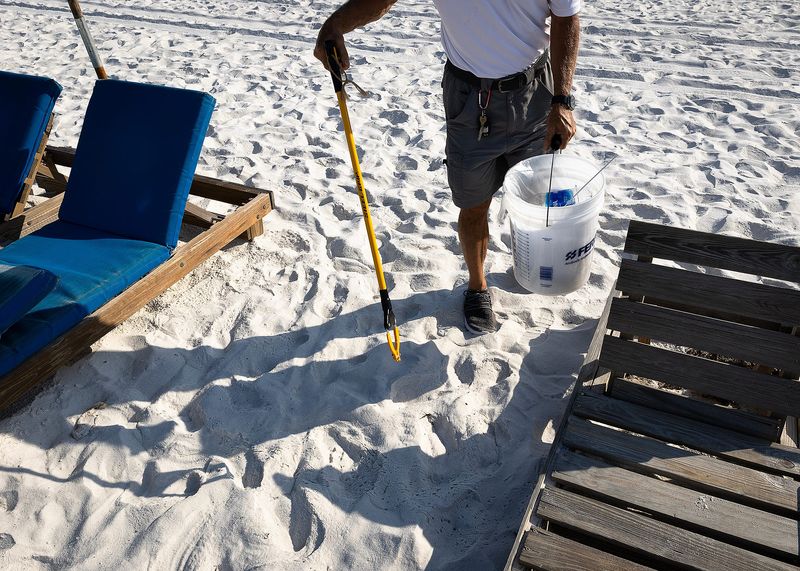
So, one of the other things Audubon Florida asks people to do, especially on these beach holidays, is to pick up after yourself and after your trip. And that doesn’t just mean pick up your garbage or plastics; it also means pick up things like your orange peel wrappers, because what this will do is actually attract predators to the beach. And they’ll come.
Predators eat the food left by beachgoers. But once the beachgoers are gone, the only food left on the beach is our shorebirds and our sea turtle nests. So, we try really hard to make sure that all of these beaches are cleaned up.
The other thing that a lot of these plastics have, that we don’t necessarily notice because our sense of smell isn’t as good as some of these birds, is that a lot of them smell like food. And because the plastics smell like food, a lot of birds will eat these plastics. And it can be very detrimental.
So, as you’re out on the beach this Fourth of July, please make sure to clean up after yourself. Clean up any firework debris that you create and try to remember to pick up even your organics.
This article originally appeared on The News Herald: Audubon Florida urges caution: Fireworks can frighten nesting shorebirds
Reporting by Tyler Orsburn, Panama City News Herald / The News Herald
USA TODAY Network via Reuters Connect