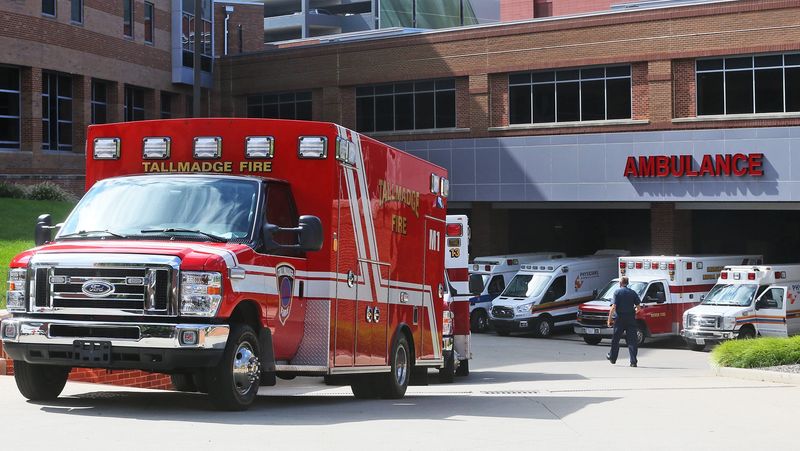
Over the past two years, Global Medical Response (GMR) was forced to shut down ambulance operations in Northeast and Western Ohio, including in Akron—decisions that impacted the livelihoods of dozens of dedicated EMS professionals.
These closures weren’t the result of mismanagement or poor planning. They were the direct consequence of a broken insurance reimbursement system, pushing vital ambulance services to the brink—and in these cases, beyond.

We raised the alarm in 2020, when a last-minute amendment—pushed by the insurance lobby—was slipped into a well-meaning bill without input from the EMS professionals it would most affect. A respected EMS veteran on our GMR team joined others in testifying against the amendment, warning that it would put ambulance services across Ohio in financial jeopardy. Our concerns were dismissed—and now, the consequences we predicted are playing out in real time.
To be clear, the biggest threat to ambulance services in Ohio isn’t the General Assembly—it’s the insurance industry and its ongoing refusal to pay fair, sustainable rates for emergency medical care. Insurers routinely reimburse ambulance providers well below their actual cost, all while knowing EMS teams are legally obligated to respond to every call, regardless of whether they’ll be reimbursed.
Insurance companies position themselves as protectors of patients, claiming to shield them from “surprise bills,” but behind that narrative is a calculated strategy to justify chronic underpayment to ambulance providers. Emergency ground ambulance services represent just 0.3% of insurers’ total health care spending—less than a third of a penny per dollar—yet they continue to deny fair reimbursement, often leaving taxpayers, patients and the ambulance providers to foot the bill.
The result? Fewer ambulances on the road. Slower response times. Higher tax levies. Communities left without reliable access to care.
Ohio’s 2020 surprise billing law may have been well intentioned, but as predicted, insurers have exploited it by using opaque billing practices, delaying payments and dragging providers into endless arbitration battles. Ambulance providers, unlike other health care entities, can’t opt out, can’t negotiate rates and can’t refuse service. We are bound to respond, even when the system fails to pay us for the care we provide.
We warned that without accountability for insurers, ambulance services across Ohio would become unsustainable. That warning is no longer hypothetical.
This is not just a billing issue—it’s a public health crisis. When insurers won’t cover the true cost of care, it’s families across Ohio who suffer.
But there is hope.
The Ohio Senate has included language in the state biennium budget to help fix what’s broken. Recognizing that EMS is not optional, but a critical piece of Ohio’s health care infrastructure, Senate leaders have stepped up with a legislative solution to ensure fairer reimbursement for ambulance providers. This change is essential to creating a more level playing field. Without it, more closures are inevitable, and everyday Ohioans—especially those in rural and underserved areas—will bear the cost.
This isn’t about politics; it’s about public safety. It’s about making sure that the next 911 call in your community doesn’t go unanswered because there’s no ambulance left to respond.
Adopting a fair ambulance reimbursement structure isn’t just smart policy; it’s a lifesaving one. By supporting the Senate’s budget language, Ohio lawmakers have a clear opportunity to do what’s right and what’s necessary to protect both patients and the first responders who serve them.
Christopher Stawasz is a licensed paramedic with over 40 years of frontline and leadership experience in emergency medical services. He currently serves as Director of Government Affairs for Global Medical Response’s Northeast Region, advocating for policies that support EMS providers and preserve access to life-saving care across the communities they serve.
This article originally appeared on Akron Beacon Journal: Ambulance services across Ohio have become unsustainable. A bill would fix that | Opinion
Reporting by Christopher Stawasz / Akron Beacon Journal
USA TODAY Network via Reuters Connect