True confession: I don’t really like tasting menus. At the risk this admission lands me in foodie jail, I generally find them disorienting and unsatisfying, even as I understand they are usually the impressive expressions of a talented chef.

So, I was initially skeptical about my assignment to review Haru Omakase at Polaris. Omakase means “I leave it up to you,” in Japanese—a diner’s total surrender to the whims of the chef. Omakase chefs depend as much on the interaction with their diners as they do on availability of seasonal ingredients to direct what dishes are created each evening. Because they are often menuless and can be expensive, traditional omakase restaurants have a reputation for being formal and intimidating.
And despite all this, I found myself delighted and amazed by a recent dinner at Haru. Perhaps because I have limited knowledge of Japanese cuisine and never cook it at home, I had no real context for this meal. I had to enjoy it in the moment—which is exactly the spirit of the omakase experience.
Satisfy your hunger for food news. Subscribe to Columbus Monthly’s weekly dining newsletter, Copy & Taste.
Haru is Columbus’ first omakase restaurant. It was opened last November by established restaurateurs Jeff and Yenny Tsao, owners of the fast-casual outlet Fukuryu Ramen and the Milky Way Matcha Bar. Jeff’s family was the last owner of the famed Kahiki Supper Club, and Yenny founded Meanie Konbini, the recently shuttered line of onigiri.
Haru’s formula is actually very transparent. For the base price of $99 per person (or $109 for one of the six seats at the chef’s counter), diners enjoy a set menu of five courses—all but dessert featuring a pristine selection of imported seafood. Sake or wine pairings, an additional premium course, and exclusive add-on ingredients like caviar and sea urchin are available at extra cost. It is plainly stated across the top of Haru’s website and while making reservations that the restaurant cannot offer vegetarian options or accommodate for dietary preferences, but it can and does address food allergies.
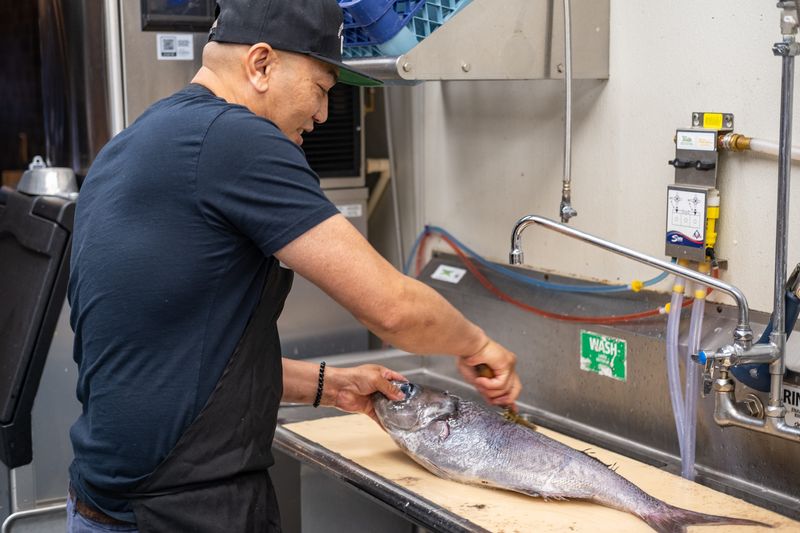
It’s clear as soon as you are seated that this structure is only a starting place. Chef Yudi Makassau creates his weekly menus based on the seasonal availability of seafood. Thirty-seven different varieties of fish had arrived from Japan the day we visited—a typical shipment that Haru receives each Thursday. Friendly, welcoming exchanges upon arrival help Makassau determine each guest’s familiarity with sushi and the flavors they like best. Attentive servers confirm if any premium ingredients will be incorporated into each guest’s meal and determine beverage selections. And then you are off on your personal “tour”—Haru’s word for the meal ahead.
On our visit, we sat at the chef’s counter, which is brightly lit and offers direct access to Makassau and his two assistants. Through casual banter and light laughter, we watched as they moved quickly, hand-shaping rice forms, expertly slicing off pieces of dark red tuna loin and silvery-skinned mackerel, and maneuvering long tweezers to precisely garnish each piece of sushi. I felt relaxed and well cared for as they described the origin and tradition of each f ish and how they handle it to maximize its unique flavor profile.
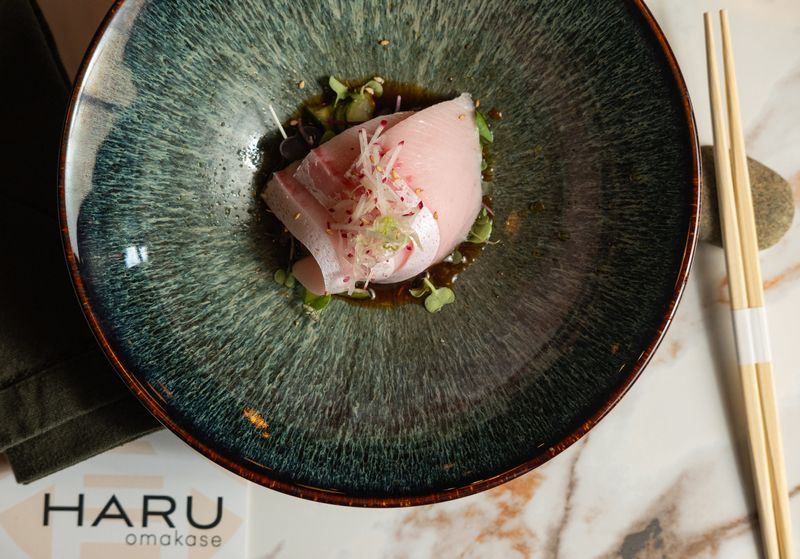
We began our meal with a small seafood salad that featured marinated raw flounder slices accompanied by delicate pieces of baby octopus and vegetables combined in a citrus-soy dressing. I loved the contrast of textures each bite held: buttery pieces of fish, dense and chewy seaweed and snappy cucumbers.
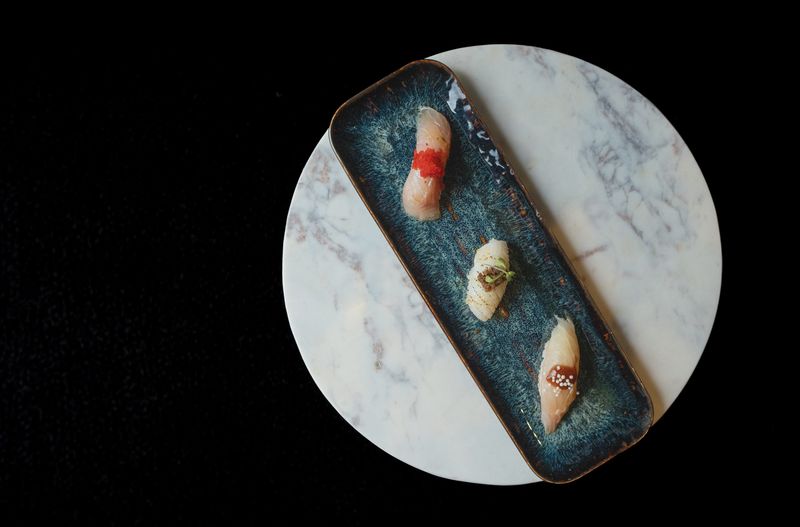
Over the next three courses, we enjoyed eight pieces of sushi and one handroll. Each course offered a flight of three different nigiri, sushi with an oval shape of rice draped with a seasoned piece of raw fish. Combinations included striped jack with a Peruvian pepper paste, snow crab with amaranth, and squid with crunchy chili and shiso leaves. Nigiri are meant to be consumed in one bite, but don’t confuse small for being insubstantial. Each piece fills your mouth and grabs your attention, forcing you to mindfully chew and experience its flavors. The measured pace of the meal also allowed for each flight to be slowly savored while the chefs watchfully judged diners’ reactions to each bite and asked for feedback. “It will only get better,” Makassau repeated with a knowing smirk throughout our meal—revealing his steady drive to impress every guest while also baiting our anticipation for the next course.
Every bite was good, though some stood out more than others. I particularly enjoyed the bluenose nigiri, a velvety fish from the butterfish family lightly smoked with hickory chips. I also savored my piece of golden threadfin, a type of bream, which was lightly garnished with bit of umeboshi, the sweet-sour paste made from pickled plums.
I also liked my bites of king salmon, featured in both a nigiri and a two-bite handroll, and the seared baby barracuda, Young yellowtail featured in a salad which reminded me of eel, my favorite sushi fish. The new-to-me gizzard shad, a pungent mackerel relative that had been lightly pickled, was described as the “fish to judge omakase by.” The reason: Its condition and the way it’s handled indicate the skill of the chef and the quality of the restaurant.
Dessert is included in the menu at Haru, though I was fully prepared to skip mine to allow my time with the savory courses to linger. I thought I could forgo a slice of cake made from crepes layered with a white chocolate whipped cream filling and topped with a sweet strawberry compote. I was wrong. One bite led to another, which led to another until it was gone.
This story appeared in the July 2025 issue of Columbus Monthly. Subscribe here.
This article originally appeared on Columbus Monthly: Review: Haru Omakase Offers a Sublime Sushi Experience
Reporting by Amy Bodiker Baskes / Columbus Monthly
USA TODAY Network via Reuters Connect