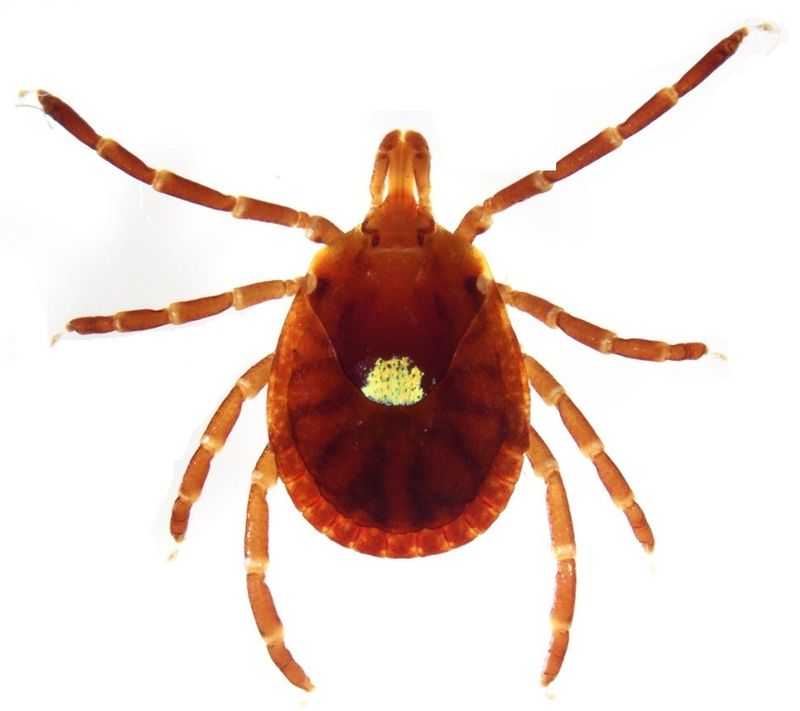
As we work and play outdoors, it takes time to think about ticks.
Ticks, sometimes mistakenly called insects, are actually arthropods belonging to the class Arachnide which also include mites, spiders, and scorpions. Ticks can be soft or hard-bodied. Hard-bodied ticks are the varieties of concern to hikers, campers, and pet owners. Ticks can bite people or pets, cause diseases, skin irritations, and allergic reactions in more sensitive people. Lyme disease is the most common tick-borne disease and is of the most concern.

Ticks do not jump or fly and must literally come in contact with a host. Favorite places for ticks include tall grass, shrubs, brushes, leaf litter, and other vegetation, particularly along trails or footpaths. However, you can encounter a tick any time and any place you are outdoors for an extended period of time.
To reduce the chances of being bitten by a tick, conduct frequent tick checks while outdoors. Examine yourself, children, and pets carefully.
Wear light-colored clothing, long pants, long-sleeved shirts, socks and closed-toed shoes. Tuck pant legs into socks and tuck shirts inside pants in order to slow crawling ticks. Apply insecticide sprays labeled for tick control to leaf litter, the perimeter of yards, and shaded landscape beds.
Consider using bug spray on yourself. Be sure to read all pesticide labels completely before applying.
Wearing tall rubber boots can reduce the number of ticks on you; the smooth rubber surface is difficult for ticks to grab onto. Always perform a tick check after any outdoor activity. Immediately place your clothes in the dryer at hot heat setting; then wash them. Be tick smart; let our CCE of Oneida County “Tick Talk” section of our website help you. Visit https://cceoneida.com/home-garden/gardening/tick-talk for more information.
Cornell Cooperative Extension Oneida County answers home and garden questions which can be emailed to homeandgarden@cornell.edu or call 315-736-3394, press 1 and ext. 333. Leave your question, name and phone number. Questions are answered, weekdays; 8am to 4pm. Also, visit our website at http://cceoneida.com/ or phone 315-736-3394, press 1 and then ext.100.
This article originally appeared on Observer-Dispatch: What to know about ticks
Reporting by Rosanne Loparco / Observer-Dispatch
USA TODAY Network via Reuters Connect