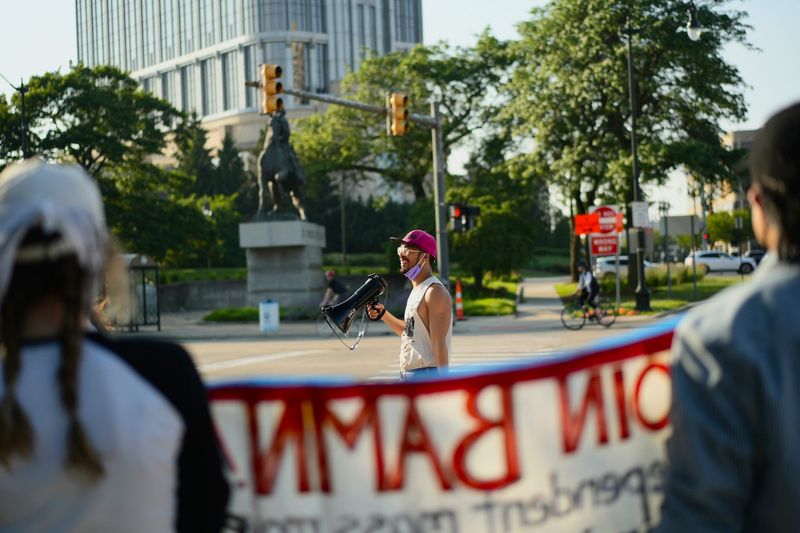
With at least 70 No Kings day demonstrations planned across Michigan on June 14 as a collective response to President Donald Trump’s policies and the recent military response to ICE protest in Los Angeles, California, those taking part may have questions about their rights if confronted by police.
“Recognizing the historical and central importance of protests and demonstrations, the First Amendment of the U.S. Constitution protects your right to protest, assemble, and petition,” the ACLU says on its website.

The demonstrations are expected to bring thousands of Michigan residents to the streets.
“The flag doesn’t belong to President Trump. It belongs to us. We’re not watching history happen. We’re making it,” the No Kings organization said on its website.
The protests are taking place on Flag Day and the U.S. Army’s 250th birthday. In Washington, D.C., President Trump is hosting a parade in honor of the Army and his own birthday.
Here’s what to know knowing you rights when protesting in Michigan, according to the ACLU:
Where can I gather to protest?
Public areas, like streets, sidewalks and in front of government buildings are open to protests as long you are not blocking access or interfering with operations, the ACLU website says.
What to do if the police tell you to disperse?
Shutting down a protest is often law enforcement’s last resort. They normally disperse a protest when there is clear danger of a riot, disorder, interference with traffic or immediate threat to public safety, the ACLU says.
Protests must receive a clear and detailed dispersal order that include:
Can I take photos at a protest?
In any public space, you have the right to photograph anything in plain view, the ACLU says.
Police officers need a warrant to confiscate or view photographs and videos. Additionally, they cannot delete data from your phone.
Officers can, however, order citizens to “cease activities,” including recording when protestors are interfering with legitimate law enforcement operations. To avoid such orders, consider recording from a safe distance.
How should I prepare for a demonstration or protest?
Human Rights Campaign offers a list of ways those taking part can be prepared.
What other rights should you be aware of?
Everyone has a number of constitutionally protected rights they can invoke in any encounter with police.
If arrested, you should be advised of your Miranda rights. Specifically, suspects must receive express warnings of their right to remain silent; that anything they say may be used as evidence against them; that they have a right to counsel; and that, if they cannot afford counsel, they are entitled to an appointed attorney.
This article originally appeared on Lansing State Journal: No Kings protests to target Trump. What are your rights in Michigan?
Reporting by Jalen Williams, Detroit Free Press / Lansing State Journal
USA TODAY Network via Reuters Connect