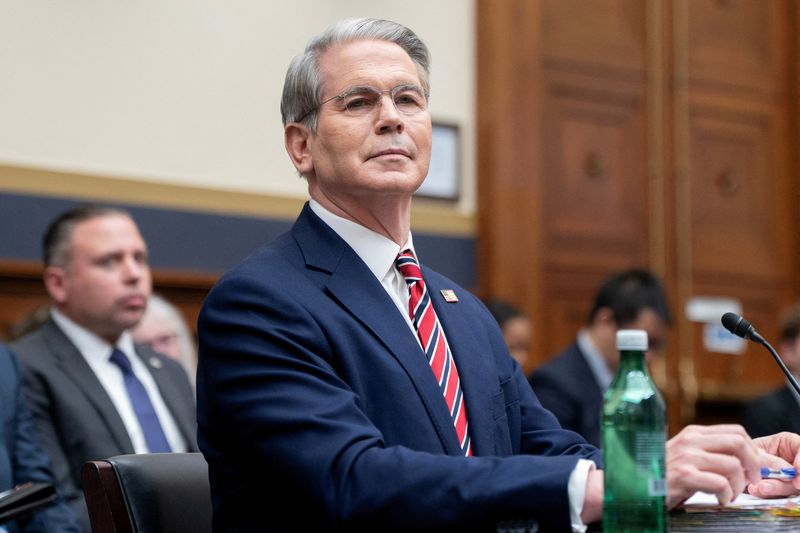
WASHINGTON (Reuters) -U.S. Treasury Secretary Scott Bessent said that the Republican tax and spending bill under consideration will prevent hundreds of billions of dollars of corporate tax payments from going to foreign governments.
Bessent told a U.S. House of Representatives Ways and Means Committee hearing that the Biden administration “chose to outsource American sovereignty on tax matters,” and the so-called One Big Beautiful Bill Act tax bill would deter countries from collecting revenues from U.S. companies through the “Pillar Two” global minimum corporate tax.

“The U.S. tax system will stand next to what is called Pillar Two, and other countries are welcome to relinquish their fiscal and tax sovereignty to other nations,” Bessent said. “The United States will not so this bill will allow us to prevent our corporate revenues from being drained into foreign treasuries, and that is in the hundreds of billions of dollars.”
The Republican bill contains a proposed tax, known as Section 899, that applies a progressive tax burden of up to 20% on foreign investors’ U.S. income as pushback against countries that impose taxes the U.S. considers unfair, such as digital service taxes. It could raise $116 billion in taxes over 10 years but has raised concerns over the attractiveness of U.S. investments.
(Reporting by David Lawder, Editing by Franklin Paul)