Most of the time, we don’t give a second thought to the name of our hometown. But once in a while, an odd name will catch our eye and pique our interest. Who names a town Bad Axe, anyway?
Here are the stories behind the unique names of 15 Michigan towns.

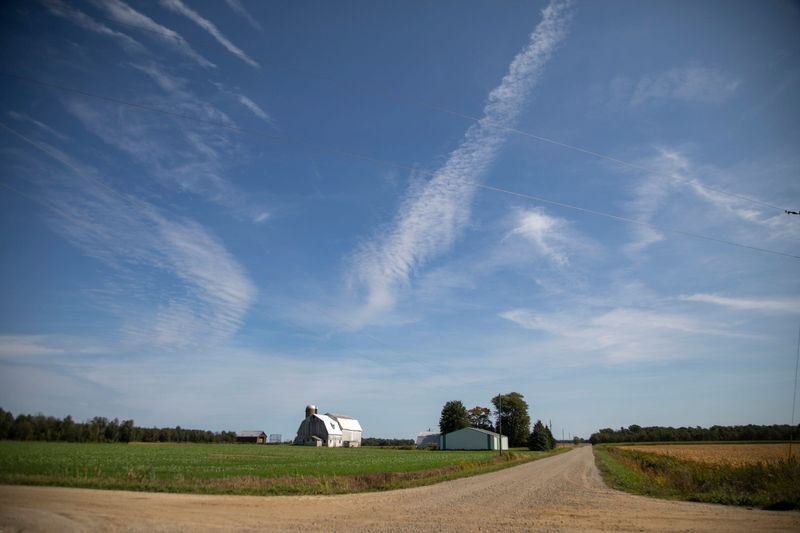
Bad Axe
Population: 2,930
Est: 1905
Story: The town is named after a worn and damaged axe that was found at the future site when settlers Rudolph Papst and George Willis Pack were surveying the area. Pack suggested that Papst write Bad Axe Camp on the survey.
Canton
Population: 98,659
Est: 1834
Story: Canton was created by the Michigan Territorial Legislature using the southern portion of Plymouth Township. The city was named in honor of the Chinese city Guangzhou, which is also known as Canton. Washington D.C. had decreed that new towns could not use names from pre-existing towns, so some new cities and towns adopted Chinese names. Canton is one of the few remaining towns with its original Chinese name.
Chesaning
Population: 2,356
Est: 1847
Story: The name is a Chippewa word meaning “big rock place.” The first recorded mention of Chesaning was in the 1819 Saginaw Treaty between the Chippewa people, the Saginaw tribe and the U.S. government. One of the reservations established by the treaty was the “Big Rock Reserve,” which was thousands of acres of land located by the Shiawassee River.
Christmas
Population: 400
Est: 1938
Story: In 1938, Julius Thorson — from Munising, just 5 miles west — built a roadside factory called Christmas Industries along what is now M-28 to make holiday gifts. That factory burned down just a year later, but the name Christmas stuck, and the town even got its own post office in 1966. Today, there is a 35-foot Santa Claus sign that greets passing cars, and the town is a destination for camping, snowmobiling and gambling (at Kewadin Casino).
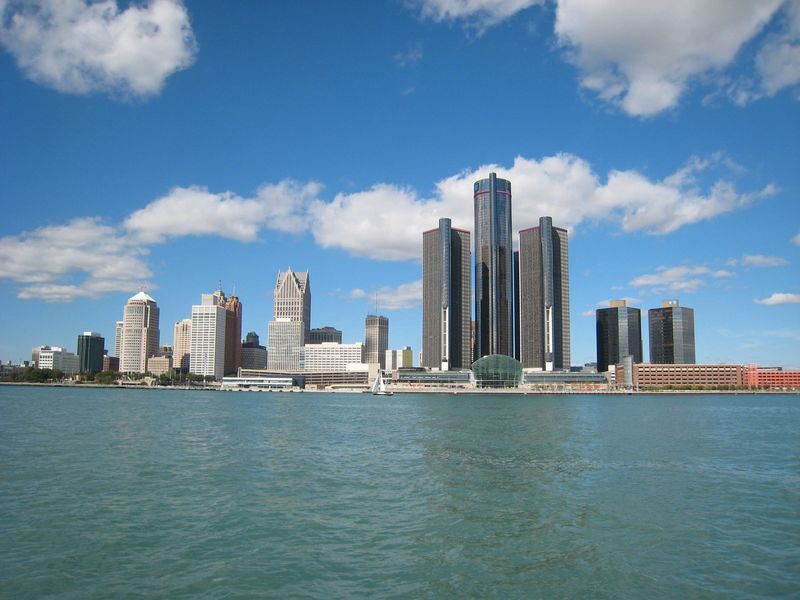
Detroit
Population: 672,351
Est: 1701
Story: The city is named after the Detroit River, which connects Lake Erie and Lake Huron, and the name is derived from the French word “détroit” meaning “strait.” The French referred to the Detroit River as “le détroit du lac Erie,” which means “the strait of Lake Erie.”
Dowagiac
Population: 5,695
Est: 1863
Story: The name comes from a Potawatomi word “dewje’og,” which means “fishing water.” The city is also headquarters to the Pokagon Band of Potawatomi Indians and contained within their reservation.
Eau Claire
Population: 763
Est: 1861
Story: Though Henry Rush planted his first crops in the land that would later become Eau Claire back in 1835, the city wasn’t established until 1861 when the population had sufficiently grown. A post office was acquired with the help of William Smythe Farmer. Rush asked him to name the post office, and Farmer suggested “Eau Claire.” The name is French for “clear water,” which is how he described an idyllic creek nearby.
Hell
Population: Unknown
Est: 1841
Story: There are many stories about the origin of the unincorporated city’s punchy name. One of the more popular ones is that George Reeves, who settled the town, often paid local farmers for grain with distilled whiskey. When asked where about their husbands whereabouts during harvest, some wives said, “He’s gone to Hell again.” Another story is that when Reeves was asked what to name the town, he said, “I don’t care. You can name it Hell for all I care.”
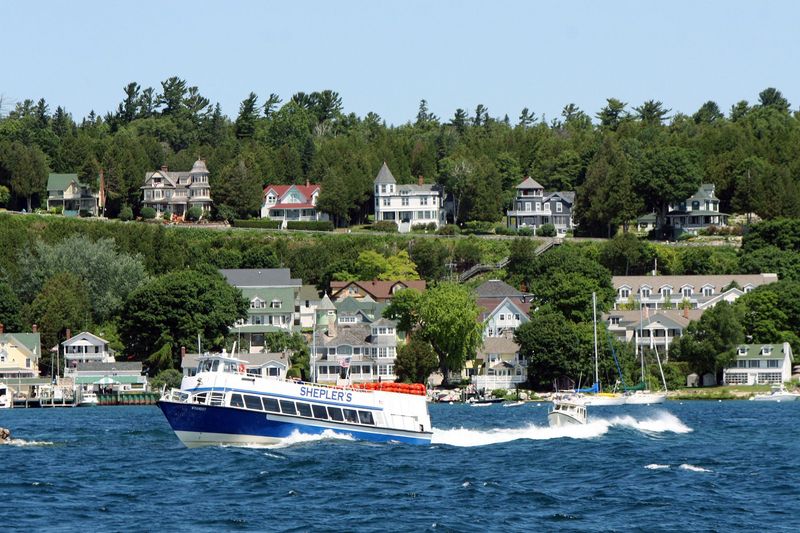
Mackinac
Population: 470
Est: 1817
Story: The Anishinaabe people believed the shape of Mackinac Island resembles a turtle, which plays a central role in their creation story. The name Mackinac is derived from the Ojibwe word “mishimikinaak”, meaning “big turtle”.
Newaygo
Population: 2,044
Est: 1834
Story: This city may have been named after an Ojibwe leader Chief Nuwagon, who signed the 1819 Treaty of Saginaw, or it may have been derived from an Algonquian word meaning “much water.”
Onekama
Population: 380
Est: 1845
Story: Located on the northeastern end of Portage Lake, the town’s name comes from the Anishinaabe word “Ona-ga-maa,” which means “singing water.” Others say it originates from the Odawa word “onekamenk”.
Ovid
Population: 1,559
Est: 1867
Story: This town was named after Ovid, New York, which was itself named for the Roman poet by a clerk interested in the classics. The New York town was the hometown of the settler William Swarthout who moved to Michigan in the mid-19th century.
Posen
Population: 270
Est: 1871
Story: The city has strong Polish roots, as Posen is the German name for the Polish city Poznań, where many of the settlers were from. Nearly 80% of Posen’s residents are reported to have Polish ancestry.
Presque Isle
Population: 1,691
Est: 1840
Story: Presque Isle is the name of both the township and its county. It is the French term for peninsula, with the words literally translating to “almost an island.” Located along Lake Huron, the peninsula is home to the northern part of the township.
Ypsilanti
Population: 20,648
Est: 1823
Story: The city is named after Demetrios Ypsilantis, a Greek army general who played an important role in the successful Greek War of Independence from 1821 to 1829. At the base of the landmark Ypsilanti Water Tower is a white marble bust of Ypsilantis, created by Greek sculptor Christopher Nastos.
This article originally appeared on Detroit Free Press: The stories behind 15 unique Michigan city names
Reporting by Sarah Raza, Detroit Free Press / Detroit Free Press
USA TODAY Network via Reuters Connect