

By Maayan Lubell and Angus McDowall
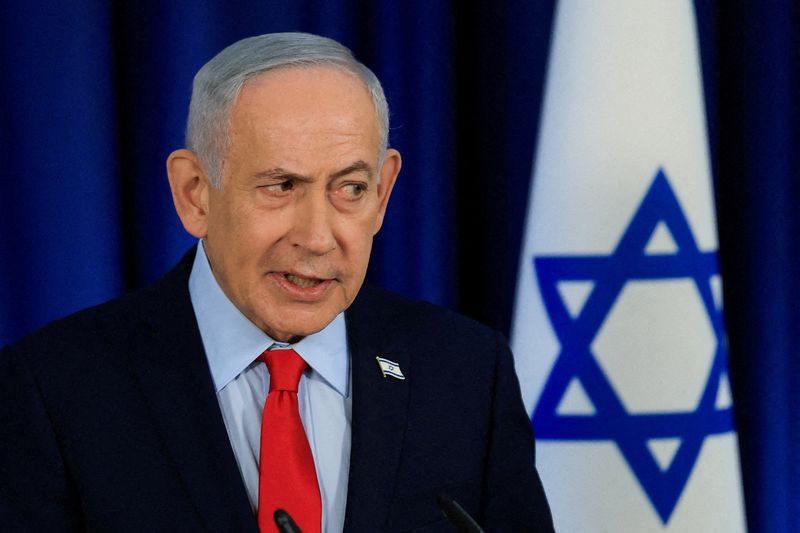
JERUSALEM, June 17 (Reuters) – Israeli Prime Minister Benjamin Netanyahu’s hopes of clinging to power in an election this autumn have long been shaky, but the interim U.S. deal with Iran has added yet another complication.

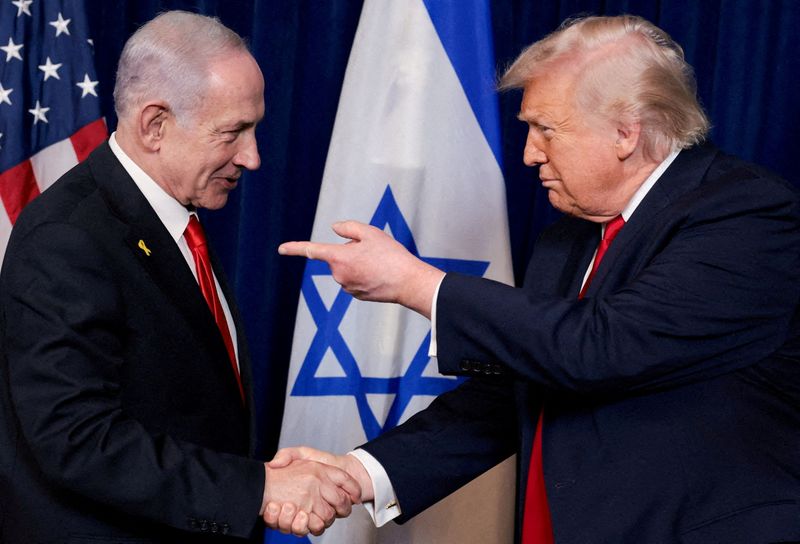
U.S. President Donald Trump has opted to end the wars in Iran and Lebanon long before Israel’s goals were accomplished, and Netanyahu’s boast in March that “we are changing the face of the Middle East” looks increasingly empty.
Already facing corruption allegations, domestic political controversies and criticism over security failings in the October 7, 2023 Hamas attack on Israel, he will now face voters’ judgement of his handling of the wars and Israel’s relationship with the United States, its most important ally.
Netanyahu, 76, confirmed this week he intends to stand again in an election that must be called by October.
Opinion polls put his right-wing coalition on course to lose but, in a parliamentary system he has dominated for long stretches since the 1990s, few Israelis would entirely discount him weaving together a new government.
NO LASTING VICTORIES
However the election unfolds, Israel’s longest-serving prime minister, whom supporters once called “King Bibi”, is already the most consequential leader of recent Israeli history and the object of boundless fury to critics.
Netanyahu’s Likud party portrays him as the security hawk who staved off demands for a Palestinian state while urging attacks on Israel’s enemy, Iran, and its regional proxies.
“There will be no Palestinian state to the west of the Jordan River,” Netanyahu said in 2025, adding “for years I have prevented the creation of that terror state, against tremendous pressure”.
His hawkish image was dented by security failings before the Hamas attack, for which he has not taken responsibility, and by wars that brought military successes but no lasting victories. Tens of thousands of people have been killed in Israeli strikes in Gaza and Lebanon, and Israel’s military death toll is at its highest in decades.
Domestic critics say Netanyahu focused security away from the Gaza border and disregarded Hamas as a real threat.
Although Israelis mostly backed the war in Gaza, many turned against Netanyahu’s handling of it. Some prominent generals and families of hostages were among critics who said he lacked a clear strategic plan.
The killings of Hezbollah leader Hassan Nasrallah and Iran’s supreme leader, Ayatollah Ali Khamenei, were celebrated in Israel. But Hamas still controls much of Gaza, revolutionary theocrats still rule Iran and Hezbollah has survived in Lebanon.
“Netanyahu lost the war. Netanyahu did not deliver – at the moment of truth he collapsed,” opposition leader Yair Lapid said after Trump imposed a new Israel-Hezbollah truce as part of his deal with Iran.
Netanyahu decries such criticism as part of a campaign to diminish Israel’s accomplishments. Warning of a potential nuclear threat from Iran, he said: “If we had not acted in time and with overwhelming force – we would not be here today.”
DENYING ACCUSATIONS OF WAR CRIMES
The devastation in Gaza drew accusations abroad of genocide that Israel rejects and an International Criminal Court arrest warrant for Netanyahu on war crimes charges, which he called absurd.
While he has assiduously courted Western support for Israel, he has also antagonised U.S. presidents and other world leaders. A biographer quoted former U.S. President Joe Biden as in private calling him a “son of a bitch” and “a bad fucking guy.”
The expansion of Israeli settlements in the occupied West Bank and attacks on Palestinians there have meanwhile fuelled international calls to revive the peace process.
Anger has gone both ways – many Israelis think Western criticism of their Gaza campaign after the Hamas attack was unfair. Rival politicians accuse Netanyahu of caving to U.S. pressure.
But in the U.S., his close ties to the Republican party and attacks on Democrats have helped upset decades of bipartisan support among politicians. Backing for Israel is falling among voters of both parties.
Trump, the U.S. president he has been closest to, called him “fucking crazy” during a June phone call.
LONGEST-SERVING PRIME MINISTER
Born to a prominent historian, Netanyahu went to school in the U.S. before joining the same elite commando unit as his elder brother, Yoni, who was killed leading the rescue of hijacked air passengers at Entebbe, Uganda, in 1976. Netanyahu said that event “changed my life”.
He proved at ease in the tough world of Israeli politics, appealing to the gut instincts of his core voter base in gritty towns and settlements.
He became Israel’s youngest prime minister in 1996, forging a coalition of settlers, security hawks, the ultra-Orthodox and pro-business voters, and has seen off many opponents, building a string of coalitions and ruthlessly abandoning former allies.
Dogged by a corruption trial, Netanyahu won an unprecedented sixth term in 2022, bringing into government nationalist parties with an openly expansionist agenda. Their efforts to curb the Supreme Court prompted the biggest protests in Israel’s history in 2023.
Netanyahu had sought a legacy through the Abraham Accords – 2020 agreements meant to normalise or expand ties with four Arab countries. He hoped to achieve peace with the Arab world without having to accept Palestinian self-determination.
But the 2023 Hamas attack and Gaza war made that impossible and with Israel’s standing in the West badly dented, his legacy will now be much more bitterly contested.
(Editing by Timothy Heritage)
By Maayan Lubell and Angus McDowall | Reuters | © Copyright Thomson Reuters 2026.
