

By Kyu-seok Shim
SEOUL, July 17 (Reuters) – South Korea’s decision to fine e-commerce firm Coupang over a data leak has drawn criticism from Washington and raised questions about the country’s openness to American tech, raising worries the matter is impacting Seoul’s relations with the U.S.

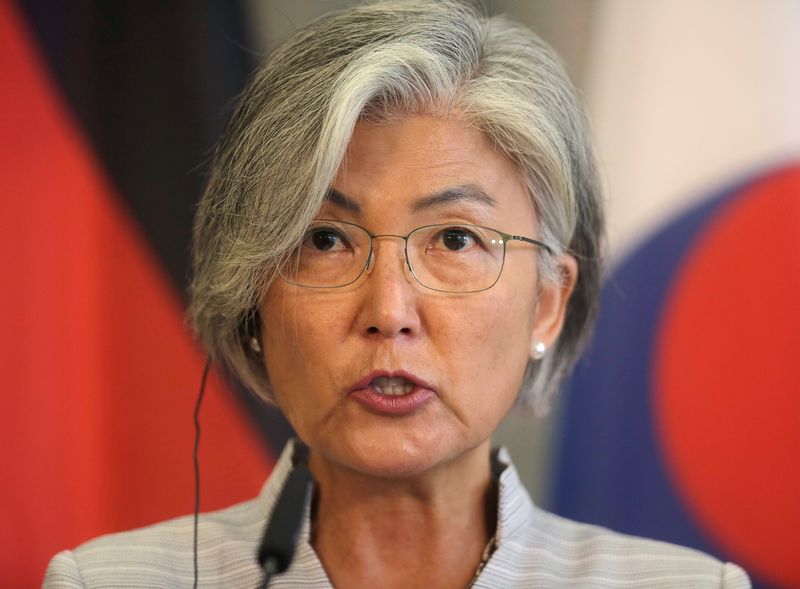
The tensions surrounding Coupang, which is South Korea’s biggest online retailer, though it is based in Seattle, have become serious enough that Kang Kyung-wha, Seoul’s ambassador to the U.S., returned to the capital on Wednesday for consultations with officials in President Lee Jae Myung’s administration.
“The (Coupang) issue is dragging on much longer than I expected,” Kang said to local media when asked about the American criticism on the issue. She added the matter would be dealt with separately from other bilateral items that have been agreed upon by the two countries.
At stake is a $350 billion South Korean pledge to invest in the U.S., Seoul’s aspiration to build nuclear-powered submarines as well as coordination on China and North Korea.
On top of the Coupang support from congressional Republicans, South Korea has been criticised by the U.S. State Department for amending its communications laws to increase financial penalties on content publishers that have been found to spread false information online.
The State Department said that it had “significant concerns” that the changes could enable excessive content regulation and undermine free speech. The amendments will affect local platforms, as well as Google, Meta, X and TikTok.
South Korean lawmakers told Reuters they are concerned that the Coupang case is being used by Washington as a test of Seoul’s openness to U.S. business, rather than being treated as a domestic privacy dispute.
“This is not discrimination against an American company,” ruling Democratic Party lawmaker Park Sun-won said. “It was action over a personal data leak affecting 35 million people. It would be the same for any company.”
Another ruling party lawmaker, Kim Young-bae, said treating the Coupang dispute as proof of an anti-U.S. bias misreads both the facts and the broader direction of the alliance.
Seoul’s Foreign Ministry has also said the Coupang matter should not be linked to ongoing security negotiations, including South Korea’s ambitions to build nuclear-powered submarines, a plan that U.S. President Donald Trump endorsed last December.
When asked about the Coupang dispute, a State Department spokesperson said South Korea “should not impose disproportionate burdens on U.S. companies.” The White House did not immediately respond to a request for comment.
Coupang referred to its past statements, saying it hoped to find a constructive resolution.
A source close to the Coupang negotiations who did not want to be identified publicly due to the sensitivity of the situation said the company had for months repeatedly sought a “constructive off-ramp” with Seoul, “literally hundreds of times over the last seven months.” Its requests included what it called a fair technical review and an appropriate penalty.
A WAR OF WORDS
The dispute began in November after Coupang said it suffered a data leak that impacted more than 33 million customers after an ex-employee in China accessed its systems.
In June, South Korean regulators fined Coupang 625 billion won ($422.62 million), saying the penalty sought to protect consumers. Coupang has said it intends to challenge the fine, arguing that regulators overlooked corrective steps that it had taken.
Subsequently, Coupang received support from some U.S. Republicans who criticised the South Korean government’s actions.
A report from the U.S. House Judiciary Committee this month accused South Korea of discriminating against American-owned businesses, saying Seoul had weaponized its regulations against Coupang and other companies.
South Korea’s presidential office rejected those claims, saying the report disproportionately reflected Coupang’s position and neglected Seoul’s.
A House Judiciary Committee spokesperson told Reuters that Seoul’s response showed “South Korea is acting just like other foreign governments that have been caught targeting and harassing innovative U.S. companies.”
Kim Joon-hyung, a lawmaker with the minor Rebuilding Korea Party, said the business-related complaints about Coupang and the changes in the communications law were being conflated by some people in the U.S. with accusations of election fraud, which members of South Korea’s far right have levied against Lee.
In June, an op-ed published in the Wall Street Journal by two American conservatives said that the Lee administration is undermining the U.S.-South Korea alliance, citing the Coupang case as an example, and also accused it of pushing constitutional revisions to rule indefinitely.
The article drew criticism from South Korean officials and the presidential office.
“This time the problem is more serious because it is combined with extreme claims – and it is being done organizationally,” Kim said.
($1 = 1,478.8600 won)
(Reporting by Kyu-seok Shim; Editing by Brenda Goh and Thomas Derpinghaus)
By Kyu-seok Shim | Reuters | © Copyright Thomson Reuters 2026.
