Wisconsin Book of the Month highlights a book — new, newish or neglected — by a state writer or on a Milwaukee or Wisconsin subject that Journal Sentinel books editor Jim Higgins recommends you read this month. This feature usually appears in the newspaper the second Sunday of each month and is usually posted online the preceding Wednesday. Want to suggest a book? Email jhiggins@journalsentinel.com.
Dennis R. McBride may have been destined, or doomed, to write. Both of his parents were Milwaukee newspaper reporters. His brother Joseph, also a former newspaper reporter, has written more than 20 books, including biographies or studies of Orson Welles, John Ford, Frank Capra and Stephen Spielberg. Other siblings and close relatives have been reporters and authors, too.

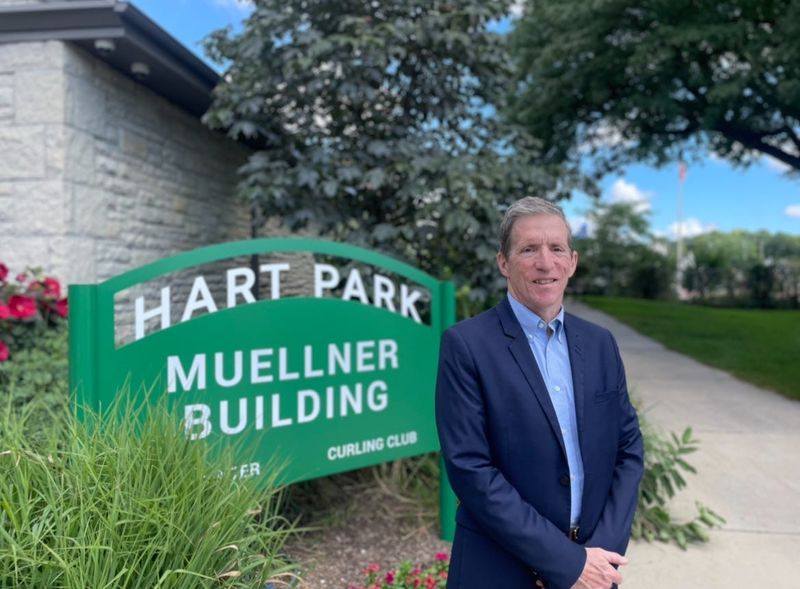
Dennis earned a bachelor’s degree in journalism at the University of Wisconsin-Milwaukee before he veered into law and public service as a trial attorney for the U.S. Equal Employment Opportunity Commission, a Wauwatosa alderman and, since April 2020, the mayor of Wauwatosa.
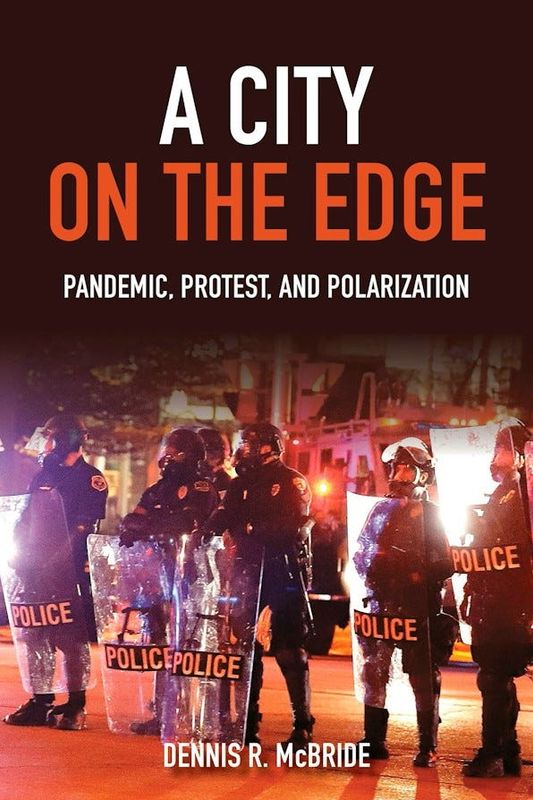
His recently published book “A City on the Edge: Pandemic, Protest and Polarization” (Indiana University Press) draws on that mayoral experience, which was extended in 2024 with his re-election. While the past five-plus years have been a difficult time to be mayor of anywhere in the United States, Tosa has faced a pressing constellation of challenges.
McBride’s title and approach draw on the “edge city” concept coined by Joel Garreau for hybrid communities, like Tosa, that seem part city, part suburb, with both the excitement and problems that implies. Wauwatosa has a “nighttime” population around 49,000, making it Wisconsin’s 14th largest city, McBride notes. But during the day, McBride points out, thanks to medical centers and other large businesses in the community, more than 105,000 people are in Tosa, swelling it to the state’s fourth-largest community, after Milwaukee, Madison and Green Bay.
A detailed account of the Mensah protests
“A City on the Edge” is two books in one. Through much of it, McBride weaves together Wauwatosa’s attempts to grapple with the COVID-19 pandemic, political polarization and other pressure points of 2020 with the experiences of many other communities across the country. Frequent quotations and his extensive endnotes indicate that McBride is an attentive reader of Milwaukee, regional and national media. (We could use more customers like him.)
Local people reading these chapters might be surprised that the mayor of Wauwatosa writes so much about other communities. He’s showing the range of American responses to recent crises. In doing so, he provides context for explaining and analyzing what Tosa did.
Nestled within the nearly statesmanesque reflections of his main book is “Our Town,” a dense and intense 30 pages on how Wauwatosa, and specifically the mayor himself, responded to months of protests and community conflict related to then-police officer Joseph Mensah killing, over several years, three people of color. Mensah’s final shooting, of Alvin Cole, a 17-year-old Black teenager, happened in February 2020, about 2.5 months before McBride became mayor. Wauwatosa’s troubled history of racial restrictions on housing is an important background element here.
McBride notes that protests in Wauwatosa didn’t begin in earnest until the murder of George Floyd in Minneapolis on May 23, 2020. Mensah was not publicly identified as the officer who killed Cole until June 6, when the Journal Sentinel named him in an article and Cole’s family led a protest naming him.
As Floyd-related protests surged around the country, like many mayors McBride declared a curfew for several days, citing both “unrest and because people were driving cars at 100 miles per hour on major thoroughfares on our West Side.” Later he would successfully fend off legal challenges to his authority to impose those curfews.
Let me stipulate that I don’t live in Wauwatosa and cannot offer an informed opinion on McBride’s actions as mayor (only to point out that he’s an unusually clear communicator for an elected official). What interests me here is how McBride’s experience reinforces his book’s points about America’s intensified polarization. During the Mensah crisis he tried to steer a functional, legal course of action through persistent, angry protestors on one side and many local enforcement officers who resisted reform efforts on the other. “I hoped the community would cut me slack because of my background as a civil rights lawyer,” McBride writes. Spoiler alert: no such slack was cut.
Protestors were angry that Milwaukee County District Attorney John Chisholm did not charge Mensah criminally in any of the three killings. They also were often insistent that McBride fire Mensah immediately, a legal impossibility, because, as the mayor reminds us several times, only the Wauwatosa Police and Fire Commission had the authority to fire an officer. Here I think McBride the writer could have served readers by providing more details on what the commission members were actually doing during this time, and to what extent the mayor was using his bully pulpit to move them.
Rhetoric turned to personal attack. McBride has the visual receipts, including images of the sign protestors stuck in McBride’s yard with “ACCOMPLICE” stamped over his face, and a Wauwatosa police detective’s Powerpoint slide referring to the mayor as “HVT,” short for high-value target.
More than 60 people would sue the city of Wauwatosa unsuccessfully over its actions during the protests on a variety of claims from inappropriate police behavior to the legality of the curfew McBride imposed.
During a period of what seemed like little action to protestors, McBride writes, negotiations were going on behind the scenes to get Mensah to leave the Tosa police force voluntarily, avoiding the protracted and expensive legal battle that would have followed a summary firing.
Mensah left the Wauwatosa Police Department in November 2020. His separation package of salary, benefits and a settlement, amounted to $125,065.44, which McBride dubs “a bargain,” compared to the $500,000 each that the city of Tacoma paid three police officers to resign in 2024 after they were acquitted of murder and manslaughter charges in a chokehold death incident. Many people, of course, are disturbed that such officers received anything.
However a reader may feel about McBride’s decisions, this chapter of his book offers an unusually detailed behind-the-scenes look of what a mayor did and thought during a crisis.
‘Leaders must remain calm and measured’
Books have months of lead time, for preparation and promotion, before publication. McBride finished and submitted his manuscript to Indiana University Press late in 2024 before another big crisis walloped Wauwatosa. Flash flooding in August 2025 caused the largest rainfall event ever recorded in Wisconsin, according to scientists with the State Climate Extremes Committee. Wauwatosa authorities estimated $4.2 million in damage to city-owned public properties, including Hart Park.
In an email message, McBride noted that the Federal Emergency Management Agency “denied Wisconsin’s application for financial assistance for Wauwatosa and other communities in southeastern Wisconsin that were affected by the historic flooding.” That request was specifically for help in repairing public infrastructure damage. The mayor also pointed out that The Tosa Foundation, a nonprofit founded by former Tosans John and Tashia Morgridge, donated $1 million to help with recovery.
“Whether the challenge is a flood, a protest, a pandemic, or a mass shooting, leaders must remain calm and measured, and remember that the tortoise wins the race, not the hare,” McBride wrote.
Note: This article was updated to add information.
This article originally appeared on Milwaukee Journal Sentinel: Wisconsin Book of the Month revisits a year of crises in Wauwatosa
Reporting by Jim Higgins, Milwaukee Journal Sentinel / Milwaukee Journal Sentinel
USA TODAY Network via Reuters Connect